






 Portuguese
  Spanish


In A Roman Necropolis, Archaeologists Made An Impressive Discovery: A Marble Epitaph About 2,200 Years Old, Dedicated To A Gladiator
More than two thousand years after the height of Rome, archaeologists found a forgotten piece of history. An epitaph (phrase, inscription, or short text written on a tombstone or grave) engraved in marble, marking the tomb of a gladiator, was discovered in an ancient necropolis in the city of Liternum, on the western coast of Italy.
The city, which was once home to the famous Roman general Cornelius Scipio Africanus, is now an archaeological park filled with ruins and stories.
Liternum
Founded by the Roman Republic over 2,200 years ago, Liternum was a strategic colony north of present-day Naples.
-
16-Year-Old from Brazil’s Sertão Wins Young Scientist Award for AI Predicting Rainfall with 94.5% Accuracy to Aid Farmers

-
Netherlands Reports First Child Euthanasia Case Since Rule Expansion for Minors

-
Brazilian Innovator Survives Homemade Submarine Dive in Paraty Despite Hatch Leak and False Oxygen Alarm
-
China Develops Custom 140-Ton Electric Mining Truck with 770 kWh Swappable Battery, Deploys 290 Units in Xinjiang’s Largest Zinc Mine



Over time, it became the stage for battles, conquests, and also the final resting place for many Romans — some illustrious, others not so much. Among them, it is now known, a gladiator.
The discovery was made by a team led by archaeologist Simona Formola, in a project supervised by the Superintendent of Archaeology, Fine Arts, and Landscape of Naples.
They excavated two large decorated tombs and dozens of smaller burials in the ancient necropolis of Liternum.
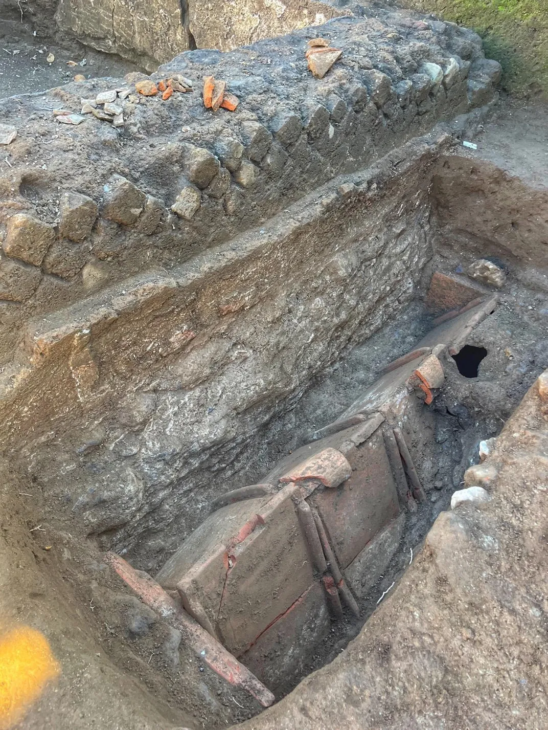
Luxurious Tombs And Humble Burials
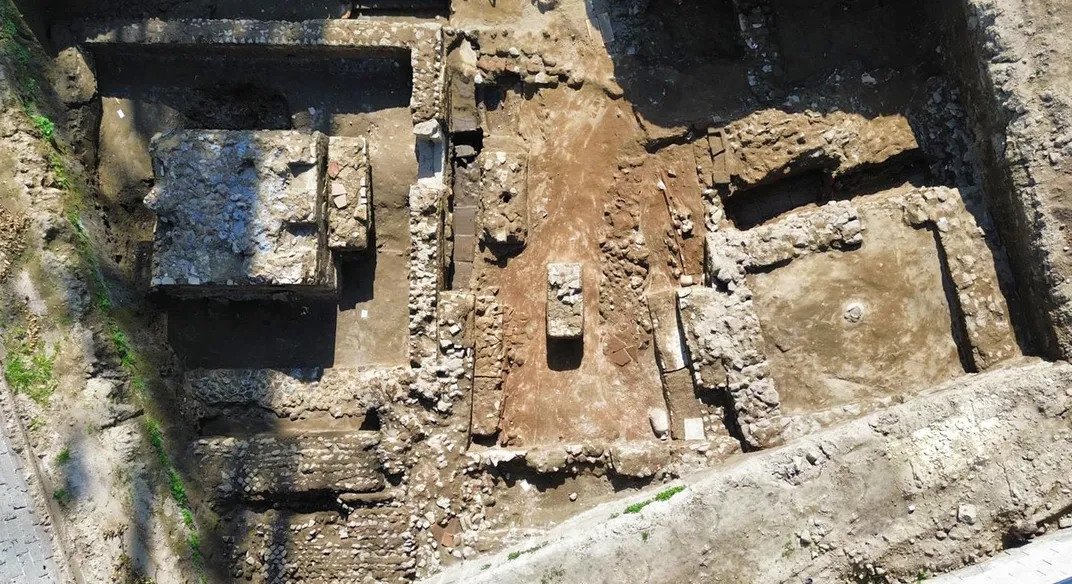
The two main tombs found were decorated with white plaster and red paint. Between them, a deep stone well — possibly serving a ritual function — separated the chambers.
One of them housed a square mausoleum, about 9 square meters, made in opus reticulatum, a type of masonry typical of the time. The structure used tuff, a volcanic rock, common in tombs of people of high social standing.
Inside this mausoleum, archaeologists found niches carved into the walls, likely to hold urns with remains.
According to the researchers, the artifacts found indicate that the tombs were used from the end of the 1st century BC until the 3rd century AD, coinciding with the beginning of the Roman Empire under the rule of Augustus.
Scattered around were about 20 other burials, including cappuccina tombs — common among poor Romans — made with tent-shaped clay tiles.
Enchytrismos burials were also found, in which the bodies were placed inside large ceramic jars. There were also brick tombs, rectangular and well-crafted.
A Gladiator In The Necropolis
The most striking discovery, however, was a marble slab with an engraved epitaph. It indicated that a gladiator was buried there.
These men — often enslaved or condemned — were forced to fight to the death for the entertainment of the Roman people. Although some gained fame, like Spartacus, most were used as mere spectacle, disposable.
The epitaph is considered a rare and poignant record of the presence of these fighters in Rome. As a local representative wrote on social media, it is a “rare and touching testimony of the memory of these fighters“. Few gladiators had their names preserved.
Many died without any record. Thus, the inscription represents more than an archaeological discovery. It is a silent reminder of those who were forgotten.
The Necropolis As A Window Into The Past
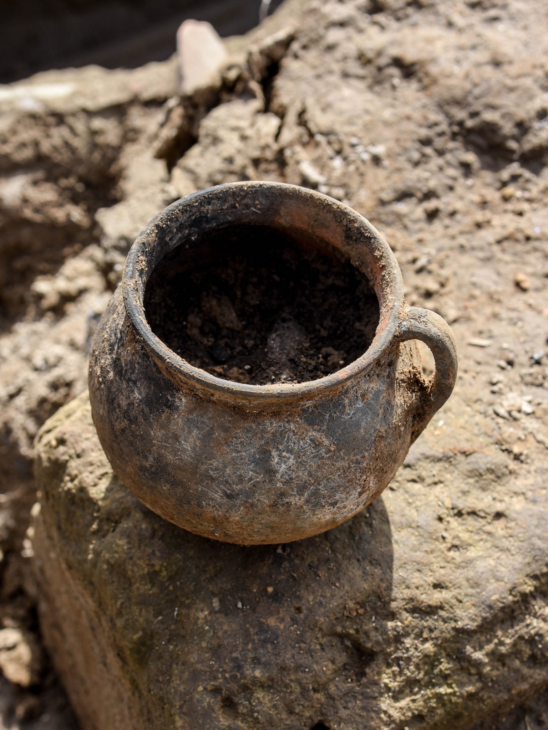
The excavation also brought to light other important items, such as coins, lamps, and small vases. Each item helps to piece together the puzzle of life and death in Liternum. The site continues to reveal funerary practices, beliefs, and ways of life of ancient Rome.
In 2024, the same team had already opened the so-called “Tomb of Cerberus“, where frescoes depicting Hades’ mythological dog and sea centaurs were found. The paintings show that even in death, Romans sought symbols and stories to mark their end.
According to Mariano Nuzzo, the superintendent responsible for the area, the necropolis of Liternum is experiencing a special moment for archaeology. “This necropolis, thanks to its wall structures and excellently preserved tombs, adds an important piece to our knowledge of the history of the colony of Liternum“, he stated.
The story is not yet finished being told. The soil of Liternum continues to hide memories. And each excavation may bring to light another name, another face lost in time.






Que reportagem mequetrefe. Quem era o personagem? Qual a mensagem?
que **** falou falou e nao falou o que estava escrito ou qualquer coisa que valha
Exemplo de pobreza jornalística.