Portuguese
  Spanish


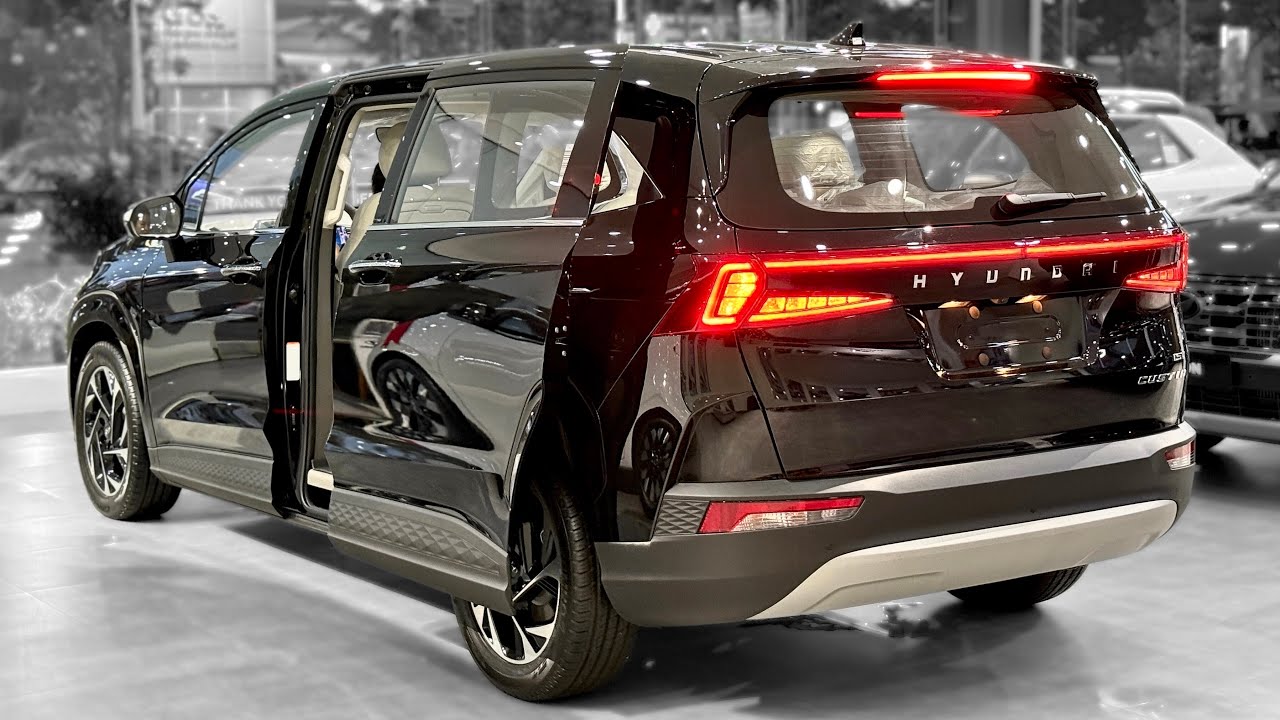


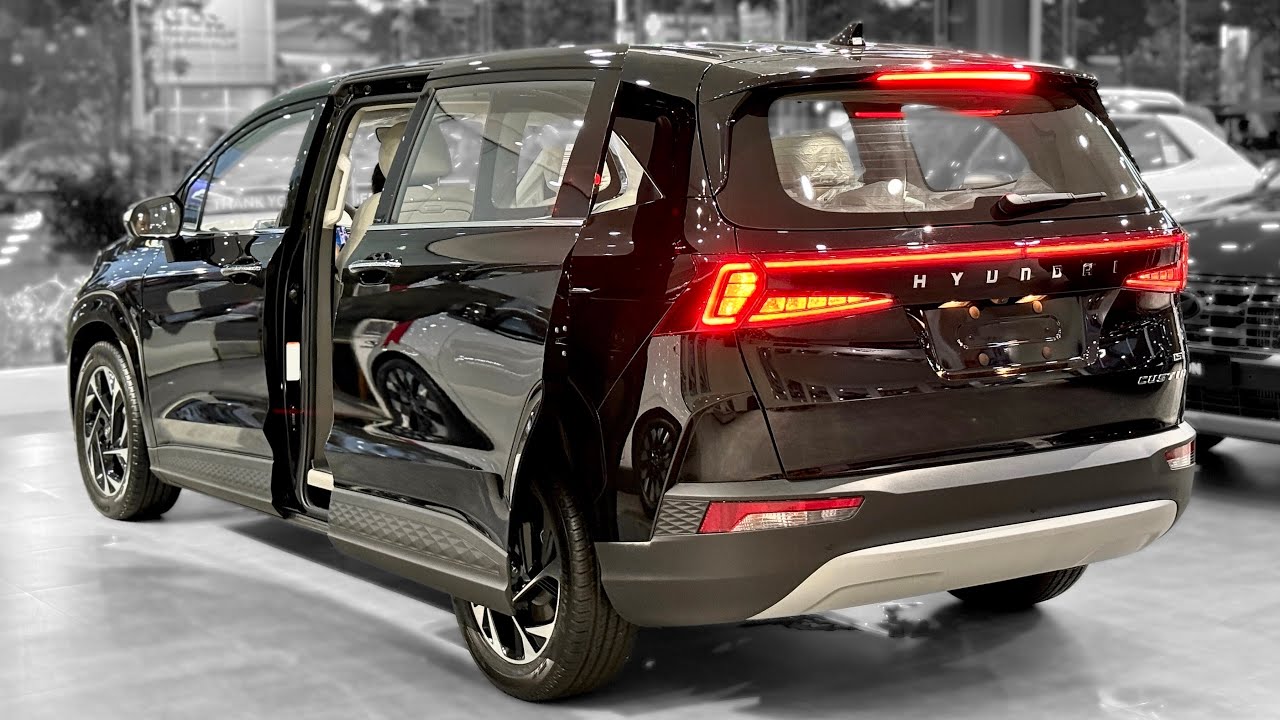
Hyundai Custin is a 7-seater minivan sold in Asia with a turbo engine, sliding doors, and interior space that rivals much larger SUVs.
While the brand focuses on SUVs like Creta, Tucson, and Santa Fe here, in countries like Vietnam, the Philippines, and China, it offers the Hyundai Custin, a 7-seater minivan created for families that prioritize space, comfort, and practicality over the SUV trend.
The model stands out because it combines dimensions close to large SUVs with features typical of executive vehicles. With almost five meters in length, a wheelbase over three meters, and sliding side doors, the Custin was designed to transform the cabin into a kind of mobile living room, something increasingly valued in Asian markets.
Hyundai Custin was born to fill the gap between family SUVs and luxury minivans
Hyundai launched the Custin in 2021 in China under the name Custo. In international markets, like Vietnam and the Philippines, it began to be marketed as Custin. The project was developed on the modern Hyundai-Kia N3 platform, also used by vehicles like Tucson and Santa Fe.
-
2027 Toyota Corolla Cross Unveiled: New Design, Enhanced Fuel Efficiency, Reduced Maintenance Costs, Advanced Technology, Connected Services, and Up to 10-Year Warranty

-
Fiat Cronos Precision 2018: Affordable Sedan with Spacious Trunk and Reliable Maintenance
-
Volkswagen to Cut Production by 1 Million Cars by 2030, Reducing Jobs and Platforms, Focusing on More Profitable Models

-
Toyota Launches First 100% Electric Car in Brazil: bZ4X with 343 HP, All-Wheel Drive, 361 km Range, Priced at $419,990 BRL, Limited to 99 Units



The manufacturer’s goal was to create a family vehicle capable of competing with models like Toyota Innova, Toyota Zenix, Kia Carnival, and other large Asian minivans.
Unlike traditional SUVs, the Custin’s proposal is to maximize internal space and comfort for second and third-row passengers, something often sacrificed in conventional SUVs.
Almost five meters in length places the Custin above many SUVs sold in Brazil
One of the most impressive features of the model is its dimensions. The Hyundai Custin measures approximately 4,950 mm in length, 1,850 mm in width, and has a generous wheelbase of 3,055 mm, numbers that place it above many medium SUVs and close to some large utilities sold globally.
The ample wheelbase is one of the secrets of the internal space. It allows for comfortably accommodating seven occupants distributed in a three-row configuration. In certain versions, the second row receives individual seats that reinforce the vehicle’s executive proposal.
Additionally, the sliding side doors make boarding and disembarking easier in tight parking spaces, a traditional feature of minivans that is becoming increasingly rare in markets dominated by SUVs.
1.5 Turbo Engine Delivers Power Close to Larger SUVs
Although it is a minivan focused on comfort, the Custin does not compromise on performance. In the more affordable versions sold in Vietnam and the Philippines, the model uses a 1.5 turbo Smartstream T-GDi engine with 1,497 cm³, capable of delivering approximately 168 hp and 253 Nm of torque.
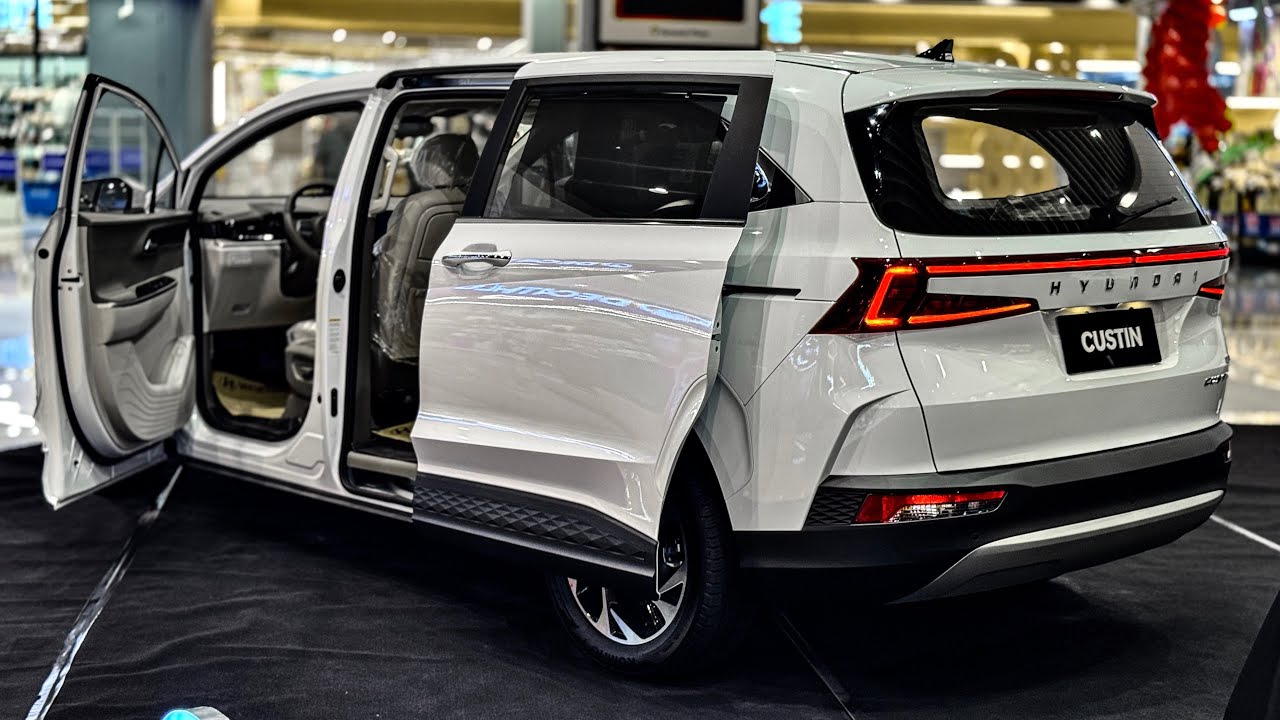
The transmission is an 8-speed automatic, sending power to the front wheels. The combination was developed to offer smoothness in family trips and efficiency in urban commutes.
In Asian markets, there is also a more powerful version equipped with a 2.0 turbo engine, reaching approximately 233 hp and 353 Nm of torque.
Interior Focuses on Comfort and Technology to Transform Long Trips into a Premium Experience
The main highlight of the Custin is inside the cabin. Hyundai equipped the model with a large vertical multimedia center, digital dashboard, and an interior configuration focused on passenger comfort.
In markets like the Philippines, the model offers compatibility with Apple CarPlay, Android Auto, voice commands, and various connectivity features.
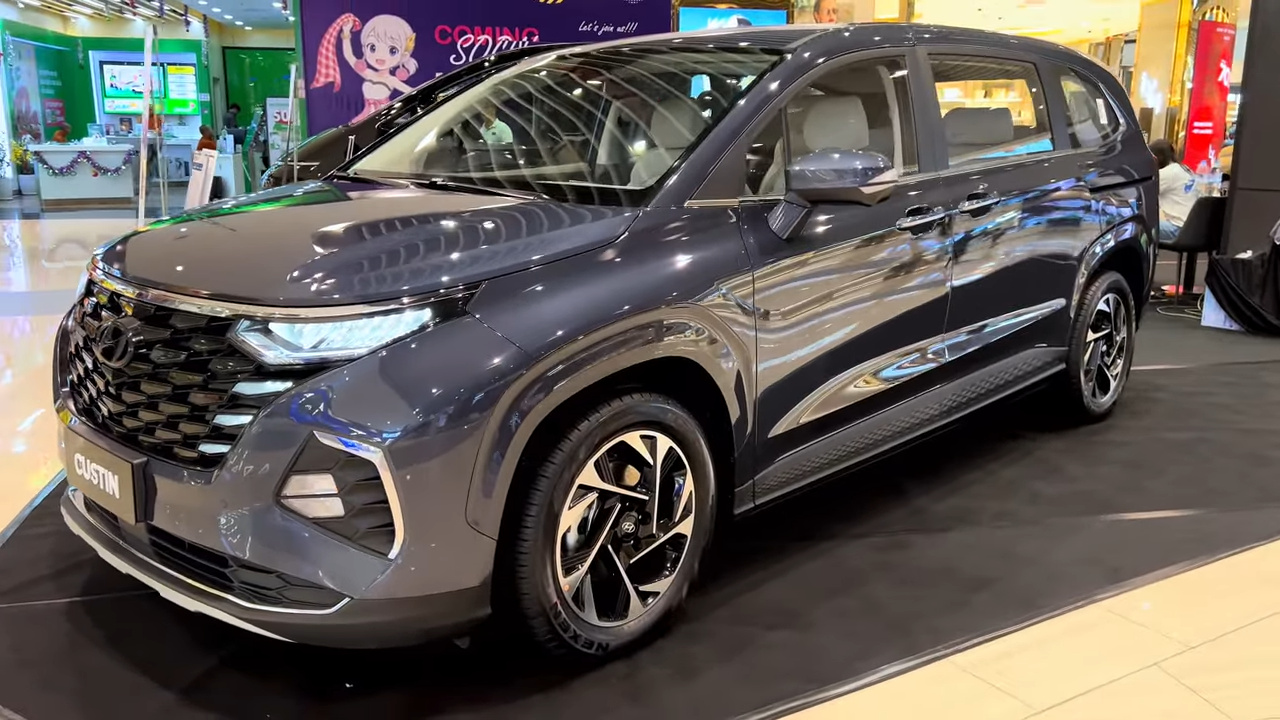
The seating arrangement prioritizes legroom and internal circulation, something favored by the long wheelbase. In some versions, the second row uses individual seats with armrests, enhancing the executive vehicle feel.
The result is an environment very different from that found in compact and medium SUVs that dominate the Brazilian market.
Converted Price Draws Attention When Compared to Family SUVs Sold in Brazil
In Vietnam, the entry-level version of the Hyundai Custin is advertised for approximately 820 million Vietnamese dongs.
Considering the direct conversion carried out in June 2026, this represents something close to R$ 157 thousand, without considering Brazilian taxes, shipping, homologation, or import costs.
Even though it is not a direct comparison with the national market, the value draws attention when placed alongside many medium SUVs sold in Brazil.
Naturally, if it were officially imported, the Custin would have a significantly higher price due to the tax burden and nationalization costs.
Technical specifications of the Hyundai Custin 1.5 T-GDi
| Specification | Hyundai Custin 1.5 T-GDi |
|---|---|
| Engine | 1.5 Turbo Smartstream T-GDi |
| Displacement | 1,497 cm³ |
| Power | 168 hp |
| Torque | 253 Nm |
| Transmission | 8-speed automatic |
| Drive | Front-wheel drive (FWD) |
| Seats | 7 |
| Length | 4,950 mm |
| Width | 1,850 mm |
| Height | 1,710 mm to 1,725 mm |
| Wheelbase | 3,055 mm |
| Ground clearance | 170 mm to 174 mm |
| Fuel tank | 58 liters |
| Platform | Hyundai-Kia N3 |
| Side doors | Sliding |
| Starting price in Vietnam | 820 million dongs (around R$ 157 thousand in direct conversion) |
Data compiled from Hyundai, Zigwheels, AutoDeal, and specifications released in Asian markets.
A Hyundai that practically does not exist for the Brazilian consumer
The Custin shows how Hyundai has a global lineup very different from that found in Brazilian dealerships.
While the national market has almost completely migrated to compact and medium SUVs, several Asian countries continue to bet on family minivans that offer more interior space, easier access, and greater versatility for transporting passengers.
With almost five meters in length, seven seats, a turbo engine, an eight-speed automatic transmission, and a cabin designed for long trips, the Hyundai Custin represents a type of vehicle that has gradually disappeared from the Brazilian market but continues to find strong demand in regions where practicality and comfort still speak louder than the mere appearance of an SUV.