





 Portuguese
  English
  Spanish
  4 min of reading
  0 comments



More Than R$ 2.8 Trillion Collected Throughout 2025 Quietly Transformed the Brazilian Fiscal Scenario and Revealed How Taxes and Economic Activity Sustained a Historic Record
A relevant change in Brazilian public accounts was consolidated throughout 2025, although it was far from the daily debate of most of the population.
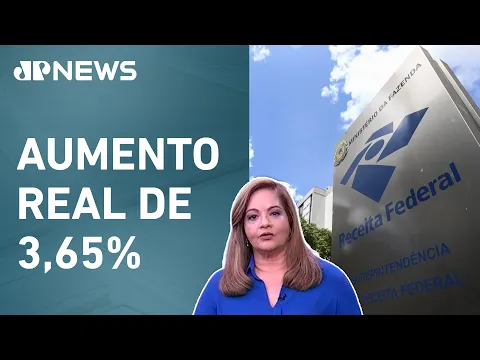
At the end of last year, the federal government’s revenue totaled R$ 2.887 trillion, according to data released in January 2026 by the Federal Revenue.
With this, the real growth reached 3.65% compared to 2024, already discounted for inflation, representing the highest annual volume since the beginning of the historical series in 1995.
-
USA to Pay New Residents: Town with Fewer than 900 Inhabitants Offers Up to $50,000 for Purchase of New Homes, Properties up to 119 m², and Ambitious Plan to Attract Families and Prevent Rural Depopulation in Nebraska

-
Reduction of working hours to 40 hours could cost R$ 77 billion to the GDP, raise food prices, and put up to 2.7 million jobs at risk, data indicates.

-
Supermarket giant buys 12 stores, Distribution Center, and two chains and accelerates expansion
-
There are only four days left until the Income Tax deadline, and the Federal Revenue Service is still awaiting over 13 million returns. Those who miss the 11:59 PM deadline on May 29 will incur a minimum fine of R$ 165.74 with no discount.




According to the Federal Revenue, the result was built gradually, reflecting revenue measures adopted throughout the current administration and, at the same time, the resilience of economic activity, even under restrictive monetary policy conducted by the Central Bank to contain inflation.
In an interview given to the press at the beginning of 2026, the special secretary of the Federal Revenue, Robinson Barreirinhas, assessed that the 2025 numbers are striking even when compared to the high level recorded the previous year, which included non-recurring revenues.

Taxes Administered Sustain Revenue Growth
Within the total collected, the taxes directly administered by the Federal Revenue reached R$ 2.763 trillion in 2025, which represented real growth of 4.27% compared to 2024.
In contrast, revenues administered by other agencies, dominated by oil royalties, fell 8.40%, totaling R$ 123.612 billion throughout the year.
Still, the performance in December played a decisive role, as monthly revenue reached R$ 292.724 billion, the highest value ever recorded for the month, with real growth of 7.46%.
This monthly result helped to restore the pace of accumulated revenue, which had lost momentum in the second half.
Fluctuations Throughout the Year Reflect Interest Rate Effects
During 2025, the accumulated real growth of revenue underwent significant fluctuations.
In July, the indicator reached a peak of 4.41%, but then fell to 3.73% in August, 3.49% in September, and 3.20% in October, a movement associated with the effects of high interest rates on the economy.
Subsequently, the pace gained momentum again, rising to 3.25% in November and closing December at 3.65%.
IOF and New Tax Fronts Stand Out
Throughout the year, the government strengthened the strategy of recovering revenue with actions such as raising rates of the Tax on Financial Operations (IOF), taxation of online bets, reinstallation of payroll taxes, limiting tax compensations, and ending benefits to the events sector.
In this scenario, the IOF was one of the main highlights of 2025, reaching record revenue of R$ 86.5 billion, an amount R$ 14.7 billion higher than in 2024, which represents real growth of 20.5%.
According to Claudemir Malaquias, head of the Center for Tax and Customs Studies at the Federal Revenue, revenue from IOF was about R$ 2 billion above what the government initially expected.
In addition, there were also advances in Social Security revenue (+3.27%), PIS/Cofins (+3.03%), Import Tax (+9.49%), and Income Tax for companies and individuals.
Sectors That Contributed Most to the Historic Result
By sector, financial entities led the gains, contributing R$ 40.5 billion more than in the previous year.
Following, the gambling and betting sectors (+R$ 9.9 billion) and the extraction of oil and natural gas (+R$ 6.1 billion) stood out.
These segments played a central role in sustaining the growth of revenue throughout the year.
Fiscal Impact and Change of Stance for 2026
The increase in revenue was essential for the government’s fiscal strategy in 2025, whose goal was zero deficit, with margin of tolerance of 0.25% of GDP.
In the week prior to the data release, the Minister of Finance, Fernando Haddad, reported that the estimated primary deficit was 0.1% of GDP, after deductions authorized by judicial decision, such as precatórios and indemnities to retirees.
The official data of the consolidated fiscal result for 2025 will be presented at the end of January 2026 by the National Treasury and the Central Bank.
For 2026, Barreirinhas indicated that the Federal Revenue will adopt a more guiding stance towards good taxpayers, while being more rigorous with chronic debtors, after the approval of tougher rules against tax evasion.
In this context, the goal is to collect R$ 200 billion in 2026 through friendly negotiations, a strategy that already resulted in R$ 177.5 billion in 2025, according to official data.
In light of this scenario, what weighed more for this historic record: the strength of the Brazilian economy or the advancement of tax measures adopted throughout the year?









-

1 person reacted to this.