Portuguese
  Spanish


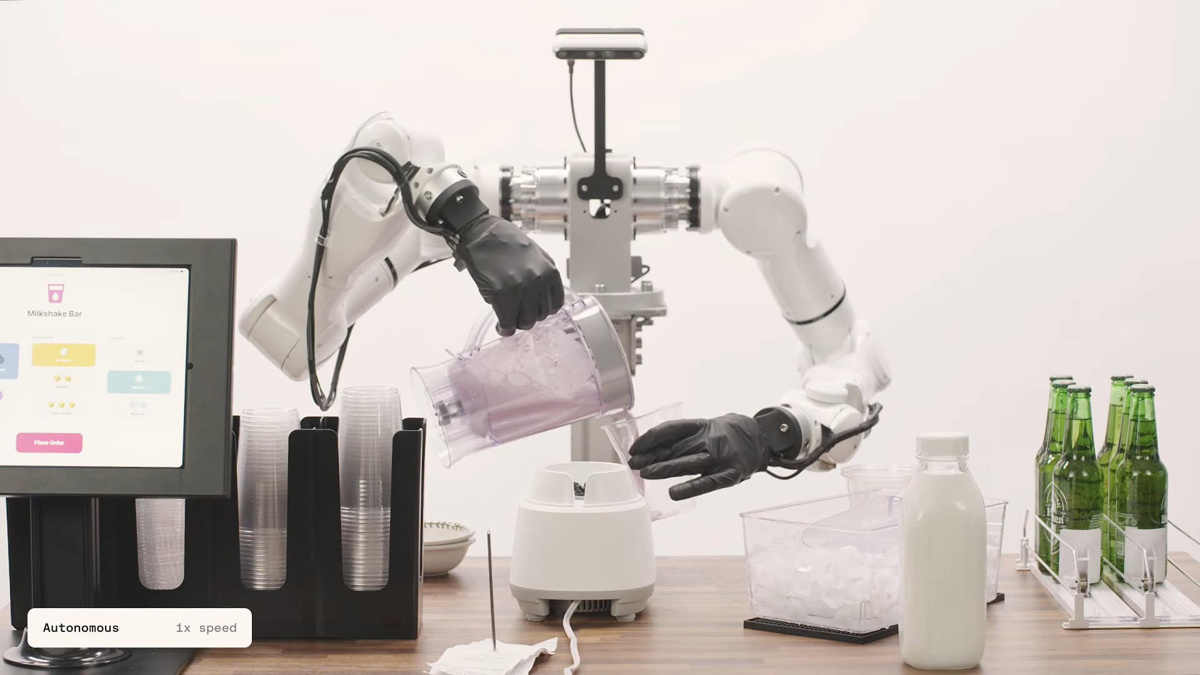


The evolution of artificial intelligence and robotics gained a new chapter with the launch of the GENE-26.5 model, developed by the startup Genesis AI. The technology was created for robots equipped with hands inspired by human anatomy and promises to significantly expand the learning capacity, precision, and interaction of machines.
The project uses its own robotic hands and special gloves with advanced sensors capable of capturing human movements in real-time. From this data, artificial intelligence can learn complex actions and reproduce movements in an increasingly natural way.
According to information released by the Olhar Digital website, this advance represents an important step for the development of intelligent automation and advanced robotics. Furthermore, the technology reinforces the growth of research aimed at bridging the gap between human movements and autonomous machines.
-
Survey of 2,500 professionals reveals AI concerns: 39% feel it makes them less intelligent, 41% fear long-term career impact.

-
Panasonic Shifts Strategy in the U.S., Focuses on AI Data Center Batteries as Global Energy Demand Surges
-
Brazilian Entrepreneur Develops Device to Provide Companionship and Health Monitoring for Elderly, Alerting Families to Potential Health Issues

-
AI Customizes Burgers for Individuals and Impresses in Blind Test with Over 100 Participants, Matching or Surpassing Fast-Food Chains’ Approval Ratings


What is GENE-26.5
GENE-26.5 is an artificial intelligence model created to train robots with robotic hands inspired by human structure.
Genesis AI’s proposal is to allow machines to learn movements directly from actions performed by real people. To do this, the system uses special sensors installed in technological gloves.
These sensors record precise details of human hand movements, including position, pressure, coordination, and flexibility.
With this information, artificial intelligence can interpret motor patterns and replicate actions in robots.


How robotic hand technology works
The robotic hands developed by the startup were designed to imitate human movements with greater precision.
Furthermore, the system seeks to reproduce important aspects of hand biomechanics, such as finger articulation, grip strength, and fine motor coordination.
According to specialists, this capability is considered one of the biggest challenges in modern robotics.
This is because simple movements for humans can require enormous computational complexity for machines.
In this context, the use of advanced sensors helps improve artificial intelligence training.
The role of artificial intelligence in modern robotics
Artificial intelligence has become a central piece in the development of the new generation of robots.
Unlike old systems, which executed programmed commands rigidly, current models can learn patterns, adapt behaviors, and improve performance over time.
Furthermore, advanced algorithms allow for greater autonomy and interaction capability with complex environments.
In the case of GENE-26.5, AI learns by observing real human movements, which accelerates the training process and improves the naturalness of robotic actions.
Why human hands inspire robotics
Human hands are considered one of the most complex structures of the human body.
They combine strength, precision, flexibility, and coordination at extremely advanced levels.
For this reason, robotics researchers have been trying for decades to develop systems capable of reproducing similar movements.
Furthermore, more precise robotic hands can expand industrial, medical, and domestic applications.
In this scenario, technologies inspired by human anatomy are gaining increasing importance.
How sensors capture human movements
The gloves used by Genesis AI have sensors capable of recording different information about hand movements.
Among the collected data are:
- Finger movement
- Intensity of applied force
- Joint position
- Movement speed
- Motor coordination
This information feeds the artificial intelligence system, which transforms the data into learning patterns.
Over time, robots are able to perform tasks with greater precision and naturalness.
The advancement of intelligent automation
The launch of GENE-26.5 also reinforces the growth of intelligent automation in different sectors.
Currently, technology companies invest billions of dollars in artificial intelligence applied to robotics.
Furthermore, the quest for more autonomous machines is accelerating research in machine learning, computer vision, and advanced sensors.
In this context, robots capable of reproducing human movements represent a new stage in modern automation.
Possible applications of the technology
Experts believe that robots with more advanced hands will be able to operate in different areas in the coming years.
Among the most promising applications are:
- Automated industry
- Medicine and robotic surgeries
- Logistics and warehousing
- Domestic assistance
- Scientific research
- Assistance for the elderly and people with disabilities
Additionally, more precise systems can enhance safety in dangerous or repetitive tasks.
The impact of artificial intelligence on the job market
The advancement of robotics and artificial intelligence also rekindles debates about the future of work.
On one hand, more advanced technologies increase productivity and operational efficiency.
On the other hand, experts discuss the impacts of automation on traditional professions.
Furthermore, new sectors related to programming, maintenance, and training of intelligent systems tend to grow.
In this scenario, companies and governments closely monitor the evolution of intelligent automation.
The global race for leadership in robotics
The race for advancements in artificial intelligence and robotics has become strategic in different countries.
Companies in the United States, China, Japan, and Europe are investing heavily in the development of smarter and more autonomous machines.
Furthermore, tech giants seek to create robots capable of operating in human environments naturally.
The launch of GENE-26.5 shows that startups are also gaining ground in this technological race.
The challenge of making robots more “human”
Despite advancements, creating robots with human-like movements remains a major scientific challenge.
Natural movements require integration between sensors, artificial intelligence, balance, spatial perception, and motor coordination.
Furthermore, human hands can perform extremely delicate tasks, something difficult to replicate in machines.
Therefore, researchers consider the development of advanced robotic hands one of the most complex aspects of modern robotics.
The relationship between AI and observational learning
One of the most important features of GENE-26.5 is learning based on human observation.
This model approaches how people learn tasks in everyday life.
By observing real movements, artificial intelligence can identify patterns and replicate actions more efficiently.
Furthermore, this method reduces the need for extremely detailed manual programming.
The future of human-machine interaction
Experts believe that the interaction between humans and robots should become increasingly common in the coming years.
Furthermore, intelligent systems tend to gain greater adaptability and autonomy.
In this context, robots equipped with human-inspired hands can operate in environments shared with people more safely and efficiently.
At the same time, advancements in artificial intelligence continue to expand the possibilities of intelligent automation.
What this technology represents for the future
The launch of GENE-26.5 shows how artificial intelligence is accelerating the evolution of modern robotics.
Furthermore, the combination of advanced sensors, machine learning, and human biomechanics opens new possibilities for different sectors.
According to experts, technologies of this type can transform the relationship between humans and machines in the coming decades.
Finally, the advancement of Genesis AI reinforces that artificial intelligence applied to robotics will continue to be one of the most strategic and innovative areas of global technology.