Portuguese
  Spanish


Panasonic wants to produce batteries for data centers in the United States, targeting the leap in artificial intelligence and the increasing pressure on energy infrastructure.
Panasonic wants to produce batteries aimed at data centers in the United States, in a shift that follows the leap in artificial intelligence and the growing pressure on the electrical infrastructure. The strategy was confirmed by the company’s CEO, Yuki Kusumi, in an interview with Reuters.
The change reinforces the Japanese manufacturer’s attempt to get closer to a market that has gained weight too quickly to rely solely on Asian production. At the center of this decision is the demand for energy storage systems, increasingly important to keep data centers running even when the grid fluctuates.
In addition to serving local customers with more security in supply, Panasonic sees the United States as an expansion front beyond the traditional business of batteries for electric vehicles. The company already operates factories in the country and continues to supply cells to automakers like Tesla.
-
Brazilian Entrepreneur Develops Device to Provide Companionship and Health Monitoring for Elderly, Alerting Families to Potential Health Issues

-
AI Customizes Burgers for Individuals and Impresses in Blind Test with Over 100 Participants, Matching or Surpassing Fast-Food Chains’ Approval Ratings

-
AI Revolutionizes Digital Entrepreneurship by Enabling Lean Startups and Rapid Scaling

-
The ‘tsunami’ of investments directed at Artificial Intelligence (AI) and semiconductor companies, which prioritize security and more predictable profits, has been a determining factor in the declining trajectory of Bitcoin.


Generative AI accelerates the race for energy
The advancement of generative AI has changed the energy bill size in the technology sector. Companies have started announcing billion-dollar investments in data centers capable of supporting much heavier loads than those required by traditional applications.
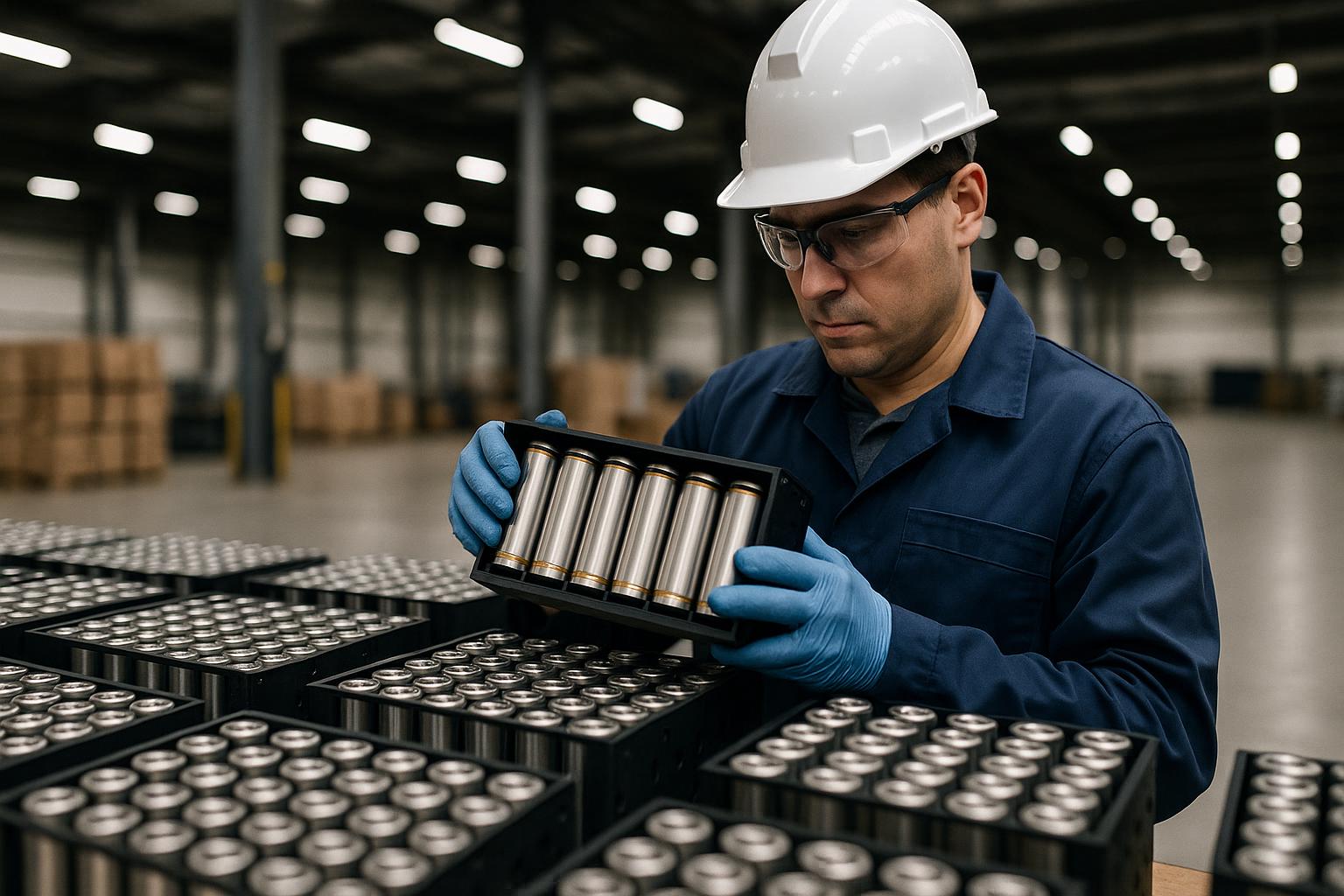
In this new scenario, having more powerful computers is not enough. It is necessary to ensure electrical stability, operational continuity, and responsiveness during network fluctuations. This is where batteries come in, seen as a key component to sustain critical services.
According to Kusumi, Panasonic sees the growth of data centers in the United States as a concrete opportunity to expand its presence in the country. The company is considering manufacturing these storage systems locally to keep up with the pace of this expansion.
Production closer to the customer and less dependence on Asia
Today, a large portion of the batteries used by Panasonic in this segment is produced in Asia. Bringing part of this manufacturing to the United States reduces dependence on imports and shortens the distance to major digital infrastructure operators.
In practice, this also helps to reduce logistical risks in a market that requires quick response. For the company, domestic manufacturing fits into a strategy of strengthening the local supply chain, especially in a sector considered sensitive by the company itself.
The executive did not detail the timeline, production capacity, or the value of the planned investments. Nevertheless, he made it clear that the location of manufacturing is part of Panasonic’s plan to expand its operations in the American market.
The new weight of data centers in Panasonic’s strategy
The Japanese manufacturer already operates with energy storage solutions for different industrial uses and is now trying to adapt this experience to the world of large data centers. The move shows that the competition for batteries is no longer restricted to electric cars.
With the expansion of artificial intelligence, data center operators have started investing not only in computational capacity but also in uninterruptible power systems and equipment capable of increasing the resilience of facilities. This opens up opportunities for suppliers who can deliver energy security at scale.
By targeting this market, Panasonic seeks to diversify its revenue streams while maintaining investments in the operation of batteries for electric vehicles. The company wants to grow without abandoning one business, but without being tied to it.
United States becomes a priority in the global battery race
Kusumi stated that the United States has become a priority market for the company, mainly due to the speed at which AI infrastructure is advancing in the country. The bet also aligns with the American industrial environment, which has been offering incentives for local production in strategic sectors.
This movement can strengthen Panasonic’s position in a market that mixes technology, energy, and digital infrastructure. At the same time, it shows how the demand for AI batteries is beginning to reshape the manufacturing logic in the sector.
With the race for data centers still expanding, the company is trying to position itself where energy consumption is growing the most. And for Panasonic, the next frontier is no longer just in electric cars but also behind the scenes of artificial intelligence. If you follow this market, it is worth keeping an eye on the company’s upcoming decisions.