






 Portuguese
  Spanish


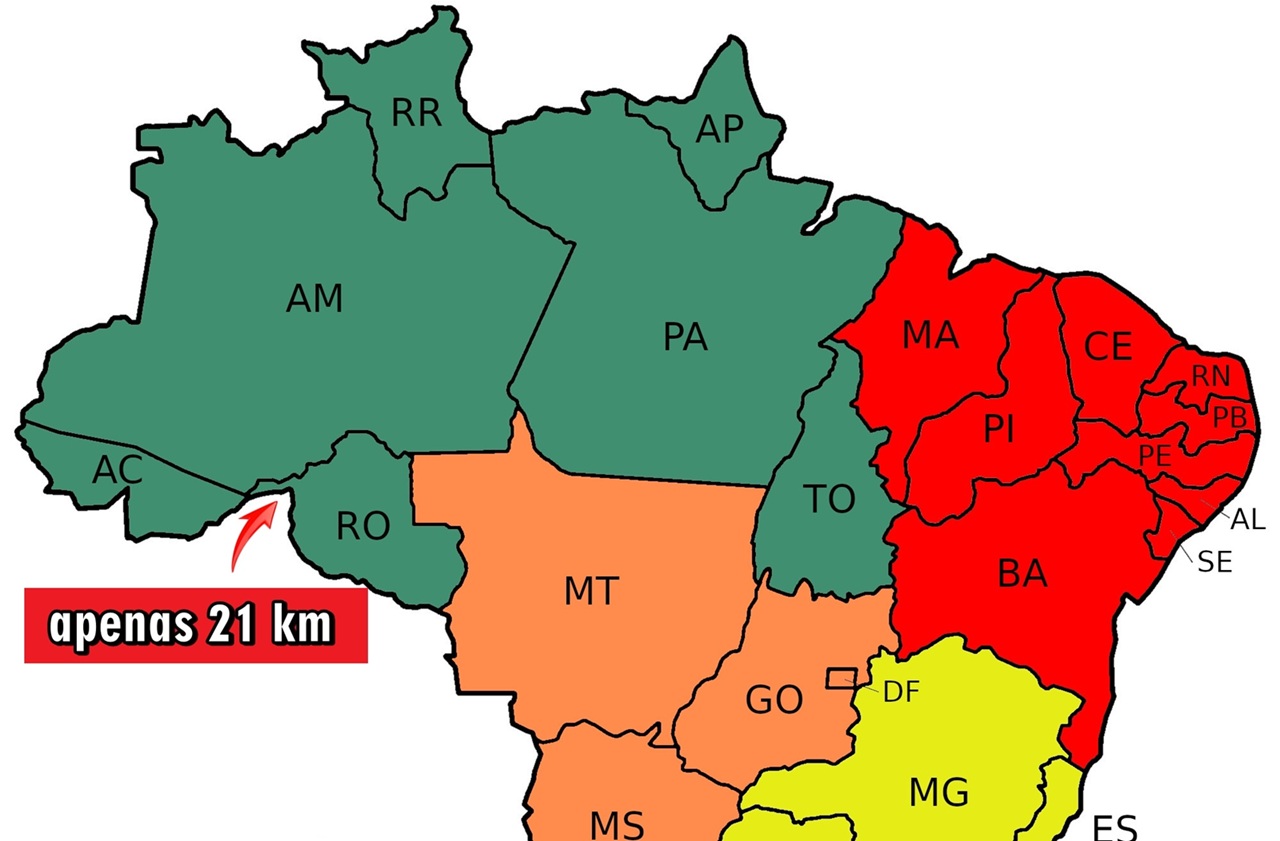


In The Immense Brazilian Territory, Where Some States Share Borders That Extend For Thousands Of Kilometers, There Are Also Almost Invisible Borders So Short That Few Imagine That Two States Can Touch Each Other For Just Two Or Three Kilometers. These Borders, Some Discreet, Discreet Reveal Geographical Curiosities That Help To Understand Better How Brazil Is Divided Internally.
Brazil is a continental country, with extensive internal borders among its 26 states and the Federal District. Some borders are so long that they cut through forests, rivers, and mountains for hundreds of kilometers.
Border: is the proper term for internal limits within a country, such as between two states or municipalities. Example: “The border between Minas Gerais and São Paulo”.
Others are so small that they hardly stand out on the map. If you think you know the national territory well, you might be surprised to discover what the smallest border between Brazilian states is.
-
Entrepreneur Who Started at 13 Delivering Flyers by Bike in São Paulo Now Runs a 4,000 m² Culinary Complex in Brazil

-
In China, Workers Use VR Goggles and Body Sensors to Train Humanoid Robots for Tasks Like Folding Clothes and Stocking Stores
-
12-Year-Old Math Prodigy from Brazil Wins Two Gold Medals and Aims for Elite IMPA Tech
-
Magnet Weighing Over 360 Kilograms, Designed for Cardiac Surgery Machine and Valued at $100,000, Retrieves Sawed-Off Shotgun with Scratched Serial Number from Sea During Magnetic Fishing


The Largest Border: Minas Gerais and Bahia
According to Nexo, the longest border between two states in Brazil is the one that separates Minas Gerais and Bahia, with approximately 1,652 kilometers in length.
This long border stands out not only for its size but also for the diversity of landscapes, including mountains, rivers, and transition areas between the Cerrado and Caatinga.
It crosses dozens of municipalities and holds historical and economic significance, especially due to the flow of people and goods between the Southeast and the Northeast.
Bahia and Espírito Santo: 71.4 km
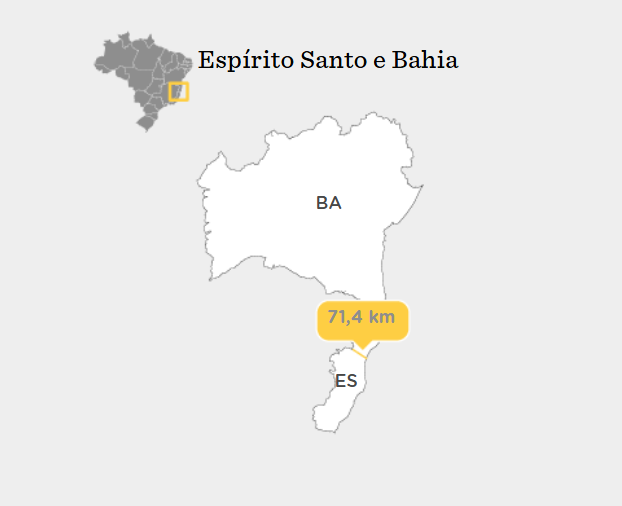
The border between Bahia and Espírito Santo is 71.4 kilometers. Although they are states with a significant presence on the coast, the land connection between them is limited to this small stretch.
The limit is marked by lower elevation areas, which facilitate road access, but it cannot be compared to the extent of other borders in the Northeast region.
Even so, this point of connection is important for commerce and tourism between the two states.
Piauí and Tocantins: 66.7 km
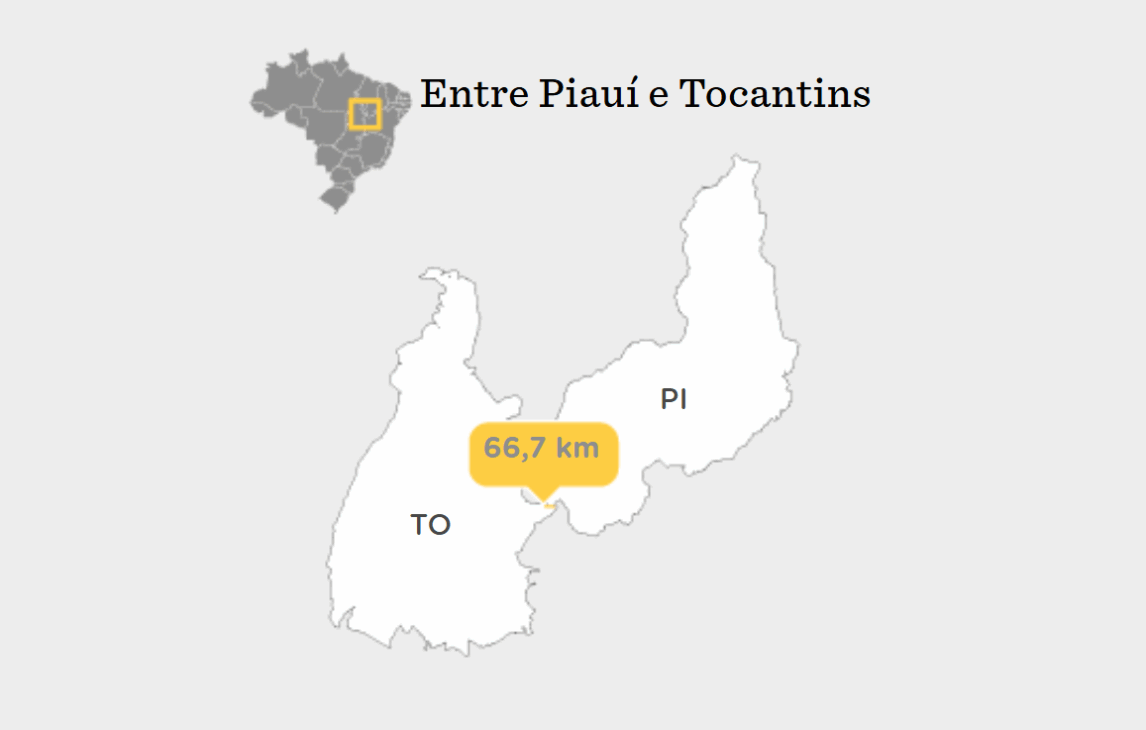
The border between Piauí and Tocantins is even smaller. There are only 66.7 kilometers separating the two states.
This stretch is located in an area further away from major urban centers, predominantly featuring vegetation from the Cerrado and little human occupation.
For this reason, the limit is often ignored by those crossing the region, but it is officially recorded.
Even with its short length, the state limit plays an important role in defining administrative jurisdictions and infrastructure responsibilities.
Alagoas and Bahia: 42.1 km
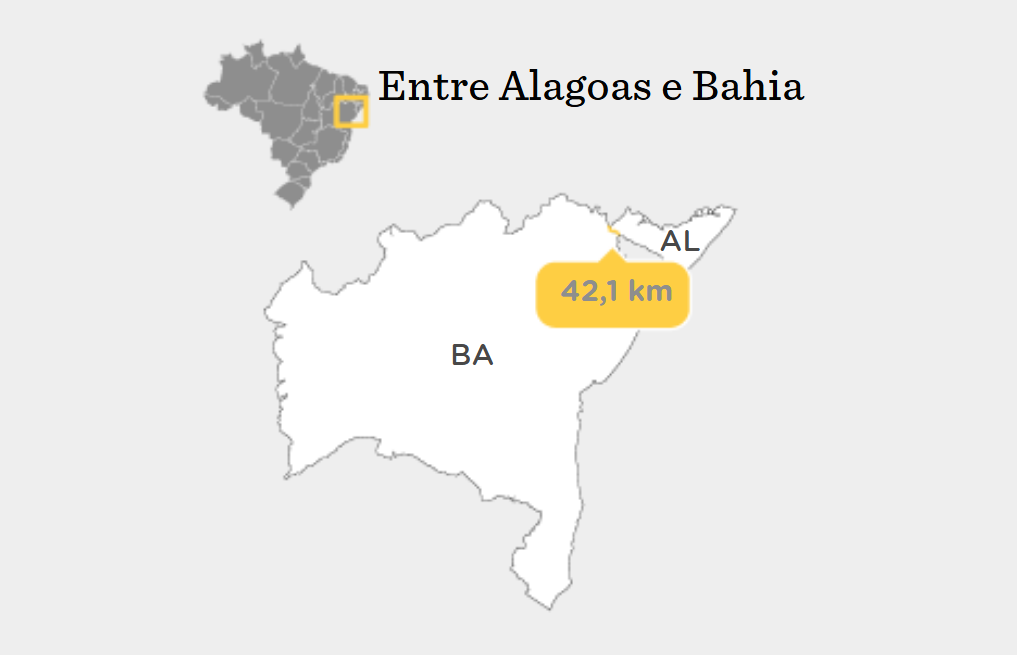
The smallest border in the Northeast is between Alagoas and Bahia. At only 42.1 kilometers, this border marks the meeting of two states with a strong historical and cultural presence.
The limit cuts through areas of Atlantic Forest and agricultural zones. Being a transition region between two populous states, this small stretch is busier than it appears.
Still, its short length draws attention when compared to other northeastern borders, which tend to be much longer.
Rondônia and Acre: 21 km
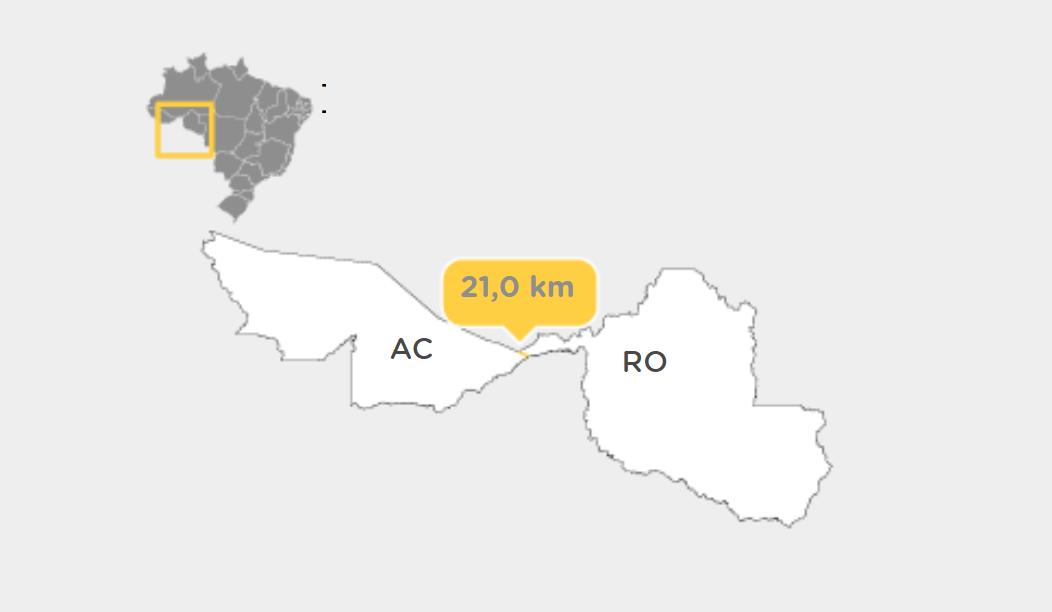
Among the states in the North region, the smallest border is between Rondônia and Acre. There are only 21 kilometers, even though both states are large in terms of territory.
The reason the limit is so small is the geographical position of the states, which only touch at an extreme point, practically a vertex.
The area is isolated, with little human presence and difficult access. Therefore, this limit is more symbolic than practical. Still, it is part of the legal division of state territories.
Federal District and Minas Gerais: 2.5 km
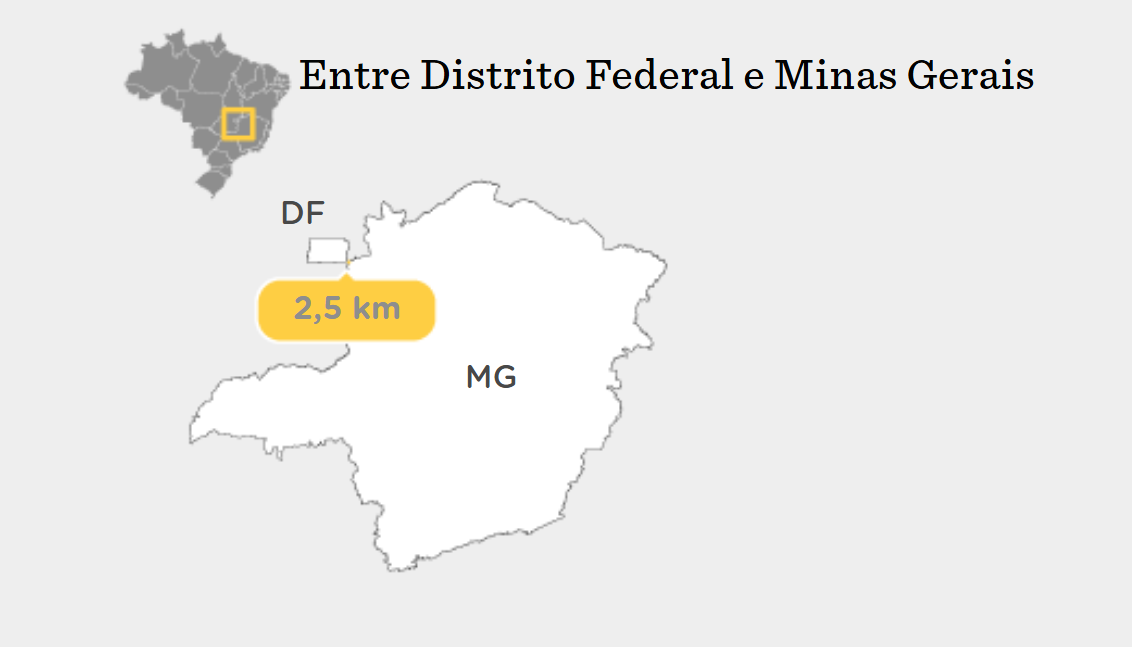
The smallest state border in Brazil is also one of the most curious. The Federal District, which houses the capital Brasília, has a border of only 2.5 kilometers with the state of Minas Gerais.
This small connection occurs at a specific point, near the region of Brazlândia.
The rest of the Federal District borders Goiás. This stretch of only 2.5 kilometers is considered the smallest among all Brazilian state borders.
This fact draws attention because the Federal District is a special federative unit, and its geographical separation is a direct result of the planned creation of Brasília.
Border Sizes Surprise
The smallest borders in Brazil show that the size of a state does not always determine the extent of the limit with neighbors.
In many cases, the geographical shape and the historical design of the limits have created curious situations, such as a border of just a few kilometers between extensive territories.
This inequality in the extent of borders also affects issues such as policing, infrastructure, and the presence of state services. A border of thousands of kilometers requires much more monitoring and maintenance than a stretch of a few kilometers.
Even with reduced sizes, all these borders have legal and administrative value. They define where one state’s jurisdiction begins and another’s ends.
Moreover, they can have implications in cases of land disputes, application of local laws, and even taxes. Regardless of how small they are, these borders help organize the Brazilian territory and are part of the complex federative division of the country.




Não é próximo de Brazlandia DF. Minas Gerais faz divisa com o Paranoá DF.