






 Portuguese
  Spanish
 5 min of reading
  47 comments


State Is Revolutionizing Its Roads By Replacing Asphalt With Concrete, Inspired By The Highways Of The USA And Germany. With 340 Km Already Under Construction, The New Technology Promises Durability And Long-Term Savings. But Is The Country Ready To Follow Suit?
Paraná is Promoting a Revolution in Its Highways, and This Innovation Could Change the Future of Brazilian Roads.
The state has decided to replace asphalt with concrete in strategic sections, drawing inspiration from the durable highways of the United States and Germany.
The decision, which covers 340 km of highways, aims to transform the road network of Paraná with a pavement that promises to last twice as long as asphalt and reduce maintenance costs.
-
Brazilian Joins Homeownership Consortium, Faces Decade of Dual Payments Totaling $141,000, Surpassing Traditional Mortgage

-
Land Rover to Halt Production in July, Putting 371 Jobs at Risk, as Chinese Automaker Negotiates to Convert Factory to 100,000 Vehicles Annually by 2027

-
Mexican Pest Threatens U.S. Cattle Herds at Historic Lows, Potentially Boosting Brazilian Beef Exports as Burger Prices Soar

-
Brazilian Freight Bill Progresses in Congress with $5,000 Minimum Wage, 70% Advance Payment, and Fines Up to $1 Million, as Agriculture and Industry Warn of Rising Costs and Legal Uncertainty


International Inspiration and Promise of Greater Durability
Concrete, although more expensive at the time of construction, has proven to be more economical in the long run.
The rigid pavement can last up to 20 years without significant maintenance, while asphalt requires constant interventions within a decade.
Inspired by the highways of the United States and Germany, Paraná has chosen to adopt this infrastructure approach, especially to withstand the intense traffic of trucks and heavy vehicles.
According to experts, the reduction in maintenance costs and shorter construction times generate significant savings for public finances, as well as minimizing inconvenience for drivers.
Cities and Sections Benefited
The project includes the renovation of 340 km in thirteen sections in Paraná.
Among them are highly relevant sections, such as the PRC-280, which connects General Carneiro to Pato Branco, and the PR-180, between Goioerê and Quarto Centenário.
Other Important Works include the duplication of the Rodovia dos Minérios and the Contorno Oeste de Cascavel, as well as restorations on the PR-151, which links Ponta Grossa to Palmeira.
By opting for concrete, the state aims for greater durability and safety for these transportation corridors.
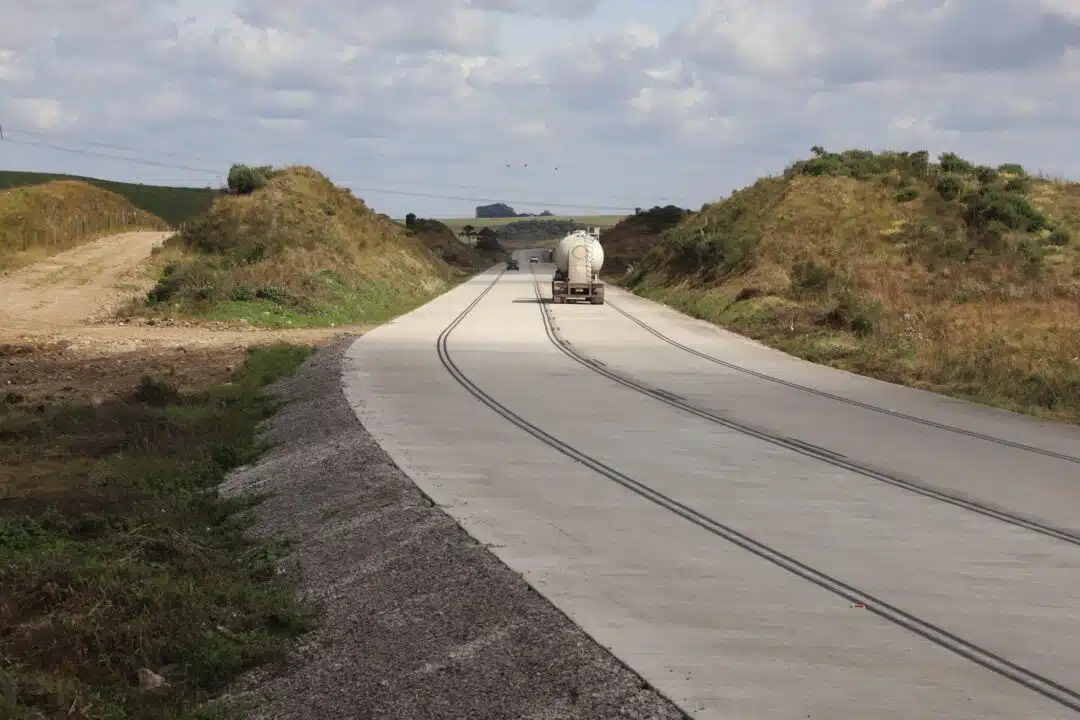
Advanced Technology for Monitoring
To ensure the quality of the pavement, Paraná utilized the Traffic Speed Deflectometer Device (TSDd), a monitoring technology that allows for assessing the strength of the concrete.
In partnership with Votorantim and engineering company Roadrunner, this device, equipped with lasers, covered 60 km of PRC-280, analyzing the structure in three hours.
The test confirmed that the applied concrete meets the requirements to support heavy traffic.
According to experts, this innovation accelerates monitoring and allows for quick corrections, if necessary.
Whitetopping: Innovative Technique for Rapid Paving
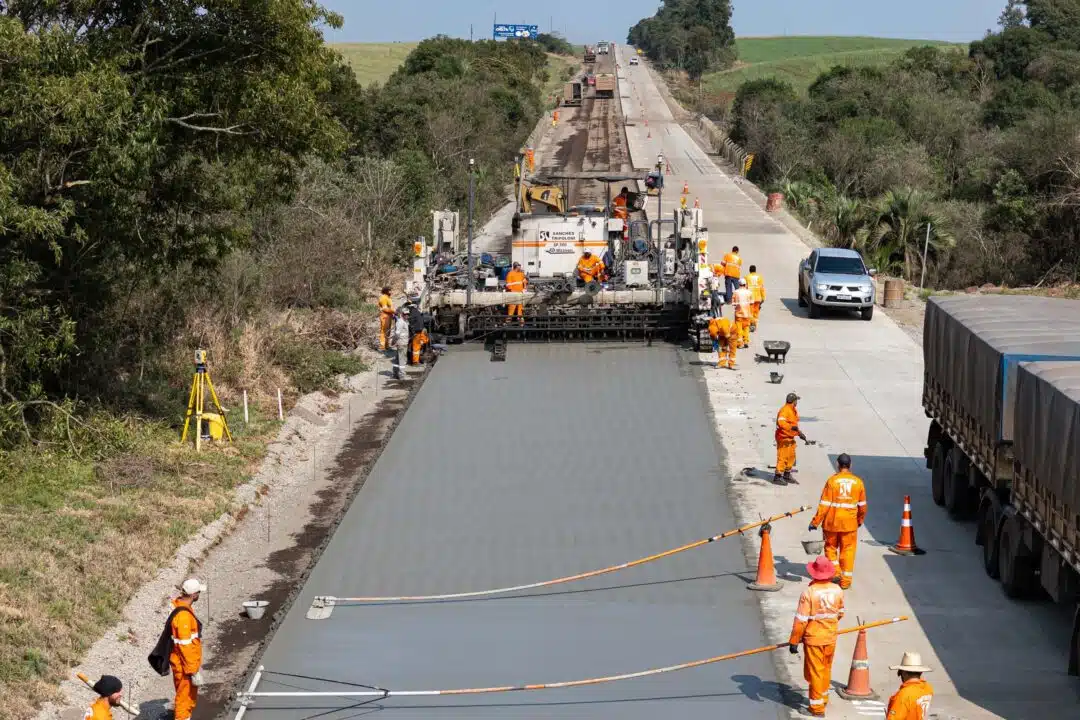
Among the paving techniques adopted is whitetopping, which involves applying a layer of concrete over the existing asphalt base.
This method accelerates the construction process and reduces costs, while ensuring greater durability of the pavement.
A successful example of whitetopping use occurred on PRC-280, between Palmas and General Carneiro, where approximately 60 km of road were renovated in just one year.
The technique also minimizes closure time, impacting drivers less.
Economic and Operational Advantages of Concrete
Concrete roads have advantages in various aspects, from durability to maintenance costs, which are considerably lower over time.
Janice Kazmierczak Soares, technical director of the Department of Roads of Paraná (DER/PR), highlighted that maintenance of the rigid pavement occurs less frequently and is simpler.
Furthermore, on hot days, concrete warms less than asphalt, providing greater comfort for drivers and reducing the risks of aquaplaning due to the textured surface that offers better grip.
Long-Term Savings and Impact on Public Finances
Although the initial cost of concrete is higher than that of asphalt, the savings generated over the years offset the investment.
Feasibility studies show that concrete is economically advantageous, especially in areas with heavy traffic.
In certain sections, such as PRC-280, concrete has proven to be more economical even during construction.
For Paraná, reduced maintenance is crucial, as it represents a significant savings in repair contracts, freeing up resources for other areas of the public budget.
History of Concrete Use in Brazil
The history of concrete roads in Brazil began over a century ago, but it was during the construction of Brasília and with the foundation of Petrobras that asphalt gained ground on national highways.
According to Dejalma Frasson Júnior, regional manager of the Brazilian Association of Portland Cement (ABCP), the preference for asphalt consolidated over the years, although concrete was traditional in many parts of the world.
Recently, with price convergence and advances in cement production technology, rigid pavement has returned as a viable option for states seeking greater durability.
Benefits for States with Agricultural and Industrial Economies
In the case of Paraná, a state with a strong agricultural and industrial presence, concrete has additional advantages.
The more durable infrastructure can withstand constant traffic of trucks and buses, essential elements for the local economy.
States with similar economic activities can benefit by adopting concrete, improving transportation logistics and reducing public spending on infrastructure.
List of Ongoing Works in Paraná
Among the major concrete works underway in Paraná are:
- Three lots of revitalization of PRC-280 (General Carneiro to Pato Branco)
- Connection between Goioerê and Quarto Centenário
- Duplication of the Contorno Oeste de Cascavel
- Duplication between Guarapuava and Turvo (three lots)
- Duplication between Matinhos and Pontal do Paraná
- Connection between Mandirituba and São José dos Pinhais
- Revitalization of PR-151, between Ponta Grossa and Palmeira
- Metropolitan Corridor of the Capital – New South Bypass of Curitiba
Will Concrete Be the Future of Brazilian Highways?
The replacement of asphalt with concrete on Paraná’s highways represents an important step towards more durable and efficient infrastructure in Brazil.
If the model adopted by Paraná proves economically viable and safe, other states may consider implementing rigid pavement in their road networks.
The Bet on Concrete Has the Potential to Reduce Public Costs and Improve Road Conditions, Directly Benefiting the Population and Local Economy.
Do You Think the Rest of Brazil Is Ready to Abandon Asphalt and Adopt Concrete on Highways?





No mínimo suspeito a Votoram participar do projeto. Convidaram a raposa para entrar no galinheiro kkkk
Se a corrupção entrar no negócio vai ser pior que o asfalto, tudo é bom em qualquer lugar do mundo, basta que haja honestidade e respeito .
Isso já deveria estar acontecendo há muito tempo
Infelizmente o desinteresse e a falta de compromisso da mão de obra que faz de qualquer jeito vai acabar virando nada vai ficar do mesmo jeito sinceramente gostaria e espero estar totalmente errado já tá na hora do Brasil começar a evoluir pegar exemplos de outros países que fizeram e deu certo e fazer aqui não só nesta questão do asfalto mas em tudo que dá certo lá pode ser aplicado aqui também.