






 Portuguese
  Spanish
  3 min of reading
  0 comments


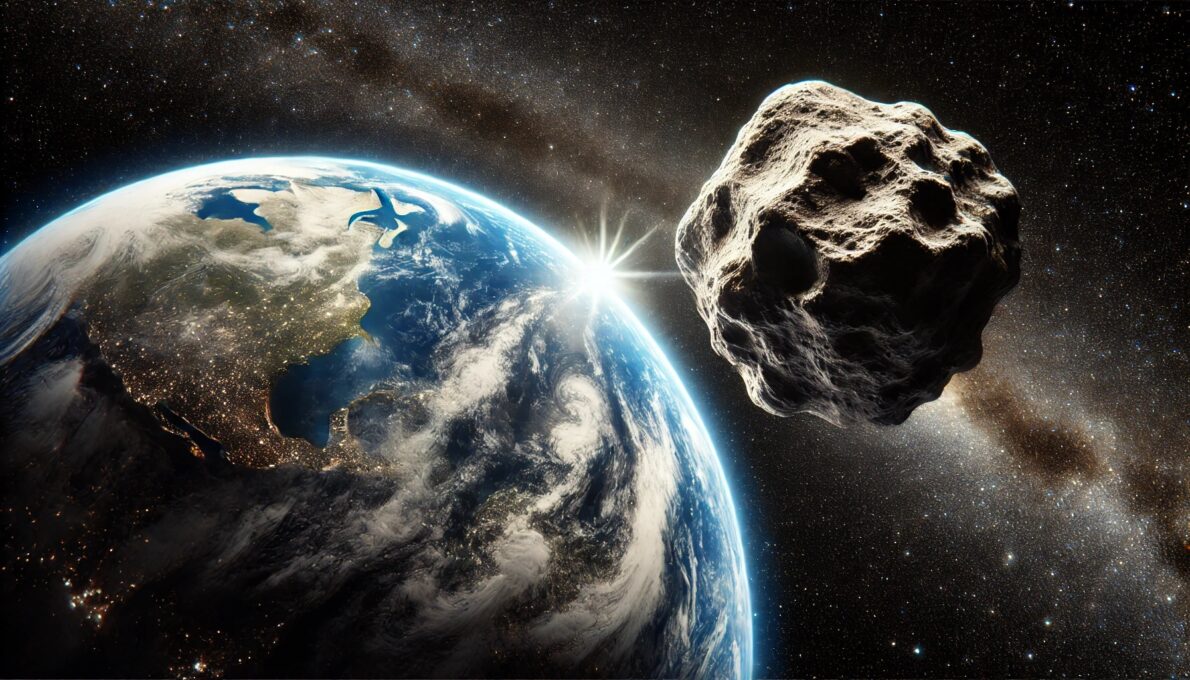
NASA Announces That Asteroid Bennu Is On A Collision Course With Earth. With A Force Equivalent To 22 Atomic Bombs, Bennu Represents A Significant Threat. Find Out When It Is Expected To Hit Our Planet.
Researchers have determined the exact date when asteroid Bennu, one of the most monitored celestial objects by NASA, could collide with Earth. With a devastating power equivalent to 22 atomic bombs, Bennu, the asteroid set to collide with Earth is approaching our planet every six years, causing growing concern in the scientific community. According to the latest calculations, the date of highest risk for this catastrophic collision is September 24, 2182. As the world watches closely, scientists continue to study possible trajectories and measures that can be taken to avert this impending threat. Learn more about the efforts to divert Bennu and what this collision would mean for Earth’s future.
NASA Plans To Divert Asteroid That Is Set To Collide With Earth


Although the potential date for the asteroid’s arrival is far off, NASA is currently engaged in intense efforts to divert asteroid Bennu from its path and is entering the final phase of this mission.
Seven years ago, the American space agency launched a probe towards the asteroid, which has a force of 22 atomic bombs, with the goal of collecting samples, hoping that the information gathered could help prevent a possible catastrophic encounter.
-
Helicopter Drops 180 Tons of Sand and Gravel on Swedish River to Revive Ecosystem Damaged by Decades of Exploitation

-
Brazilian Company Launches Retro Smartphone with 48 MP Camera, T9 Keyboard, and Privacy Features for Social Media-Free Use

-
Self-Taught Chinese Farmer Builds 5-Ton Submarine from Scrap, Launches It in Anhui River
-
Invisible Induction Technology Enables Wireless Power for Blenders, Coffee Makers, and Air Fryers, Reducing Countertop Cables





However, asteroids have hit Earth multiple times over the years. An initial analysis of a sample collected from asteroid Bennu suggests that the space rock had an unexpectedly rich history of water and may have even broken off from an ancient oceanic world.
The OSIRIS-REx mission from NASA collected a pristine sample of 121.6 grams from the near-Earth asteroid in 2020 and returned it to Earth last September. Since then, scientists have been analyzing the asteroid’s rocks and dust to see what secrets they may hold about the asteroid’s composition and whether it could have provided the elements for life on Earth.
Asteroid That Is Set To Collide With Earth May Have Come From Another Planet
An initial review of part of the sample, shared in October, suggested that the asteroid contained a large amount of carbon. During a new analysis of the sample, the team found that the dust from the asteroid, which has a power of 22 atomic bombs, is rich in carbon, nitrogen , and organic compounds, all of which helped form the Solar System. These ingredients are also essential for life as we know it and may help scientists better understand how Earth-like planets evolve.
According to Jason Dworkin, co-author of the study and a scientist for the OSIRIS-REx project at NASA’s Goddard Space Flight Center in Grimbold, Maryland, in a statement, the probe provided exactly what was expected, a large primitive asteroid sample rich in nitrogen and carbon from a previously wet world.
What Was Found On The Asteroid That Is Set To Collide With Earth?
The biggest surprise was finding sodium-magnesium phosphate within the sample, which remote sensing initially did not detect when OSIRIS-REx, or the Origins, Spectral Interpretation, Resource Identification, and Security – Regolith Explorer mission, was orbiting the asteroid with a power of 22 atomic bombs. Sodium-magnesium phosphate is a compound that can dissolve in water and serves as a component of the biochemistry of life.
It is possible that the asteroid set to collide with Earth may have broken off from a small primitive ocean world that no longer exists in our solar system, researchers said.
The asteroid sample mainly consists of clay minerals, including serpentine, which makes the sample remarkably similar to rocks found in mid-ocean ridges on Earth. These ridges are where mantle material, the layer beneath Earth’s surface crust, meets water.





Be the first to react!