Portuguese
  Spanish


Prototype tested in Sapucaia do Sul used construction and demolition waste to manufacture recycled blocks, with reported strength of 7.5 MPa, estimated reduction of 3,996 kg of CO2, and proposal to apply technology in popular housing, according to a report by Massa Cinzenta originally published on 08/24/2011.
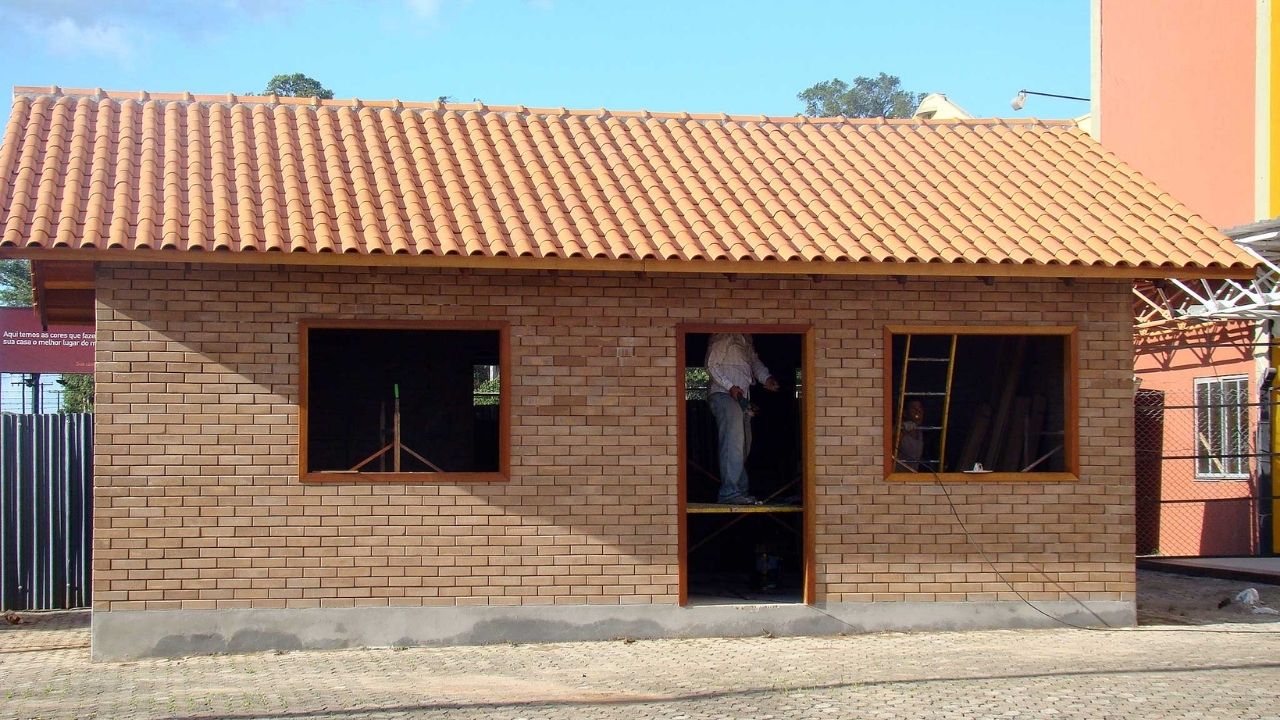
The house made with debris in Rio Grande do Sul showed, back in 2011, how construction and demolition waste could stop occupying landfills and return to the sector as raw material for popular housing. The prototype was developed in Sapucaia do Sul, in the metropolitan region of Porto Alegre, with 52 m², two bedrooms, living room, kitchen, and bathroom.
According to a report published by Massa Cinzenta, from Portal Itambé, on August 24, 2011, the technology used 32.8 tons of Construction and Demolition Waste, the so-called RCDs, to produce 8,640 blocks. The estimated cost of the housing was about R$ 45,000, with the possibility, at the time, of seeking inclusion in housing programs.
Debris became raw material for housing
The project started from a simple, yet still current question for the construction industry: what to do with the volume of waste generated by construction, renovations, and demolitions? According to data cited in the report, a city the size of Porto Alegre produced 242 tons of RCD per hour.
-
Americans Build Entire Homes in a Day Using Compact Sand Foundations and Pre-Made Wooden Trusses, Reducing Construction Costs

-
China’s Largest Floating LNG Plant, NGUYA, Sets Sail for Congo: 2.4 Million Tons Annually for Italy’s Eni

-
Innovative Project Demonstrates How to Build a Modular, Eco-Friendly Cabin Using Recycled Timber Logs
-
Transform Your Bathroom with Paint, Mirrors, LED Lighting, and Accessories for a Quick, Cost-Effective Makeover


The house made with debris attempted to address this problem through the logic of recycling. Instead of treating construction waste merely as disposal, the system proposed crushing, separating, and transforming the material into aggregates capable of becoming blocks for building popular housing.
Prototype was born in Sapucaia do Sul
The initiative was tested in Sapucaia do Sul, a municipality in the metropolitan region of Porto Alegre. The presented model was 52 m², a size compatible with a compact popular residence, consisting of two bedrooms, a kitchen, a living room, and a bathroom.
The focus of the proposal was not a luxury experimental house, but a lower-cost alternative for low-income housing. The most significant data is in the scale of reuse: 32.8 tons of waste converted into 8,640 blocks.
Estimated cost was R$ 45 thousand
The report stated that the residence cost about R$ 45 thousand. This value was linked to the model presented in 2011, with the technology of recycling debris and manufacturing blocks from processed waste.
As this is data from 2011, the value should not be treated as the current construction price. The number serves to understand the original proposal of the prototype and the objective of reducing costs in popular housing projects.
Machine separated the waste
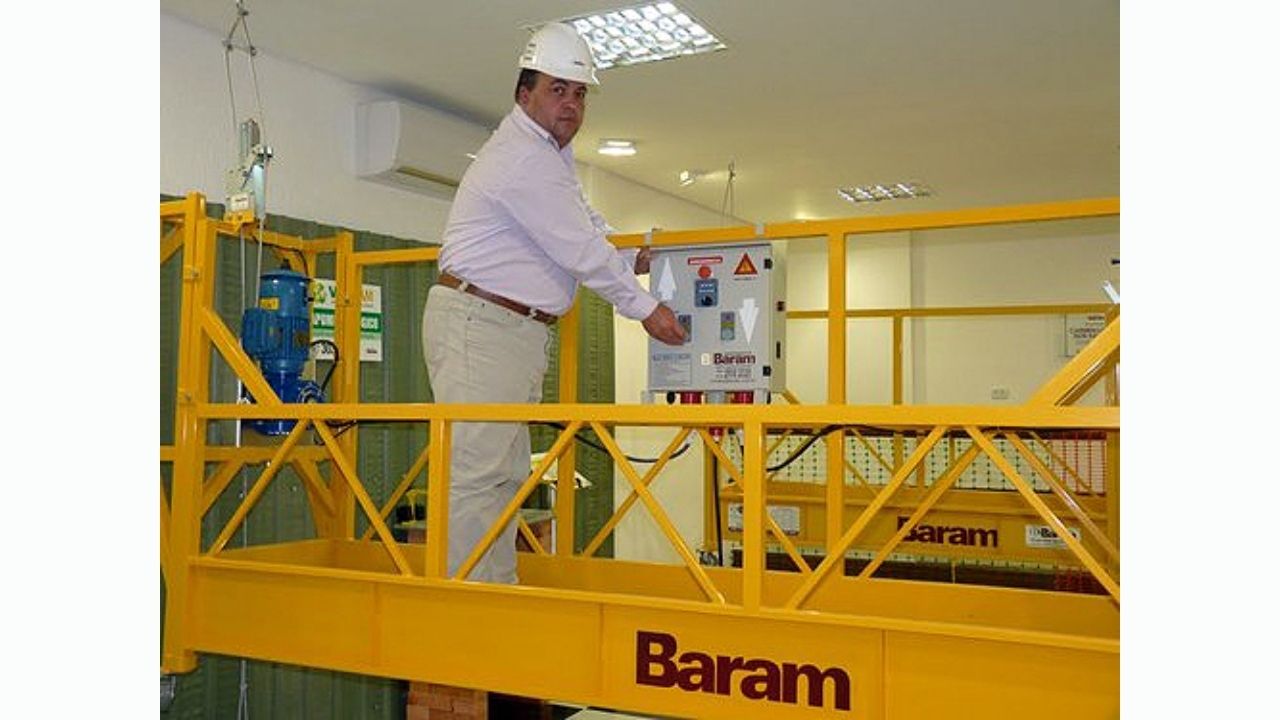
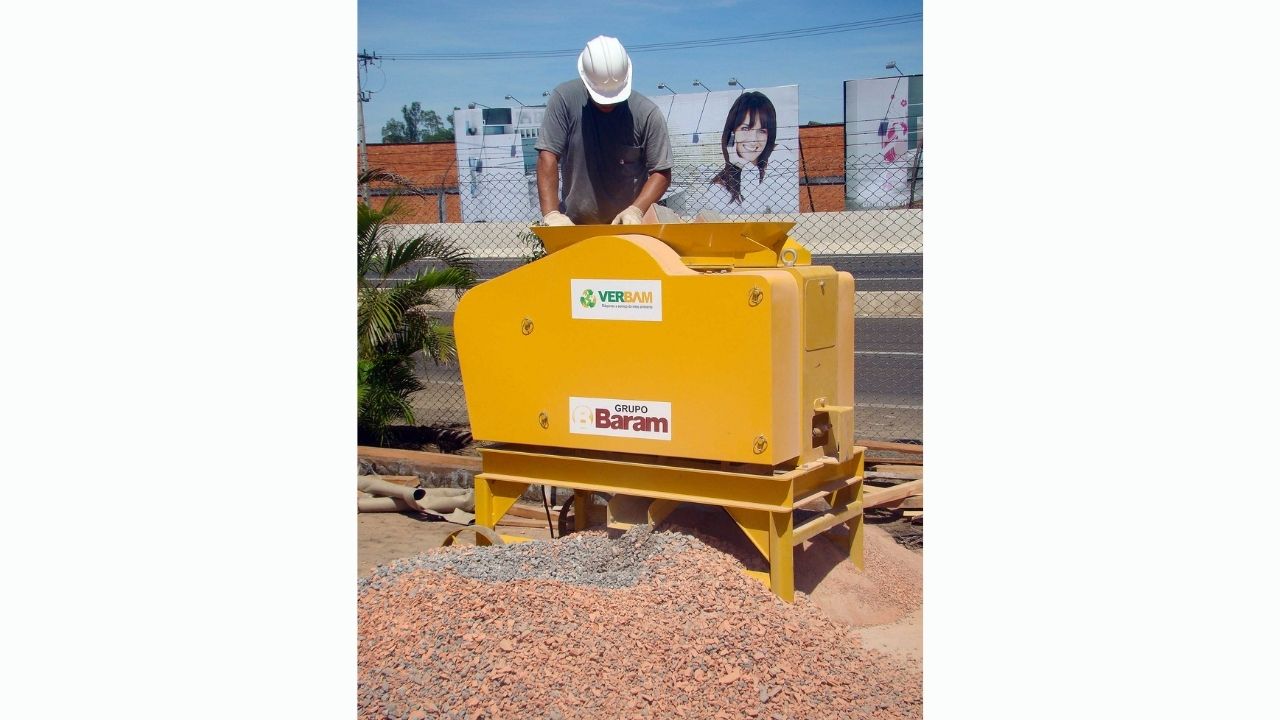
Businessman Josely Rosa, CEO of the Baram group, explained to the report that the system depended on a kit of recycling machines. These devices separated the waste and allowed the transformation of construction leftovers into aggregate for brick manufacturing.
According to him, materials such as mortar, sand, ceramics, concrete, wood, metals, papers, plastics, stones, bricks, and paints could undergo the process. Coarser fragments could also be used as material for the residence’s subfloor.
Recycled block had reported strength of 7.5 MPa
One of the technical arguments presented was the strength of the brick made exclusively with recycled aggregates. The report stated that the block reached 7.5 MPa, a measure used to indicate mechanical strength.
The text also compared this performance to traditional ceramic bricks, stating that the recycled material was three times more resistant. The information reinforced the proposal to transform construction waste into a useful structural component, not just low-value material.
Recycling also reduced environmental impact
Besides the cost and resistance, the project highlighted the environmental impact. The number of blocks needed to build the house would prevent, according to data cited from the Ministry of Mines and Energy, the emission of 3,996 kg of CO2.
The report also associated this saving with the equivalent of 21 trees. The data showed that the house made with rubble was presented not only as a housing alternative but also as a strategy to reduce waste and emissions in the construction sector.
RCD was still an urban problem
The source reminded that, despite there being a resolution from the National Environment Council since 2002 on construction and demolition waste, part of the material still ended up mixed with city dumps.
This is the urban point of the agenda: rubble is not just leftover from construction. When improperly discarded, it takes up space, generates public cost, degrades areas, and wastes material that could return to the production chain.
Technology aimed at popular housing
The next step cited by Josely Rosa was to try to place the construction system of the house based on recycled rubble among the models eligible to integrate the Minha Casa, Minha Vida program, according to the context informed in 2011.
The article also mentioned bills that were being processed in the National Congress at the time and aimed to encourage the reuse of construction waste. Therefore, the proposal had the ambition to move from prototype to mass production.
Laws could encourage the use of recyclables
According to the report, one of the projects in progress required that construction companies, to participate in public works tenders, would have to use recycled waste.
The same legislative context provided advantages for private companies that invested in technological training to reduce waste or use recycled material. Among the benefits cited were special deadlines for taxes, fiscal incentives for the importation of technologies, and access to financing programs.
Specific fund was also foreseen
Another point mentioned was the creation of Construction Waste Funds in each region. These funds could be formed by donations from national and international entities, individuals, and other occasional revenues.
The purpose would be to recover areas degraded by irregular disposal and to encourage studies and research in recycling techniques. In practice, the prototype in Sapucaia do Sul appeared as a concrete example of a policy that could unite construction, recycling, and housing.
More than 90% of waste could be reused
Josely Rosa stated to the report that more than 90% of waste from construction could be reused by employing aggregates with characteristics similar to the original product.
This data was central to defending the system’s potential. If applied on a large scale, reuse could reduce pressure on landfills, decrease the extraction of new materials, and create a recycling chain focused on the construction sector.
House made with rubble was not improvised
Despite the attention-grabbing name, the house made with rubble was not described as an improvised construction. The project depended on machines, material separation, aggregate production, block manufacturing, and resistance evaluation.
This framing is important to avoid misinterpretation. The proposal was not to stack construction leftovers but to transform processed waste into building components, with a defined application within a popular housing system.
Alternative depended on scale and regulation
The prototype showed technical and environmental feasibility, but its large-scale adoption would depend on external factors. Among them were regulation, acceptance by housing programs, investment in machinery, training, and adaptation of construction companies.
It would also be necessary to organize the collection and separation of waste. Without waste management at the source, recycling loses efficiency and the process cost can increase.
Construction could reduce waste
The proposal from Sapucaia do Sul pointed to a structural problem in construction: material waste. Projects generate leftovers, demolitions discard large volumes, and many cities still face difficulties in properly disposing of rubble.
In this scenario, transforming C&D waste into recycled blocks can help close a cycle. The material leaves one construction, goes through processing, and returns as a component for another construction, reducing waste and demand for new raw materials.
Prototype serves as an example of debate
The report is from 2011, so it should not be read as current news. Nevertheless, the case remains relevant as an example of a technical solution to a recurring problem: the accumulation of urban debris and the cost of affordable housing.
The house made with debris showed that construction waste could become housing with concrete measures: 32.8 tons processed, 8,640 blocks manufactured, 52 m² built, and an estimated cost of R$ 45,000 in the context of the time.
Construction waste can become housing policy
The case of Rio Grande do Sul shows that construction debris can be treated as a resource, not just a problem. When properly processed, it can generate aggregate, block, subfloor, and solutions aimed at housing.
The discussion that remains is straightforward: if cities produce tons of construction waste every day, does it make sense to continue wasting this material while there are shortages of alternatives for affordable housing?
Do you think houses made with recycled debris should receive more public and private incentives? Leave your opinion in the comments.