Portuguese
  Spanish


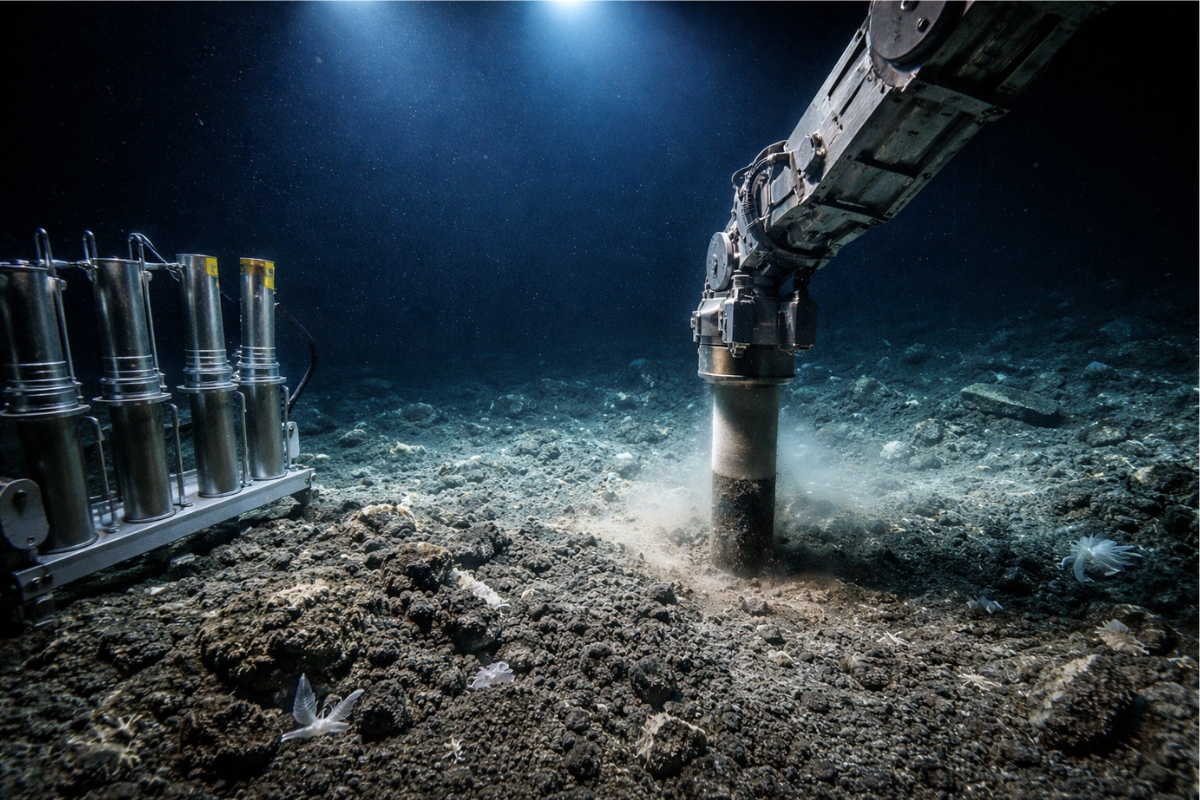

The finding reveals how microorganisms survive under extreme pressure, enhances understanding of the relationship between viruses and bacteria in the deep sea, and paves the way for new research on hadal ecosystems.
Nearly 9 thousand meters below the surface, where the pressure is brutal and light does not reach, scientists managed to extract from the sediments of the Mariana Trench a virus that has drawn attention worldwide. The finding shed new light on microscopic life that endures at the most extreme point of the ocean.
The organism was named vB_HmeY_H4907 and was associated with the bacterium Halomonas meridiana H4907. In practice, it is a bacteriophage, a virus that lives and replicates in bacteria, which already places the discovery in an important group for understanding how deep ecosystems function and reorganize.
What made this case stand out was not just the unusual name or the extreme environment. The central point was the isolation of the virus in surface sediment taken at 8,900 meters, a rare level even for cutting-edge ocean research. At the time of the scientific disclosure, the achievement was treated as the deepest record of a phage isolated in the ocean.
-
Scientists Convert Food Waste into Aviation Fuel, Successfully Test 50% Blend with Conventional Kerosene to Cut Emissions and Promote Sustainable Flights

-
OnePlus N6 Smartphone to Launch in India with 8,000mAh Battery and 45W SuperVOOC Charging, Lasting Up to Three Days
-
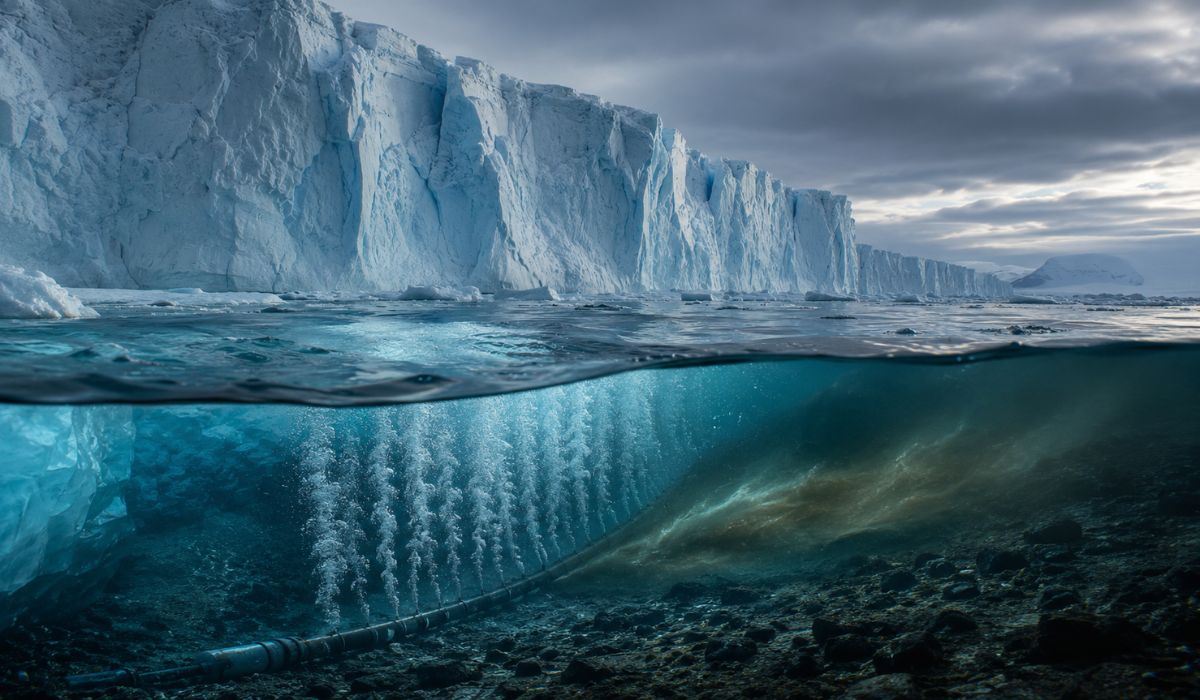
Scientists Plan to Release Air Bubbles Underwater to Protect Antarctica’s “Doomsday Glacier” from Melting

-
Chinese R6000 Drone Combines Airplane and Helicopter Features, Carries Up to 12 People for Multiple Missions
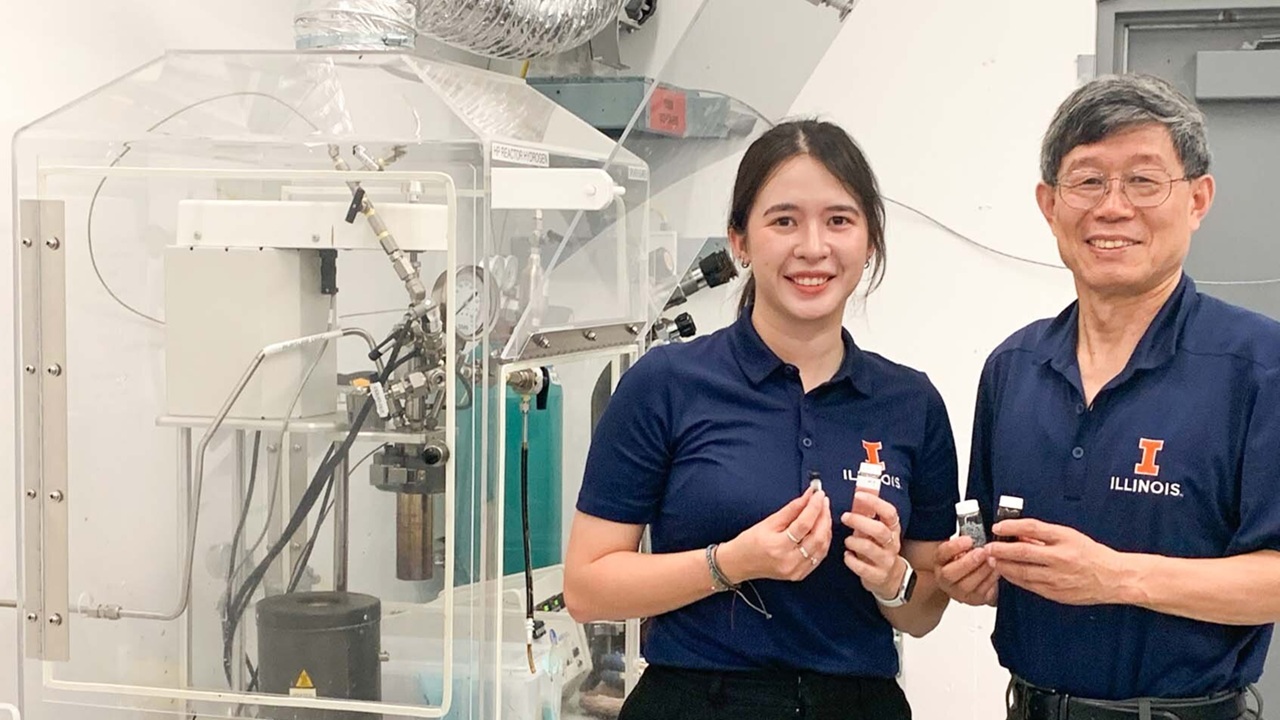


The collection at the bottom of the Pacific opened a new window on life in the abyss
The Mariana Trench is known for concentrating some of the harshest conditions on the planet. Low temperatures, immense pressure, and limited nutrient availability make this environment a natural laboratory for studying extreme adaptation. Finding a virus there, and being able to characterize it, expands what is known about the limits of marine life.
This point is crucial because viruses are not just passengers in these environments. They participate in the balance between microorganisms, influence carbon, nitrogen, and sulfur cycles, and can alter the metabolism of the bacteria that dominate the deepest sediments. In hadal regions, where almost everything is still poorly understood, each real isolation is worth much more than a supposition.

What vB_HmeY_H4907 revealed about the seafloor
According to Microbiology Spectrum, a scientific journal of microbiology from the American Society for Microbiology, vB_HmeY_H4907 was isolated from surface sediment of the Mariana Trench at 8,900 meters and infects the bacterium Halomonas meridiana H4907.
The researchers also observed that this virus has 40,452 base pairs of DNA and 55 identified genetic regions. The analysis also indicated that it separates from other isolated phages and may represent a new viral family, called Suviridae, which adds even greater significance to the finding within marine microbiology.
Another relevant detail is the behavior of this virus within the bacterium. It has been described as a temperate virus, capable of remaining associated with the host without destroying the cell right away. This type of relationship helps explain how microscopic life can persist in areas of scarce energy and under extreme physical conditions.
The record drew attention, but the scientific value goes beyond the number
The mark of 8,900 meters helped turn the case into a headline, but the real scientific gain lies elsewhere. Previous research had already detected signs of viral communities in even deeper areas of the region, including above 10,900 meters. The difference here was the effective isolation of a virus and its detailed characterization in the laboratory.
This difference is important because detecting genetic material in environmental samples is not the same as studying an isolated virus, associated with a known host and with a described genome. When this step is achieved, science can compare lineages, understand survival strategies, and more accurately estimate the role of these agents in the deep ecosystem.
The impact ranges from marine biology to understanding the limits of life
Discoveries like this help answer an age-old question in science: how far can life adapt? In the case of the Mariana Trench, the virus reinforces that the ocean floor is not an inert space. Even under extreme pressure, there are active biological relationships, with genetic exchange, microbial persistence, and signs of specialized evolution.
This also explains why the study resonated so much outside academic circles. The common imagination still sees the ocean abyss as an almost inactive void. When a virus is isolated under such severe conditions, this image loses strength and gives way to another reading: that of a living, dynamic environment that is much more complex than it seemed.
The discovery repositions research on the planet’s deepest sediments
The isolation of vB_HmeY_H4907 also serves as a starting point for new studies. From it, researchers can investigate whether there are other viral families hidden in the same sediments, how these viruses affect abyssal bacteria, and how these interactions influence the chemical balance of the ocean floor.
In parallel, the advancement shows that the deep ocean continues to provide answers and new questions at the same time. Samples from oceanic trenches have already been revealing viral diversity far above what was expected, suggesting that this microscopic universe is still far from being fully understood.
In the end, the weight of this discovery lies in what it confirms. Even in the most inaccessible points of the planet, life not only exists but also maintains sophisticated relationships between viruses and bacteria. This changes the scale of the debate on extreme adaptation and adds more depth to what is known about the Pacific.
The virus taken from the Mariana Trench is not just a laboratory curiosity. It has become a concrete signal that the abyss holds active biological processes, rare and decisive for science. When a sample of this rises to the surface, it brings not just a new microorganism. It stirs the Pacific.