Portuguese
  Spanish


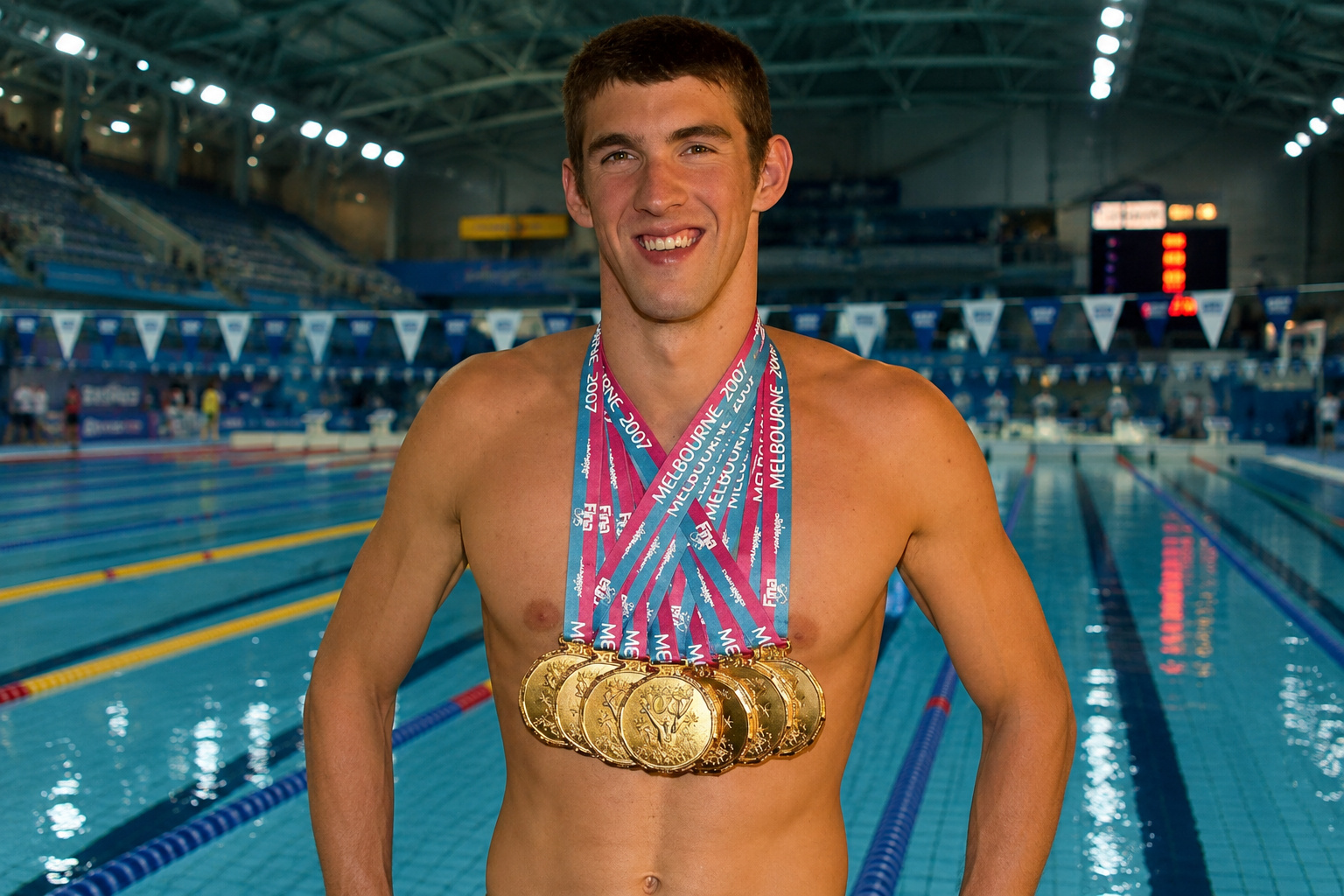

The greatest Olympic champion in history revealed that the financial reward created by his mother during his adolescence was decisive in developing discipline, responsibility with money, and a long-term vision that influenced his career both inside and outside the pools.
Michael Phelps is remembered for his Olympic medals and the records that rewrote the history of swimming. However, a revelation made by the former athlete shows that one of the greatest lessons of his career began in adolescence, long before becoming a sports legend. In an interview published on July 7, 2026, during the program Richer Lives, part of the SoFi series presented by Vivian Tu, known on social media as Your Rich BFF, Phelps shared that his mother created a reward system that helped him develop a healthy relationship with money, performance, and discipline.
The former swimmer, now 41 years old, explained that the agreement was simple: every time he broke a world record, he would be allowed to spend US$ 20,000 — in some cases, according to him, the amount reached US$ 25,000. The rule, however, had a single requirement: the reward only existed if the goal was achieved.
A simple agreement that ended up yielding dozens of rewards
Phelps turned professional at 16 years old, but had already secured a spot for his first Olympics at 15, at the Sydney 2000 Games. It was precisely at this stage that sponsorship contracts began to generate significant income.
-
A couple was renovating an 18th-century house in Rio when the floor revealed a historic cemetery hidden beneath the property; the 1996 discovery became the Instituto dos Pretos Novos in 2005 and today preserves one of the deepest memories of the African diaspora in Brazil.

-
At 17, he transported dirt in a donkey-drawn cart, bought two carts to enter the construction business, and became the founder of the construction company that opened roads to Brasília, participated in Itaipu, and left a billion-dollar fortune.
-
A 19-year-old postponed medical school to care for his mother in Roraima, discovered coffee planted by his grandmother in the Raposa Serra do Sol Indigenous Land, transformed 240 seedlings into nearly 9,000 agroforestry plants, and brought the first indigenous Arabica coffee from the state to national gold, proving that ancestry, reforestation, and management can become a sustainable business in the Amazon.
-
11-year-old girl who ran more than 6 km barefoot and holding flip-flops in her hands went viral in Piauí, received sneakers and a uniform from the city hall, and now dreams of turning running and soccer into a path to reach the Olympics.


Instead of allowing her son to freely use the money received, his mother decided to create a goal-based model.
“When I turned professional, my mother made an agreement with me. She said: ‘Whenever you break a world record, you can spend US$ 20,000 or US$ 25,000,'” Phelps recalled during the interview.
According to the former athlete, neither of them imagined that he would break so many records throughout his career.
The game ended up becoming expensive.
Michael Phelps ended his competitive journey with 39 world records, becoming one of the greatest record holders in the history of swimming.
In the early years, he used the money to buy video games and consoles. Later, at 16 years old, he made his first major purchase: a Cadillac Escalade, one of the most desired luxury SUVs of the time.
Financial discipline came before fortune
Despite starting to receive hundreds of thousands of dollars at a very young age, Phelps claims he never saw money as his main goal.
According to him, competing and winning were always the biggest motivations.
At the same time, the strategy created by his mother made him understand from an early age that financial gains should be a consequence of performance and managed responsibly.
“Hundreds of thousands of dollars were literally coming into my account. I knew I couldn’t just go out and spend it all. That wouldn’t be smart,” he stated.
This mindset ended up completely changing his way of viewing his career.
Money stopped representing just immediate consumption and started to be seen as a tool to build wealth and open new opportunities.
During the conversation, Phelps mentioned that he started thinking about investments, equity participation in companies, and financial planning long before ending his career in the pools.


The same financial advisor has been with Phelps since he was 15
Another detail revealed by the multi-champion draws attention.
Phelps stated that he has worked with the same financial consultant since he was 15 years old.
According to him, this guidance was essential for learning concepts such as budgeting, wealth planning, and financial sustainability.
The advisor used to summarize his philosophy in a curious expression: “B+ living”, which can be interpreted as living comfortably and sustainably, without entering a constant race for increasingly expensive standards.
This vision helped Phelps avoid impulsive decisions, even during the peak of his sports career.
Contracts had to be changed because he broke too many records
Success in the pools also ended up creating an unexpected situation.
Several advertising contracts signed by Phelps included financial bonuses for records and achievements.
The problem was that he started reaching these goals much more frequently than companies anticipated.
“When I started breaking too many American records, they said, ‘We need to change this contract,'” he recounted, in a good-humored tone.
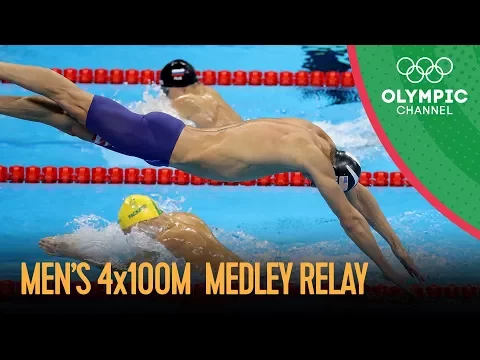
One of the most memorable moments happened after the Beijing 2008 Olympics, when he won eight gold medals in a single edition of the Olympics.
As a reward, Speedo paid a bonus of US$ 1 million.
Instead of using the amount for personal purchases, Phelps decided to invest all the money in creating the Michael Phelps Foundation, an institution dedicated to water safety, sports encouragement, and educational programs.
The greatest victory happened outside the pools
Today, besides being the greatest Olympic champion in history, with 23 gold medals, Michael Phelps acts as an investor, entrepreneur, and mental health advocate.
According to him, the principles he used to win titles continue to guide his professional life.
Preparation, discipline, consistency, and planning remain the pillars of all decisions.
For Phelps, the difference between good and extraordinary athletes was never just in talent.
It lies in the willingness to do daily what many do not want to do.
This philosophy began with a seemingly simple agreement between mother and son, but ended up becoming one of the foundations that supported one of the most successful careers in the history of world sports.
And you, do you believe that rewards for goals can help children and teenagers develop discipline and financial responsibility, or do you prefer another education model? Share your opinion in the comments.