






 Portuguese
  Spanish
  3 min of reading


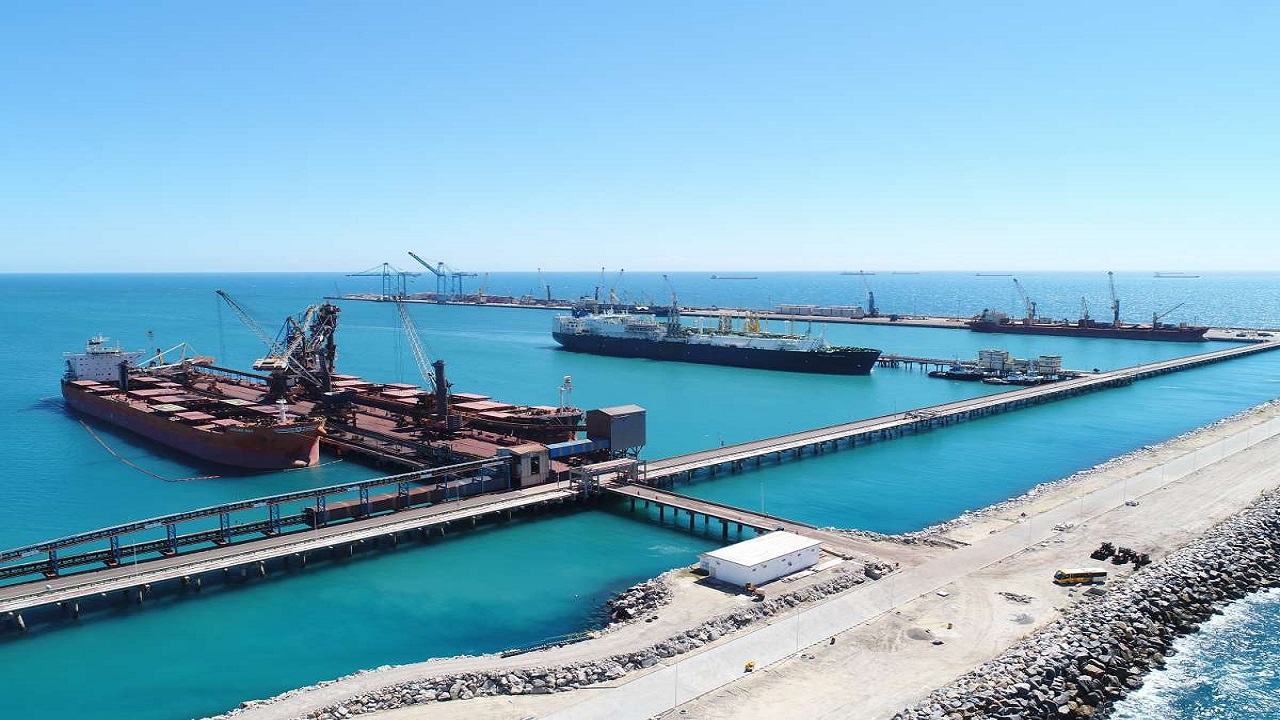
Fortescue Announces New Investments for the Construction of a Desalination Plant at the Future Hub of the Pecém Industrial and Port Complex. The Project Will Provide Water for Green Hydrogen Production.
The Australian giant Fortescue is applying new investments in the development of engineering projects for the installation of its industrial unit for producing Green Hydrogen at the future hub that will be built in the Pecém Industrial and Port Complex. The company has also decided to install a desalination plant on site.
Fortescue to Install a 1.2 GW Pilot Project
This information came from a reliable source in the State Government, which indicated that the investment could exceed US$ 100 million. According to the same source, the projects will be completed in 2024, potentially finishing as early as 2027.
The informant adds that Fortescue will install a 1.2 GW electrolyzer pilot project, equivalent to a production of 200 thousand tons of green hydrogen per year. According to reports, the Australian company has also decided to build a seawater desalination plant, also in the Pecém Industrial and Port Complex, with the capacity to generate up to 0.5 cubic meters per second, half of what the Marquise Group’s plant will produce at Praia do Futuro in Fortaleza.
-
Near Amsterdam, residents buy land and discover they must also build streets, manage drainage, handle waste, and grow food on half their plot.

-
Brazil’s WEG to Open New Factory in China by 2027, Expanding Production of Large Rotating Electric Machines and Low to Medium Voltage Motors in Rugao

-
Chinese Shipyard Secures $1 Billion in Orders for Low-Carbon Container Ships Amid Global Fleet Renewal Efforts
-
Brazilian Planned Community Provides Housing for Over 420 Formerly Homeless, Aims to Reach 1,900 Residents


An energy specialist engineer stated that to generate green hydrogen at the Hub, only 0.3 cubic meters per second of water would be needed. In the installation of the desalination plant, the Australians will invest around R$ 1.3 billion, practically one-third of what the Marquise Group will invest in its Praia do Futuro plant, which has an estimated investment of R$ 4 billion.
Ceará Government Meets with Fortescue
On the morning of November 9, Governor Izolda Cela met with the CEO of Fortescue Future Industries (FFI), Andrew Forrest, to sign an amendment to the Memorandum of Understanding MoU with the Australian multinational. The document reaffirms the company’s intention to install its green hydrogen plant at the Pecém Industrial and Port Complex.
In June, the Ceará government had already signed a pre-contract with Fortescue. The expectation is to generate 2,500 jobs during the construction phase and 800 during the operation of the unit, which will involve an investment of 6 billion dollars.
According to Governor Izolda Cela, this is a vigorous project, a very robust plant from a company that has enormous potential and is engaged in this energy transition. This seeks to consolidate a systemic action that the state has been undertaking to position itself in the movement to be the home of Green Hydrogen. The state has this potential, both from nature and from its infrastructure.
Water Used in Green Hydrogen Production Will Come from the Desalination Plant
Since the launch of the H2V Hub at the Pecém Industrial and Port Complex in February of last year, 24 memorandums of understanding have been signed with companies planning to generate the fuel and its derivatives at the Pecém Complex.
The Fortescue project is one of the most advanced and will be fed by Power Purchase Agreements (PPAs) for the production of green hydrogen and other green products. The water used in the electrolysis process will come from a new desalination plant or water reuse.
Currently, the project is in the feasibility phase, where engineering studies, environmental and social impact assessments are being conducted to find viable new opportunities for green hydrogen production in the region, protecting biodiversity and ensuring opportunities for local communities.





Be the first to react!