






 Portuguese
  Spanish


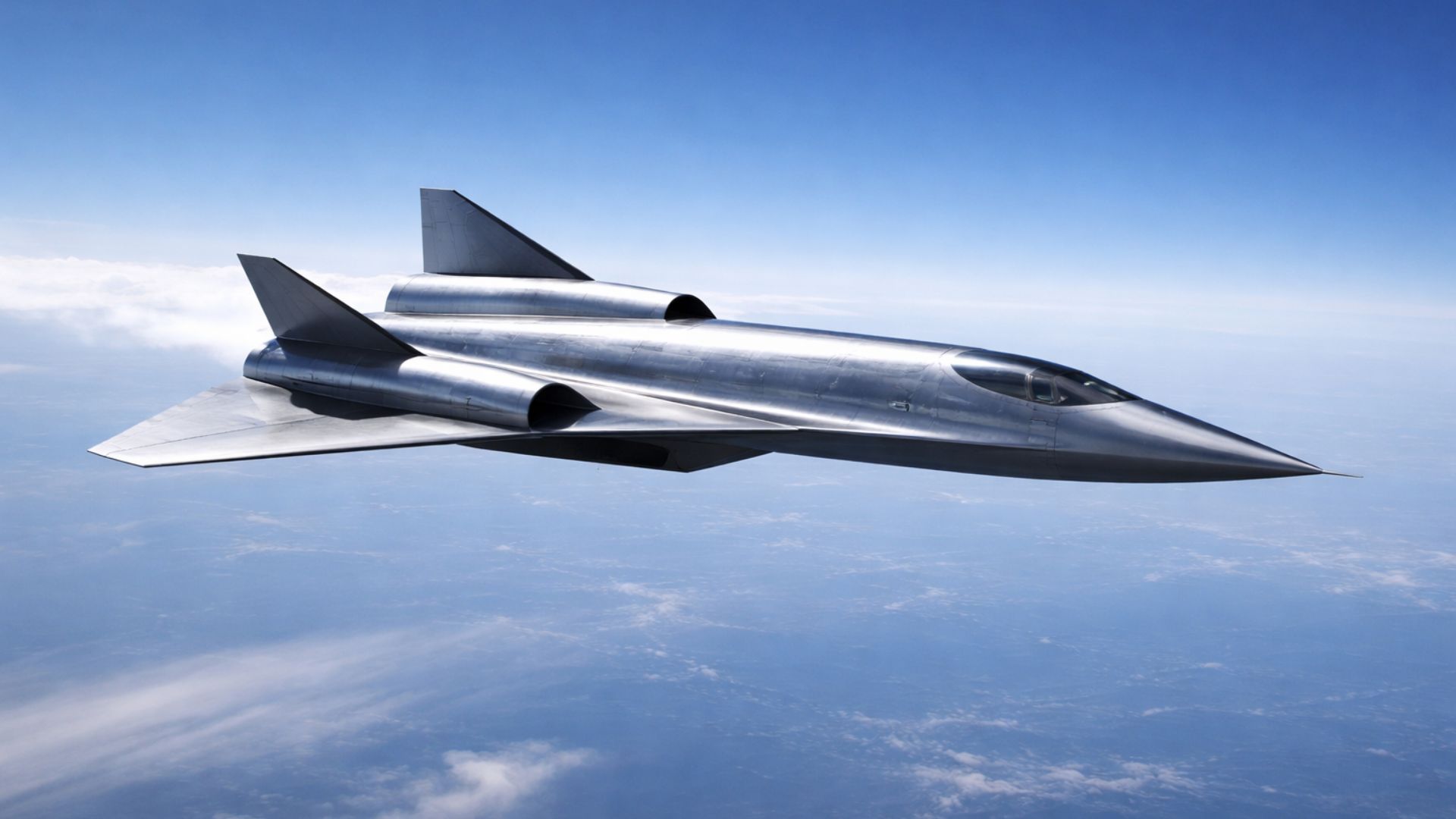
Hypersonic Technology Advances Amid Global Strategic Disputes and Pressures Traditional Defense Systems with Promise of Speed Above 6,000 km/h, Innovative Engines, and New Military Response Standards.
A military aircraft capable of flying at Mach 5, above 6,000 km/h, has firmly entered the radar of the powers because it compresses decision timelines and reduces the time available for defensive response, changing calculations of deterrence and operational readiness.
In parallel, proposals like the SR-72, associated with Lockheed Martin, continue to be publicly treated as a concept and do not have confirmed flights in widely verifiable official sources, which keeps the subject surrounded by secrecy and controlled speculation.
What Does It Mean to Fly at Mach 5 in Practice
Mach is the ratio between the speed of a vehicle and the local speed of sound, which varies with atmospheric conditions, but is typically presented, at sea level and under standard conditions, at around 1,235 km/h for Mach 1.
-
In the World’s Most Densely Populated Desert, Families Dig Funnel-Shaped Underground Cisterns to Capture Rare Rainfall and Store Drinking Water for Up to Eight Months

-
Smart Glass Revolutionizes Privacy: Touch-Activated Opacity Transforms Windows into Connected Home Features with App and Voice Control

-
Young Innovators from Brazil Turn Discarded Plastic into Eco-Friendly Bricks Using Coconut Fiber, Offering a Sustainable Alternative for Construction
-
Brazilian Scientists Among Team Proposing to Turn Ocean Depths into Giant Gravity Battery Using Cargo Ships and Subsea Cranes




When the aircraft exceeds Mach 5, it enters the hypersonic regime, in which the extreme speed changes the behavior of airflow, increases aerodynamic heating, and imposes design demands that do not appear with the same force in merely supersonic flights.
Scramjet Engine and Innovation in Propulsion
In this scenario, the scramjet emerges as a key component because it burns fuel with air flowing through the engine at supersonic speeds, using the very speed to compress the air, without relying on compressors and rotating turbines.
In practice, this does not make the challenge any smaller, since the scramjet requires a prior acceleration phase to operate, and maintaining stable combustion in supersonic flow requires fine control of mixture, temperature, and the internal geometry of the engine.
Extreme Heat and Advanced Materials

Beyond propulsion, the greatest enemy of sustained hypersonic flight is the heat generated by friction and air compression, which can reach levels capable of compromising common metal structures and require advanced cooling materials and techniques.
Added to this are the difficulties of stability and control, because small attitude variations can produce large aerodynamic effects at high speed, pressuring navigation systems and actuators to respond accurately and robustly under extreme conditions.
Strategic Impact on Air Defense
In operational terms, the central advantage of a Mach 5 platform is not just “getting there faster,” but shortening the window in which radars, command centers, and interceptors can detect, classify, decide, and engage a target before it leaves the area.
Even when a hypersonic object is identified, the combination of speed and flight profile can make interception more complex than in traditional subsonic and supersonic threats, which drives countries to revise sensors, networks, and employment doctrines.
Speed Versus Stealth in Military Missions
The comparison with stealth helps to understand the contrast: modern programs focus on reducing signatures and gaining situational awareness through integrated sensors, while hypersonic logic suggests that, even when detected, the platform may remain in a window too short to be neutralized.
This does not mean that stealth is over, but that extreme speed opens another way to achieve tactical advantage, especially in rapid reconnaissance and opportunity strike tasks, as long as the aircraft can operate safely and reliably.

Testing and Experimental Programs
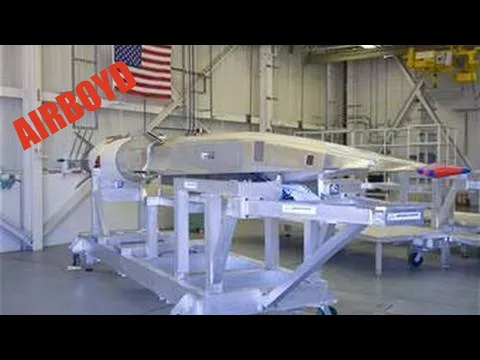
The most solid advance in public official sources appears, for now, in demonstrators and test programs, such as HAWC, developed by DARPA and the U.S. Air Force, which recorded successful flights and generated data for technological maturation.
A frequently cited historical reference is NASA’s family of scramjet tests, which describes engines with few or no moving components and relies on prior acceleration to initiate combustion, demonstrating the technical path, albeit in an experimental environment.
What Is Known About the SR-72
The SR-72 is often presented as a concept for a hypersonic reconnaissance aircraft, associated with the idea of combined propulsion, but, until the last widely traceable public information, there is no confirmation of a prototype in flight or a consolidated official timeline.
Therefore, when talking about a Mach 5 aircraft that changes the balance, the most secure factual part lies in the strategic potential of the hypersonic regime and demonstrations of related technologies, rather than in a specific model already available for routine use.
Technology Race and Global Military Balance
Still, the race is real because the dominance of hypersonics influences defense planning, investments in sensors, and decisions about readiness, and part of this movement involves weapons and vehicles that seek to combine speed, range, and operational unpredictability.
As tests accumulate data and the debate intensifies, the critical point shifts from merely reaching Mach 5 for brief moments to operating with reliability, acceptable cost, and integration into command, control, and logistics systems in real scenarios.
If the promise of hypersonic flight is to reduce reaction time to minutes, what kind of defensive response, based on sensors, interception, and automatic decision-making, would need to exist for that advantage to cease being decisive?


-

-

-

-

-

-

33 people reacted to this.