Portuguese
  Spanish


The Trump tariff proposed by the USTR, of 25% on Brazilian imports, led representatives from Santa Catarina and companies like WEG, Portobello, and Schaefer Yachts to advocate for exceptions at a hearing in the USA, warning of impacts on industrial chains, jobs, exports, and also a possible advance of Chinese suppliers in the American market.
The Trump tariff of 25% on Brazilian products raised an alert in Santa Catarina this week, following a public hearing by the United States Trade Representative’s Office, the USTR, in Washington. Representatives of companies from Santa Catarina went to the USA to defend exports, industrial operations, and requests for exceptions.
According to NSC Total, in a report by Estela Benetti, published on July 8, 2026 and updated on the same day, representatives from WEG, Portobello, Schaefer Yachts, and the Santa Catarina office in the USA attended the hearing on the taxation. The USTR had scheduled a public hearing on the measure within the Section 301 investigation.
Trump Tariff Enters the Radar of the Santa Catarina Industry
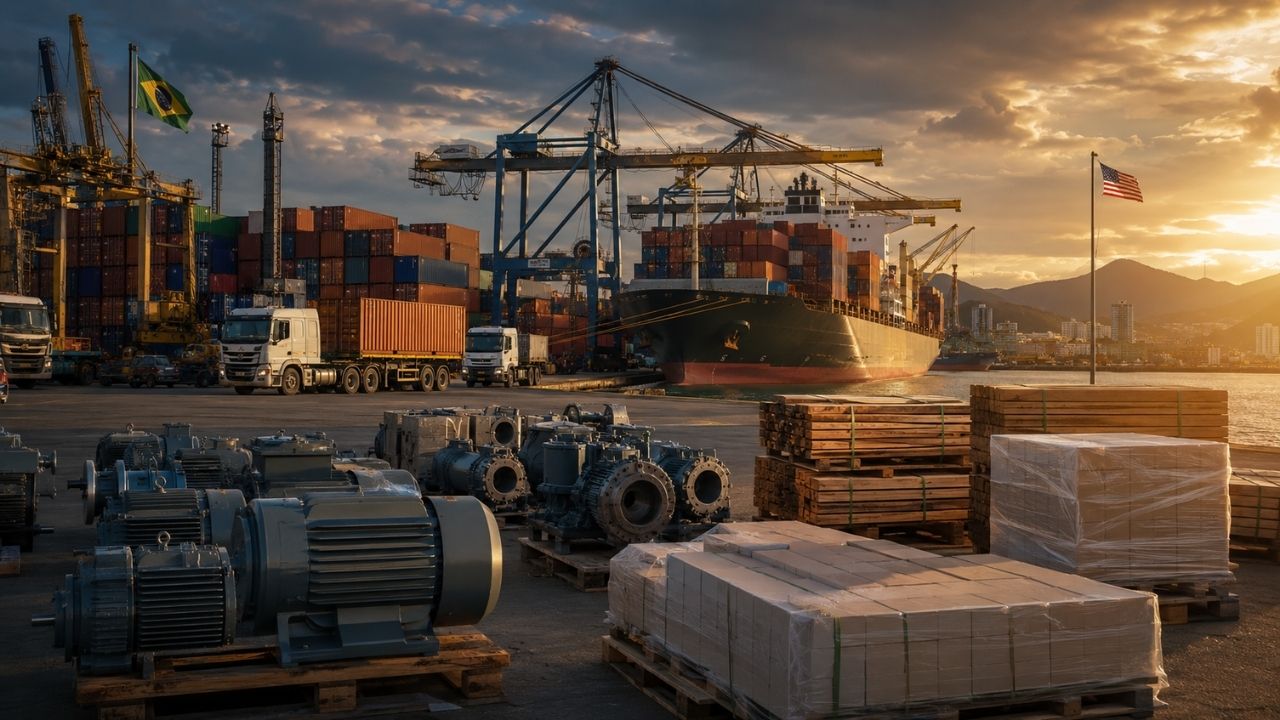
The Trump tariff proposal foresees a 25% charge on some Brazilian imports, within a process conducted by the USTR under Section 301. For Santa Catarina, the issue gained weight because the state has companies with international presence and strong ties with industrial chains in the United States.
-
Former Mastercard VP Launches “Tinder” for Small Businesses, Aiming for 6,000 Deals Worth $420 Million by 2027

-
“MasterChef” Judge Expands Handcrafted Empanada Chain to 46 Stores, Aiming for $20 Million in Franchise Revenue

-
From a 12-square-meter room to leading a $4.8 billion fuel empire with over a thousand stations

-
El Niño Threatens Brazilian Food Production, Economists Predict Rising Prices for Coffee, Corn, and Rice



The alert involves not only external sales but also supply, production, and jobs in American operations linked to Brazilian companies. Therefore, the defense made at the hearing aimed to show that some products from Brazil enter as complementary parts of the US industry, and not just as direct competitors.
WEG, Portobello, and Schaefer defended exceptions in the USA
In the hearing, representatives from companies such as WEG, Portobello, and Schaefer Yachts participated in the defense against the broad application of the tariff. The strategy included technical arguments about supply, operational costs, and potential changes in supply chains.
According to Rodrigo Prisco Paraíso, a representative of the Santa Catarina office in the USA cited by NSC Total, the Brazilian private sector argued that industrial parts and agricultural products should not be taxed. The companies also presented requests for exceptions as an alternative plan if the measure is adopted.
Cited risk involves Chinese suppliers in the American market
One of the most sensitive points of the hearing was the possible indirect effect of the taxation. Peter Barry, CEO of WEG in the USA, stated that Chinese products could occupy the space of products manufactured by the company from Santa Catarina if the tariffs were applied.
The concern also appeared in questions posed by members of the American government about alternative supply options for US companies currently served by Brazilian companies. According to the report, industrialists present indicated that part of these products could be replaced by suppliers based in China.
Portobello pointed out impact on operation in Tennessee
In the case of Portobello, the argument presented to the Americans involved the dependency of the US unit on products and raw materials coming from Brazil. James Durbin, CEO of Portobello in the USA, stated that these items are essential to maintain jobs generated by the plant in Tennessee.
This point shows why Trump’s tariff concerns companies operating on both sides of the trade relationship. When a Brazilian company also employs and produces in the United States, the taxation can affect not only exporters in Brazil but also American operations that depend on these inputs.
Santa Catarina has relevant products in the agenda with the USA
The report highlighted items exported by Santa Catarina to the United States, including carpentry works for construction, electric motors, motor parts, sawn wood, furniture, plywood, electrical transformers, and parts and accessories for vehicles.
This set helps explain why Trump’s tariff mobilized companies from Santa Catarina. The state’s export agenda is not limited to simple final products; it involves segments related to construction, energy, machinery, wood, industrial components, and chains that can be affected by additional costs.
Brazilian Private Sector Took Center Stage at the Hearing
In addition to companies from Santa Catarina, representatives from the National Confederation of Industry and the United States-Brazil Chamber of Commerce participated. Amcham argued that tariffs would not be the best way to improve bilateral trade, according to a report published by NSC Total.
Roberto Azevedo, former president of the World Trade Organization and representative of CNI, highlighted the complementarity between the economies of Brazil and the United States. The defense also cited the US surplus in trade relations with Brazil and cooperation in strategic sectors.
Decision Still Depends on Negotiations and the USTR
The hearing is part of the American process before a final decision on the tariff application. The USTR previously informed that it received public comments and held a hearing on the proposed action, while Reuters reported that the final decision was expected by July 15, 2026.
Until then, the scenario remains open. Some products may receive exceptions, the measure may be adjusted, or the tariff may proceed as per the evaluation of the United States government. For Santa Catarina, the critical point is to know if companies with integrated chains will be able to maintain competitiveness in the American market.
What’s at Stake for Exports and Jobs
The dispute over the Trump tariff raises a larger issue: to what extent a trade measure designed to pressure Brazil could end up affecting companies, factories, and jobs also within the United States. This was one of the central arguments presented by Brazilian companies at the hearing.
Do you believe that such tariffs protect the American industry or could they open space for suppliers from other countries, like China, to occupy the market? Leave your opinion in the comments and join the discussion.