Portuguese
  Spanish


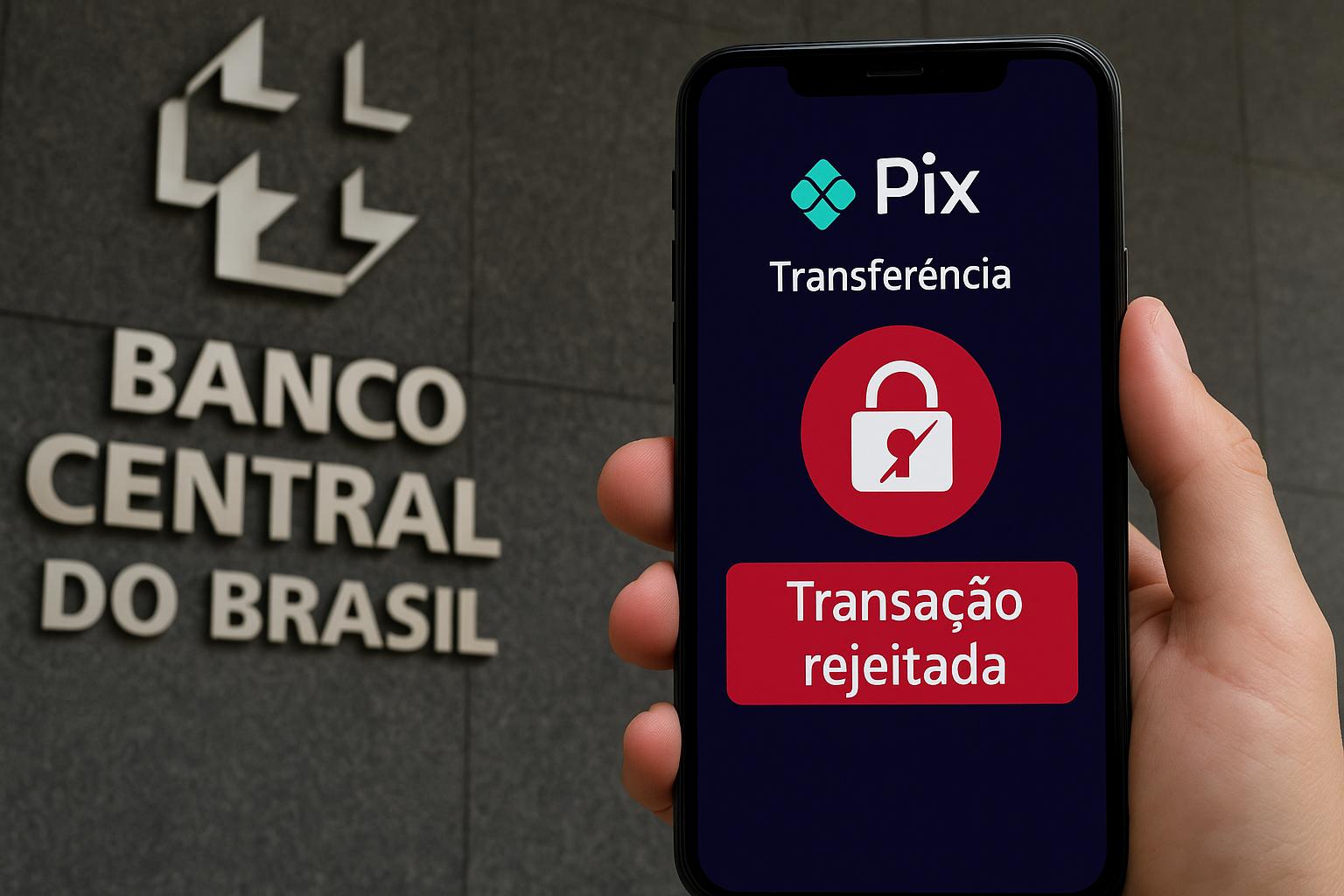

After Attack That Diverted R$ 710 Million Via Pix, Central Bank Determines That Banks Block Transfers to Accounts Suspected of Fraud and Strengthen Anti-Fraud Systems Throughout the National Financial System.
In recent years, Brazil has witnessed a rise in digital crimes involving the financial system. Pix, which has become the most popular form of transfer in the country since its inception in 2020, brought unprecedented speed but also opened the door to new types of fraud.
Between 2020 and 2024, scams related to Pix grew exponentially, ranging from small local gangs to organized networks of digital criminals who use temporary accounts to launder money. These accounts are opened in the names of fronts and used for a short period before being abandoned.
In this context, the Central Bank (BC) has been expanding its regulatory arsenal. The most recent measure, published in September 2025, is Resolution BCB No. 501, which requires banks and financial institutions to reject transfers to accounts with well-founded suspicion of involvement in fraud.
-
A 180-meter ship with a deck the size of a football field was christened to carry 25,000 tons of giant energy modules around the world.

-
To erect the “Baleia” building on the richest avenue in Brazil, he bought 35 houses, paying with trips to Disney, a truck, and even an apartment, waited over 20 years, and today the complex is valued at R$ 2.5 billion.
-
The land belonged to her great-great-grandfather and was worth R$ 25 per square meter during the pandemic; the couple sold 250,000 m² for the nearly R$ 30 billion project that is transforming the “neighbor of Jericoacoara,” and today a house in the region goes for R$ 4.2 million.

-
Labor shortage reaches the truck drivers’ area: Brazil is already facing a deficit of 120,000 drivers, 65.1% of transport companies feel the impacts, and Mercedes-Benz strengthens training in the face of the new generation of technological trucks.



How The New Rule Will Work
The resolution, which has mandatory effectiveness until October 13, 2025, determines that banks use electronic fraud-fighting systems and public and private databases to monitor suspicious transactions in real time.
If they identify signs of fraud, institutions must block the transfer and immediately notify the account holder involved.


Although the main focus is Pix, due to its widespread use, the measure also applies to other payment methods, such as TEDs. Thus, all financial transactions will be subject to scrutiny from anti-fraud tools.
Immediate Repercussion Among Banks and Specialists
For traditional banks, the measure reinforces the need to invest in advanced monitoring technology. Banking consultant André Castro explains that the challenge will be to integrate existing systems with new artificial intelligence platforms capable of identifying unusual movements in fractions of seconds.
According to him, “the BC’s decision creates a stricter standard, which can increase public confidence, but will require high investments in technology and training.”
Fintechs, which have grown by offering agile digital services, will also need to adapt. Specialists point out that startups in the sector will incur extra costs to comply with the new rules, but this is inevitable to ensure competitiveness in the market.
Supplementary Measures From The Central Bank
Resolution BCB No. 501 did not come in isolation. A few days earlier, the Central Bank had already announced an important limitation: transfers via Pix or TED made by unauthorized institutions or connected to the National Financial System through technology service providers (PSTIs) are restricted to R$ 15 thousand.
The goal is to curb the use of these intermediary institutions for large value transfers anonymously. With the restriction, million-dollar fraud becomes more challenging to execute without detection.
The Trigger: Attack of R$ 710 Million
The backdrop for these measures is a recent episode that shook the financial sector: a cyberattack that diverted about R$ 710 million from two financial institutions via Pix.
The case, still under investigation, exposed vulnerabilities in certain points of the network and showed that, even after years of operation, the system remains a primary target for digital criminals. The immediate fallout was significant: analysts called for stricter regulations, and the BC responded with a series of emergency measures that are now starting to take shape.

Impacts For Customers
In practice, account holders may face rejection of transfers when attempting to send money to accounts identified as suspicious. Although this may create initial discomfort, the measure is seen as essential to protect users from scams.
The immediate rejection is expected to primarily affect accounts used by financial pyramid schemes, fake investment websites, and gangs that employ the “fake bank employee scam.”
The BC emphasizes that if a transfer is blocked, the user will receive explanations and can contest the decision with the institution. The expectation is that transparency will prevent excessive strains and maintain public confidence in the system.
Why 2025 Marks A Turning Point
The year 2025 is already shaping up to be a turning point in the Central Bank’s security policy. Since January, three resolutions focused on combating fraud have been issued.
The emphasis now is to balance speed and convenience of Pix with robust security layers. This means that the system will remain free and instantaneous but will operate under stricter rules. If successful, the strategy could consolidate Pix not only as a popular tool but also as an international standard for security in digital transfers.

Challenges For Implementation
Despite the progress, specialists warn that implementation will require integration among banks, fintechs, security agencies, and the BC itself. Anti-fraud systems need to be constantly updated to deal with new money laundering and social engineering techniques.
Another point is the need for financial education. Without more attentive and informed users, criminals continue to find loopholes, even in highly monitored systems.
The Future Of Banking Security In Brazil
With Resolution No. 501, the Central Bank makes it clear that it is willing to tighten the grip against organized crime in the financial system.
The challenge will be to ensure that the user experience is not compromised by unwarranted blockages or excessive bureaucracy.
Even so, the measure represents an important advance in the effort to protect both the R$ trillions moved annually in the system and the public’s trust in one of the most revolutionary payment methods in recent history.