






 Portuguese
  Spanish


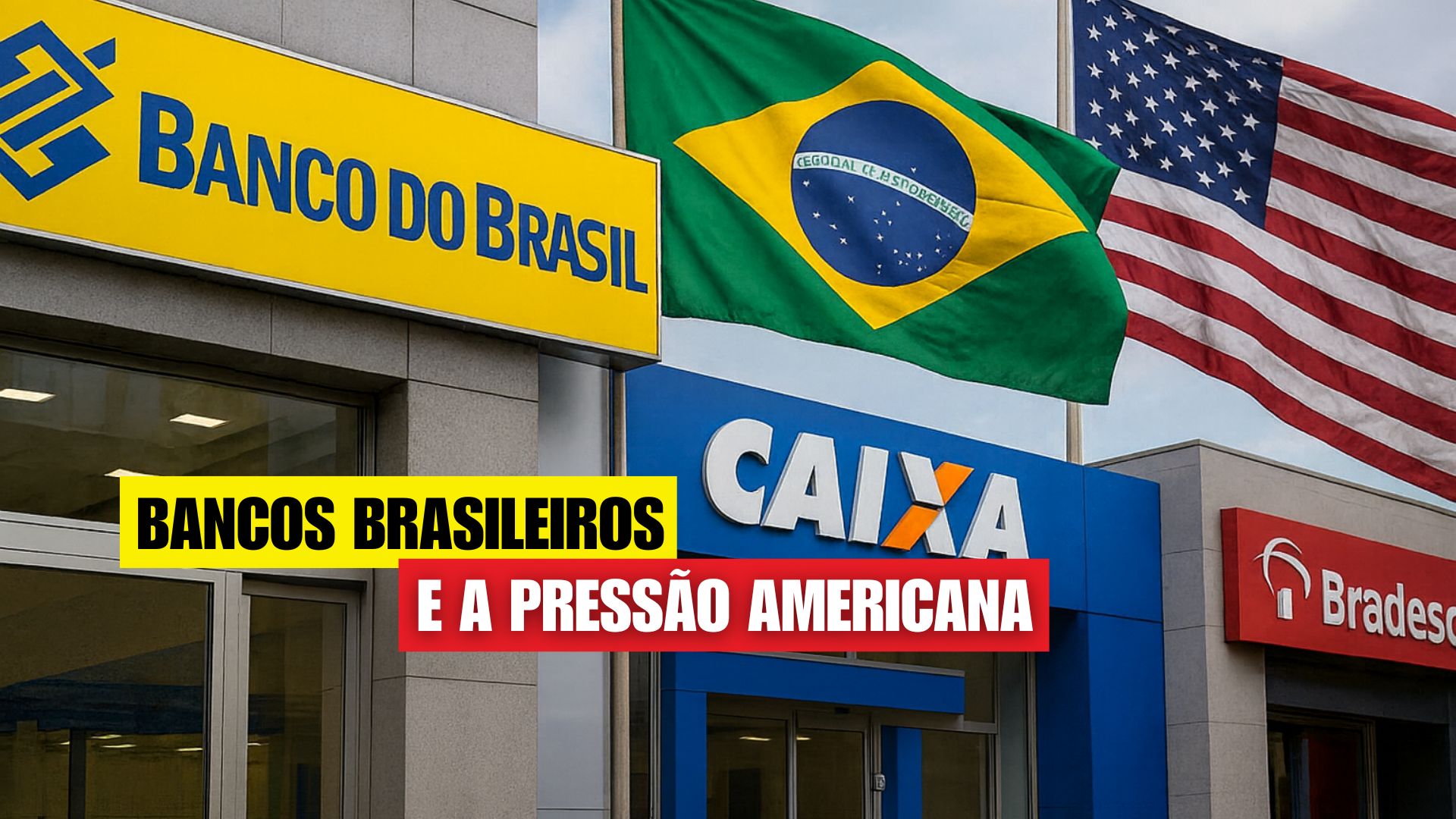


Billion-Dollar Fines and Severe Sanctions Imposed by U.S. Authorities on Major International Banks Reveal How Brazilian Institutions Operating in Dollars May Face Elevated Compliance and Reputation Risks in the Global Financial Market.
The penalties imposed by U.S. authorities on foreign banks that violated sanctions highlight the size of the potential liability for any institution with a significant presence in the North American market.
In three emblematic episodes, BNP Paribas, Standard Chartered, and Commerzbank accepted billion-dollar settlements, accompanied by the imposition of independent monitors, enhancement of controls, and, in the most severe case, a temporary suspension of dollar-clearing operations.
These precedents continue to serve as a direct reference for banks that operate in Brazil and deal in dollars — Banco do Brasil included.
-
A person from Minas Gerais started as an intern at a technology company, left convinced they wouldn’t return, created their own consultancy, and came back as a partner before becoming president and increasing the revenue from R$ 25.6 million to over R$ 100 million.

-
Hurry: Wikipedia pays up to R$ 2,500 for those who write about Minas Gerais, contest entries end on July 10, 2026, and even beginners can “earn,” with prizes starting at R$ 200.

-
A city with 8,000 inhabitants will receive R$ 25 billion to host the largest single-stage pulp mill in the world, with a production of 3.5 million tons per year and a cost of R$ 45 million.
-
He left India for Oman in 1976, entered through the door of luxury finishes, and took Sobha to the premium real estate market in the Middle East.


International Precedents for Regulatory Risk
At BNP Paribas, authorities reported the repeated processing of dollar transactions for counterparts in Sudan, Iran, and Cuba, in violation of U.S. embargoes.
On June 30, 2014, the French bank agreed to pay US$ 8.9 billion and pleaded guilty to conspiracy to violate emergency economic powers legislation, as well as the law prohibiting trade with the enemy.
The sanction included one-year suspension of dollar clearing in specific areas, extension of independent monitoring, and additional measures imposed by federal and state regulators.
This case established a standard that continues to be applied when there are confirmed violations in the use of the dollar financial system.
Five years later, on April 9, 2019, Standard Chartered announced a multijurisdictional settlement.
The portion of sanctions administered by OFAC was US$ 639,023,750, within a total package exceeding US$ 1.1 billion.
The Federal Reserve added US$ 164 million for unsafe practices and weak controls, and NYDFS issued a consent order requiring governance enhancements, periodic sanction risk assessments, and the maintenance of an independent consultant.
Official documents point to failures in message filters, customer due diligence, and handling of blocked payments.
This supervision model continues to be adopted in subsequent investigations.
In March 2015, Commerzbank admitted violations related to sanctions and the Bank Secrecy Act, accepting a package totaling US$ 1.45 billion in criminal and civil penalties.
There was also the appointment of an independent monitor and an order from the Federal Reserve imposing a US$ 200 million fine, along with requirements to enhance global sanction and anti-money laundering programs.
This set of decisions demonstrates how U.S. authorities continue to coordinate responses between federal and state levels, especially when operations pass through New York.
Fines, Monitors, and Structural Changes
These processes have common features.
Extensive investigations, cooperation between agencies, billion-dollar fines, the imposition of external monitors, and detailed remediation plans with deadlines and independent audits are recurring.
In all cases, access to the dollar financial system appears as a central axis of pressure, affecting liquidity, reputation, and business continuity.
BNP Paribas faced a temporary suspension in critical settlement segments, while Standard Chartered and Commerzbank had to implement specific governance for sanctions, annual risk assessments, and technology reviews.
Impacts on the Brazilian Market
Brazilian banks with presence or correspondents in the U.S. are subject to strict sanction compliance requirements.
This includes filters in SWIFT messages, blocking or rejecting transactions procedures, audit trails, training, and governance aligned with OFAC policies.
The risk is higher for institutions operating in New York and connected to critical clearing and settlement systems.
At Banco do Brasil, resolution planning documents provided in section 165(d) of Dodd-Frank describe the structure of units in the U.S., such as branches in New York and Miami and the Orlando Servicing Center.
The public material shows asset levels, funding sources, and links to systems like Fedwire, SWIFT, Euroclear, DTC, CLS, and CHIPS.
Although these plans do not indicate the existence of sanctions, they reveal the operational criticality and level of regulatory exposure of the institution in the country.
Consequences Beyond Financial Penalties
Financial penalties do not exhaust the effects of violation cases.
Official reports demonstrate temporary restrictions on lines of business, elevated costs for consulting and external monitors, as well as requirements for executive replacements in certain situations.
There are also obligations for technological updates to avoid practices such as “stripping” of information in financial messages.
These factors impact counterparty risk assessment, increase the cost of capital, and influence debt trading conditions in the secondary market.
Practical Lessons for Financial Institutions
The experience accumulated by DOJ, OFAC, Federal Reserve, and NYDFS indicates that the key points of attention are failures in due diligence, updating sanctions lists, identifying beneficial owners, and responding to risk alerts.
Remediation plans require risk inventories by business unit, verifiable goals, independent audits, and periodic reports to the supervisor.
These elements are present in recent orders and demonstrate the continuity of the standard.
For Brazilian banks, the message is clear: any institution that operates in dollars must demonstrate effective, documented, and tested controls capable of detecting and addressing sanction risks.
Without this, international experience shows that regulatory responses can be long-lasting and costly, with external monitoring and correction deadlines extending for years.
Situation of Banco do Brasil in 2025
Banco do Brasil maintains operations in the U.S. and, therefore, is under the supervision of Federal Reserve, NYDFS, and state regulators, in addition to the Central Bank of Brazil.
The public resolution documentation does not provide any indication of sanctions but outlines how a potential orderly resolution would be organized on U.S. soil.
It is important to highlight that, until September 2025, there is no official announcement of U.S. sanctions against Banco do Brasil.
The comparison with BNP Paribas, Standard Chartered, and Commerzbank thus serves merely as a parameter for action when violations are confirmed.
Based on this history and current requirements, the question is: how do Banco do Brasil and other Brazilian institutions plan to strengthen their compliance programs to reduce international sanction risks?






Não entendi porque colocaram o Banco do Brasil, pois fica parecendo que sofreu sansões ou multas, o que o próprio artigo desmente. Acho desonesto esse tipo de artigo. Nunca tinha lido nada de vocês e nunca mais vou ler.