Portuguese
  Spanish


Zabeer Zarif Akhter created in Bangladesh a water purifier with plasma and electronic waste to tackle contamination and floods.
In 2024, the student Zabeer Zarif Akhter, aged 17, gained prominence in Bangladesh by developing a water purifier made from electronic waste and based on high voltage plasma. The project was presented as the first of its kind in the country and earned the young man the national title of the Stockholm Junior Water Prize Bangladesh 2024.
What makes the invention even stronger is the combination of three fronts in a single prototype. The device was designed to decontaminate water, reuse electronic scrap, and operate in critical scenarios, such as remote areas and regions affected by floods, where access to clean water often deteriorates quickly.
Plasma water purifier turns contaminated water into sterilizing flow
The core of the invention lies in the use of plasma for water purification. The prototype developed by Zabeer transforms contaminated water into a plasma flow and combines ultraviolet radiation with plasma sterilization, in an attempt to eliminate pathogens without relying on expensive equipment or complex industrial systems.
-
Rare Diamond Found in Brazil’s Mato Grosso Formed 800 Kilometers Deep, Holds Clues to Earth’s Water Transport

-
Smart Connectivity Transforms Daily Life: High-Speed Internet, 5G Mobility, and Seamless Service Control

-
World’s First Fully Robot-Operated Hotel to Begin Trials with Real Guests in 2026, Full Opening in China Set for 2027

-
Estonia Constructs Bunkers and Trenches on Russian Border to Strengthen NATO Defense and Signal Baltic Readiness


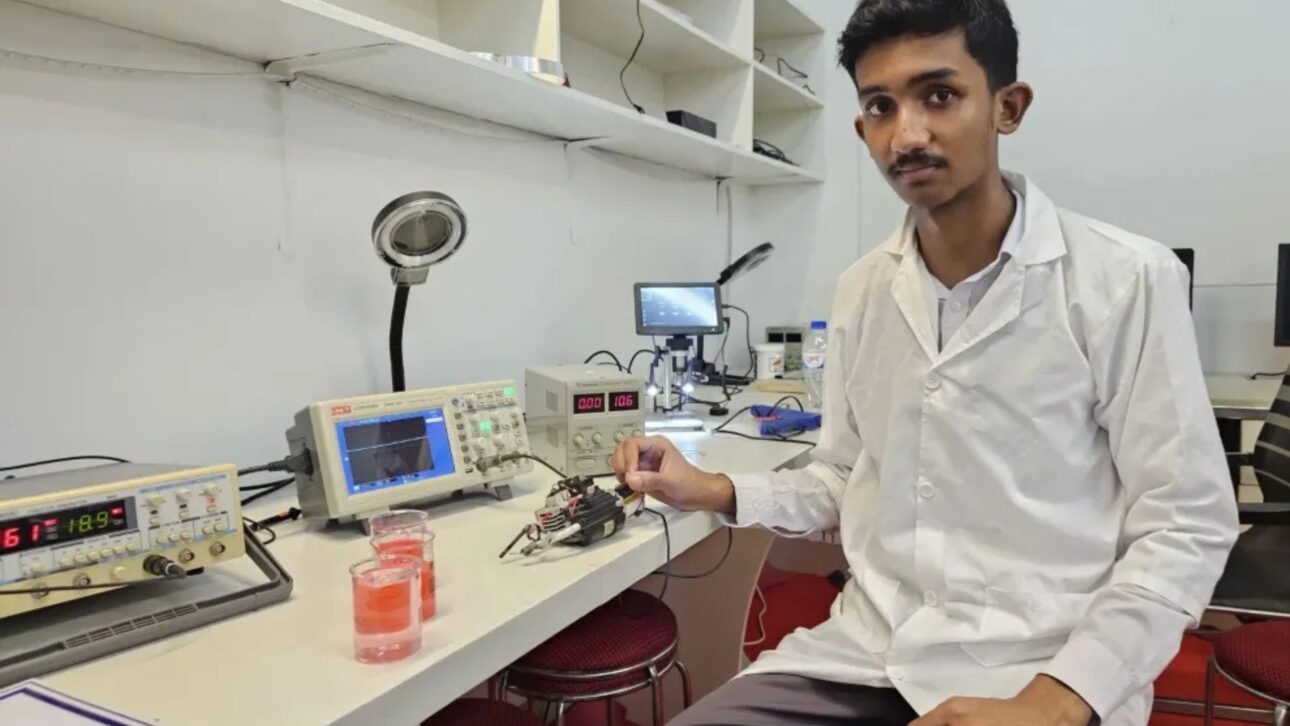
One of the most relevant points is that the process occurs without a significant increase in temperature. This places the system within a non-thermal plasma logic, which reduces the need for water heating and reinforces the proposal of a more efficient solution for emergency or individual use.
In the simplified version for remote areas, the equipment requires only two carbon electrodes and the electronic circuit. According to the project description, this arrangement creates plasma at atmospheric pressure and was designed to combat microorganisms present in the water, including E. coli, total coliforms, and fecal coliforms.
Electronic waste becomes raw material to reduce cost and environmental impact
Instead of using new and specialized parts, Zabeer assembled the purifier with components taken from scrap. Among the materials mentioned by him are parts of circuits from three-wheeled vehicle engines, old tube TVs, abandoned laptops, and lithium batteries from cell phones.
This choice has a direct impact on the project’s cost and also on the environmental appeal of the invention. By reusing discarded electronic materials, the student tries to convert a problematic waste into a useful tool for a basic need, which is access to safer water.
The very design of the device reinforces this logic of sustainability. According to the description presented by the young inventor, the purifier can also be charged by solar panels, which enhances the technology’s utility in areas without a stable electrical grid and reduces dependence on conventional infrastructure.
Floods in Bangladesh help explain the urgency of the invention
The creation of the purifier did not arise in a laboratory isolated from reality. In a report published by UNICEF, Zabeer stated that the idea took shape after the major floods in Bangladesh, when he realized that water contamination continued to kill and sicken people even after the waters receded.
This motivation helps to understand why the project was designed for quick, portable, and individual use. The proposal is not just to purify water in theory, but to offer a practical response for moments when communities have to deal with contaminated water, waterborne diseases, and temporary collapse of basic services.
The student himself also associated his invention with the impacts of industrial pollutants and textile dyes on water and soil. In Bangladesh, where recurring floods and water contamination intersect, this type of solution gains strength precisely because it targets a real, everyday problem with high sanitary impact.
Stockholm Junior Water Prize took the project from Bangladesh to Sweden
Zabeer’s work received national recognition by winning the Bangladesh Stockholm Junior Water Prize 2024 with the project titled “High Voltage Plasma Water Purifier from E-waste”.
With this, he secured the spot to represent Bangladesh in the international stage of the competition during the World Water Week in Stockholm.
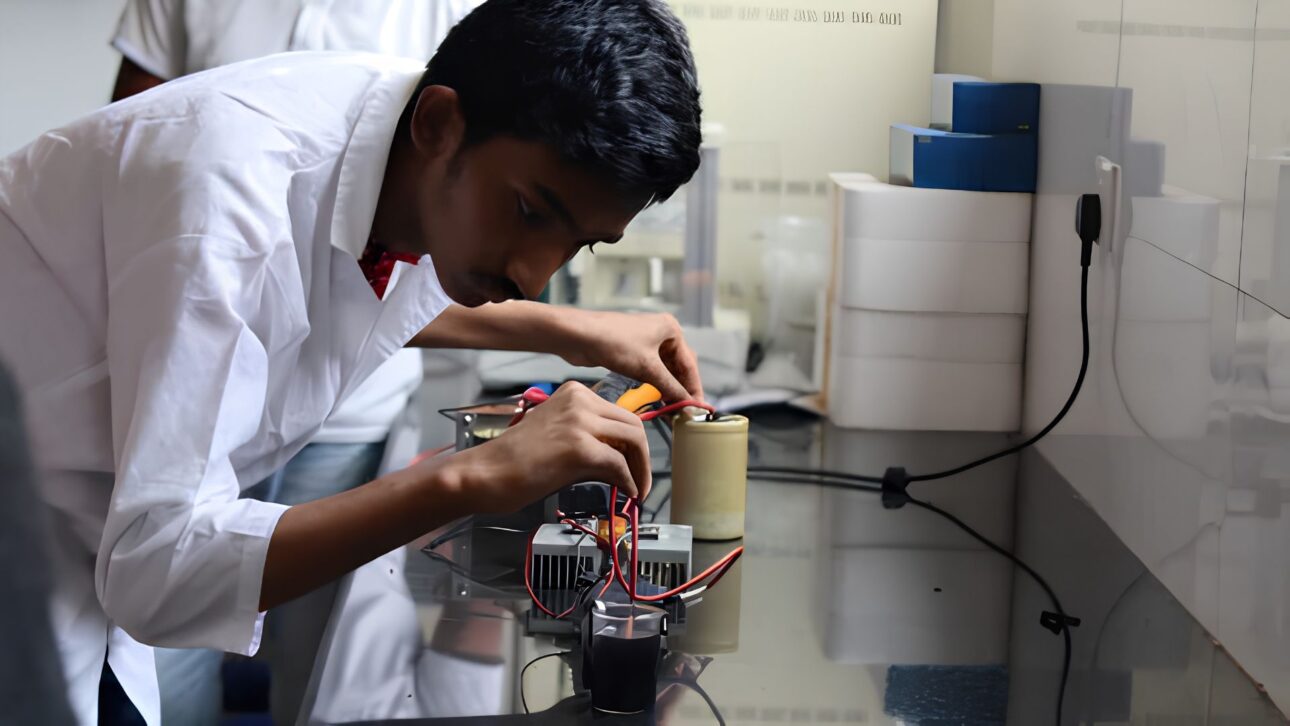
The impact of the project was not limited to the award. A report from The Business Standard stated that the invention began to be monitored in a laboratory at BUET, the Bangladesh University of Engineering and Technology, with technical supervision to make the system more functional and effective.
The journey also progressed beyond the first prototype. In a later publication by UNICEF, Zabeer appears as a two-time winner of the national award edition in Bangladesh and reports having also created a water quality testing system with artificial intelligence, made with cheap parts from old cell phones and cameras.
Low-cost innovation shows how scrap can become impactful technology
The strength of this story lies in the type of innovation it represents. Instead of relying on a million-dollar laboratory or a sophisticated industrial chain, the project was born from the combination of technical knowledge, observation of the local problem, and reuse of discarded materials.
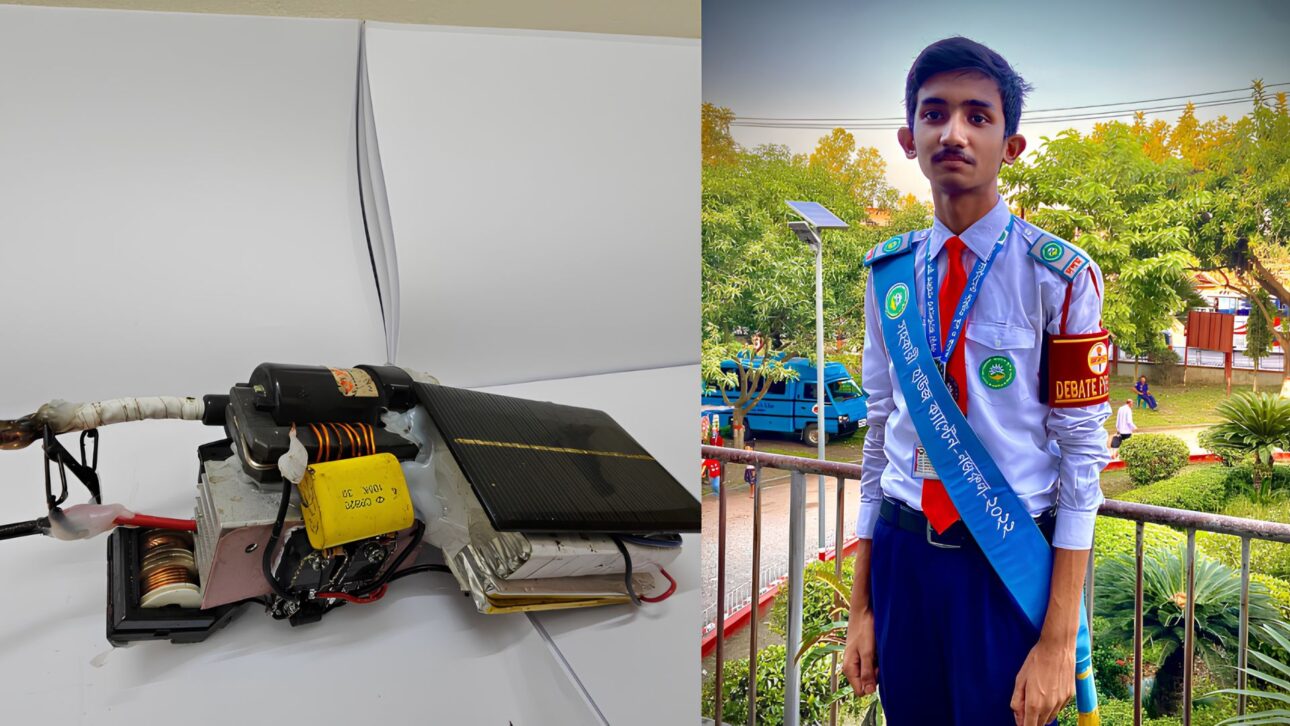
The story of Zabeer Zarif Akhter gains relevance precisely for uniting water purification, plasma technology, reuse of electronic waste, and response to climate emergencies in a single solution. In a country pressured by contamination and floods, this combination helps explain why the invention attracted so much attention both inside and outside Bangladesh.