Portuguese
  Spanish


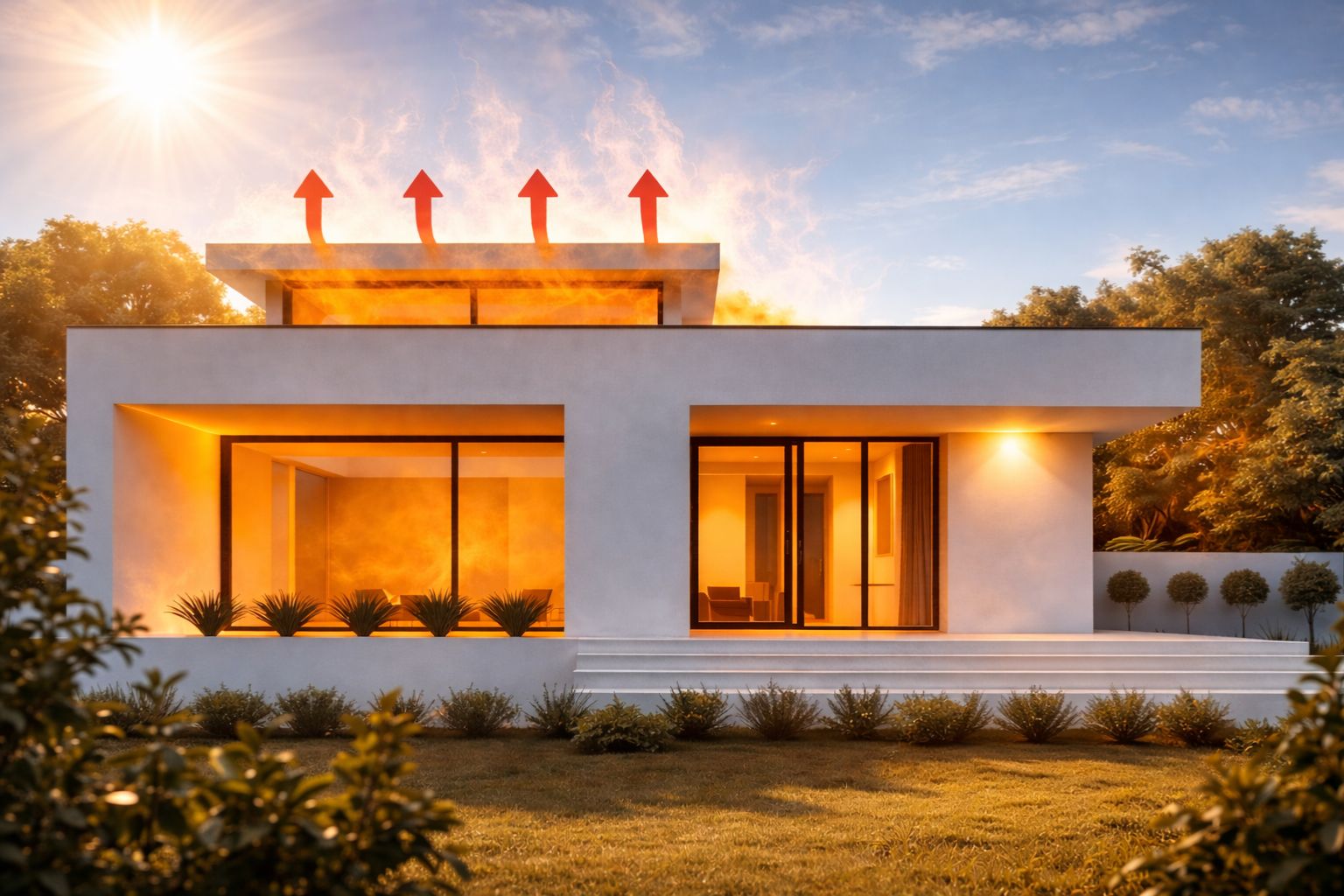

The box house has become a trend among those who dream of modern and minimalist style, but the model with straight forms, hidden roof, and large glass panels was designed for cold climates. In Brazil, where the annual average is 24°C, this type of construction accumulates heat like a greenhouse, raises the internal temperature, and increases air conditioning costs.
The box house is beautiful, minimalist, and full of glass, but it has a problem that most people only discover after living in it: in the Brazilian climate, it can turn the interior of the residence into an oven. The reason is that this architectural style was not born for Brazil. With straight forms, a hidden roof, large glass panels, and less protection on the facades, the box house works well in cold countries, where the goal is to make the most of the sun’s heat to warm the internal environment. In Brazil, where the sun is abundant for most of the year and the average annual temperature is around 24°C according to INMET, the effect is the opposite of what is desired.
The result is predictable: the box house accumulates heat during the day and turns the internal environment into a greenhouse. “What we see today is just an empty repetition of an international aesthetic that completely ignores where it is being built. The form is copied without understanding the function”, explains architect Daniela Andrade, who has over 30 years of experience in the residential market. The trend garners likes on social media and beautiful photos for Instagram, but those who live in the box house in the Brazilian tropical climate feel the consequences of a project that was not designed for our sun, both on their skin and in their wallets.
Why the box house heats up more than it should in Brazil
According to information from the portal ndmais, the problem of the box house in the Brazilian climate starts with the basic physics of heat transfer. The large glass panels that define the aesthetics of the model allow solar radiation to enter directly into the interior of the house, heating floors, internal walls, and furniture. This absorbed heat is radiated back into the internal environment, but the glass prevents it from escaping as easily as it entered, creating the so-called domestic greenhouse effect. The larger the surface area of glass exposed to the sun, the greater the accumulation of heat.
-
A Brazilian street cleaner built a machine to recycle PET bottles in the hinterlands of Paraíba, transforming the trash he swept from the streets into threads, brooms, and equipment sold even outside Brazil, and began earning about R$ 7,500 per month with his own invention.

-
In a city where every piece of land is worth gold, he began buying plots in the 1960s and built a real estate empire with over a thousand properties.

-
An artist sank over 500 life-sized human statues at the bottom of the Caribbean Sea, and what seemed like macabre art turned into a living reef covered with corals that attracts divers from all over the world.

-
A fossil kept for years in a small museum in Montreal concealed 450-million-year-old soft tissue, a discovery that has only happened once before in history.


The absence of eaves, balconies, and shading elements on the facades exacerbates the problem. In the box house, the exterior walls receive direct sunlight for hours, with no protection to reduce solar incidence, and the hidden roofs, which are a hallmark of the style, eliminate the eave that traditionally protects the walls and windows from direct radiation. In Brazil, where many regions receive intense sunlight for at least eight months of the year, this combination of exposed glass and unprotected facades causes the box house to function as a heat collector.
What Brazilian architecture knew before the box house trend
Long before the box house became a trend in Brazil, national architecture had already solved the problem of building stylishly in a tropical country. Great names like Oscar Niemeyer and Lúcio Costa established a modern aesthetic adapted to the Brazilian climatic reality, incorporating solutions such as brise-soleil, cobogós, wide balconies, and wide eaves. These elements are not decorative: they are design tools that block direct sunlight, favor natural ventilation, and keep the house cool without relying on artificial air conditioning.
The difference between modernist Brazilian architecture and the imported box house is that the former was designed to function in the climate where it would be built. Balconies create shade over the facades, eaves protect windows from rain and sun, cobogós allow air passage without compromising privacy, and brise-soleils adjust the light entry throughout the day. The box house discards all these elements in favor of a clean and geometric aesthetic that looks good in photos but sacrifices the thermal comfort of those living inside it.
The real cost of living in a box house in Brazil
The heat accumulated by the box house in the Brazilian climate is not only uncomfortable, it is expensive. To maintain a bearable internal temperature, residents resort to air conditioning for more hours than they would need in a house designed with adequate solar protection, which significantly raises the electricity bill. In regions such as the Northeast, Central-West, and North of Brazil, where temperatures exceed 30°C for months on end, the cost of air conditioning a box house can represent a significant portion of the household budget.
The impact goes beyond the electricity bill. The intensive use of air conditioning in a house that was not designed for the tropical climate generates an unnecessary carbon footprint, contributing to global warming which, in turn, makes the climate even hotter. It is a cycle that Brazilian vernacular architecture has always known how to avoid: building in a way that the house cools naturally, using wind, shade, and the right materials, without relying on electrical equipment to compensate for misguided design decisions.
How to adapt the box house to function in the Brazilian climate
Those who like the aesthetics of the box house do not necessarily need to abandon it, but need to adapt it. Small project choices make a big difference: solar protection on windows with brises or pergolas, cross ventilation that allows for natural air circulation, shaded areas on the facades most exposed to the sun, and materials that absorb less heat are adjustments that preserve the visual language of contemporary style without turning the house into a greenhouse.
The solar orientation of the land is also fundamental. Positioning the largest glass surfaces of the box house facing south, where solar incidence is lower in the southern hemisphere, and protecting the north and west facades with shading elements can drastically reduce thermal gain. Roofs with thermal insulation, even if hidden by the parapet, and glass with solar control treatment are investments that cost more during construction but save on comfort and energy throughout the house’s lifespan.
What really matters when building your house
The box house is yet another example of how imported aesthetic trends can work poorly when applied without adaptation to the local context. In the end, what defines a good house is not the style of the facade, but the comfort of those who live inside it. With the advancement of climate change and increasingly frequent heatwaves in Brazil, betting on passive solutions like cross ventilation, shading, and appropriate materials is not conservatism; it is intelligence.
Brazilian architecture has plenty of repertoire to prove that it is possible to be modern and functional at the same time. Following trends may yield likes on social media, but living in a house that truly works is what separates a beautiful project from a good project. Before building your dream box house, ask the architect how it will behave at two in the afternoon on a January Saturday. The answer could change the entire project.
The box house is beautiful, but it can turn into a greenhouse in the Brazilian climate. Do you live in a box house or have you thought about building one? Did you feel the heat? Do you think it’s worth adapting or is it better to choose another style? Share in the comments.