Portuguese
  Spanish


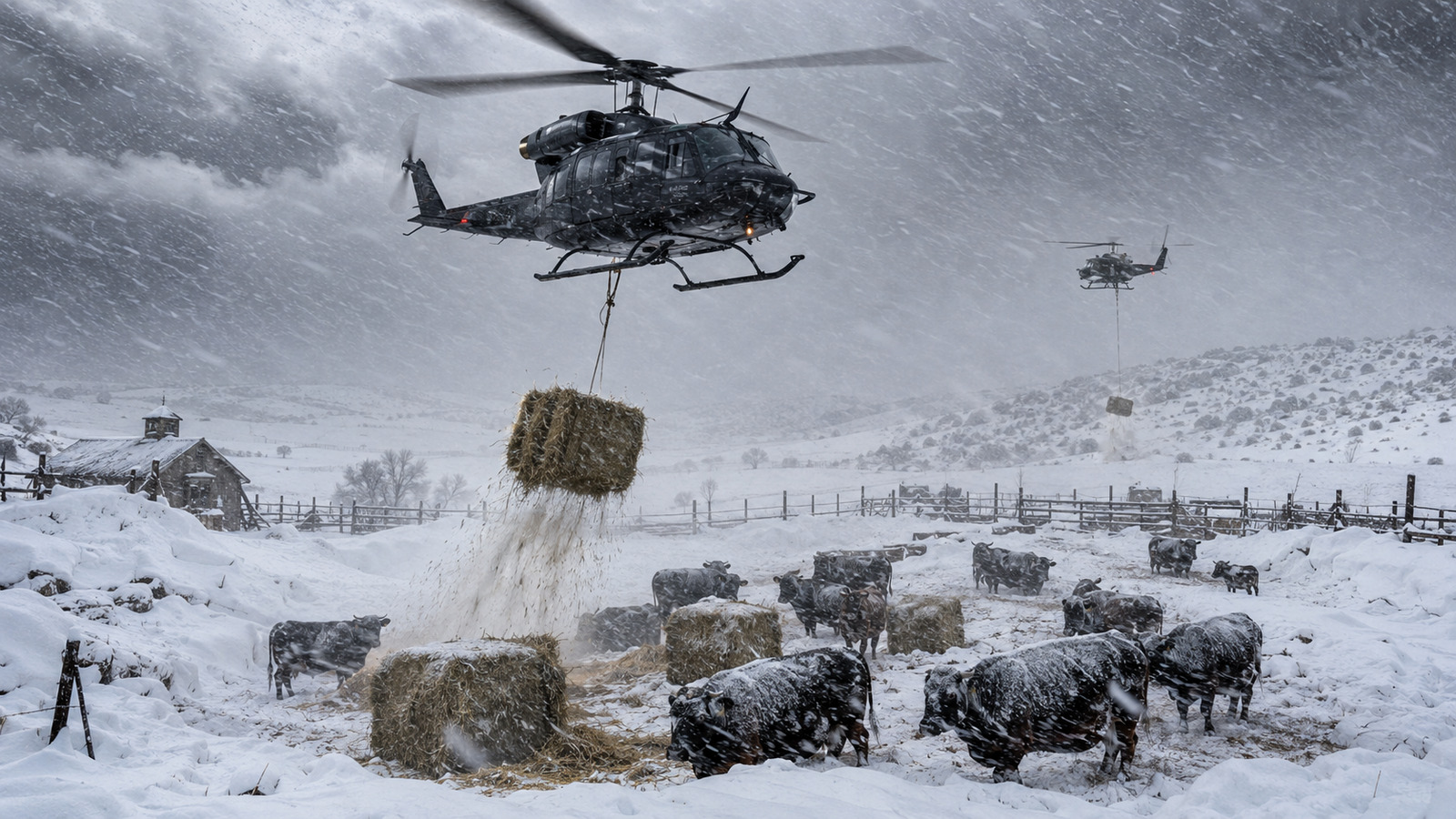

Emergency operation used helicopters to deliver hay to farms isolated by snow in California, where calves were born under intense cold and ranchers awaited the thaw to calculate herd losses
In 2023, about 2,500 head of cattle were at risk in Mendocino, Humboldt, and Trinity counties in California after a historic snowstorm covered pastures, isolated farms, and prevented ranchers from accessing the animals. The emergency led local authorities to take a drastic measure: dropping bales of hay by helicopter.


Historic snowstorm leaves herds without access to food
In Kneeland, California, rancher Lauren Sizemore knew a storm was coming, but did not expect such a severe situation. Her ranch, which housed about 300 head of cattle, was isolated by snow.
With the animals trapped and without access to food, Sizemore reported the impact of the situation to the ranchers.
-
From Hotel Porter to CEO: Brazilian Entrepreneur Leads Travel Agency Serving Major Brands and Generating $270 Million in Revenue

-
From Selling Cleaning Products in Vans to Over 300 Franchises: Entrepreneur Targets $30 Million by Expanding into Professional Cleaning Services and Laundries

-
China Constructs 5.1 km Undersea Highway in Dalian Bay, Reducing Travel Time from 1 Hour to 5 Minutes
-
Massive Transporters Otto and Lore Move ALMA Radio Telescope in Chile’s Atacama Desert



She stated that it was “absolutely heartbreaking” to know there was cattle outside without being able to reach them.
The property is about an hour from Eureka. On Monday and Tuesday, the ranch received bales of hay dropped by air, in an emergency operation organized by local authorities.
The delivery of the food was possible because the animals had location trackers. With this data, Sizemore was able to provide the exact coordinates for the bales to be dropped at the points where the cattle were concentrated.

Hay dropped by helicopter reaches 35 farms
The operation set up by the authorities followed a support system for ranchers. Producers collect surplus hay and take the material to Rohnerville Airport, near Fortuna.
On site, employees from the Humboldt County Emergency Services Office and the Sheriff’s Office were helping to load the bales onto the helicopters. The distribution is carried out by two Cal Fire aircraft and two others from partner agencies.
Each helicopter transported about eight bales at a time. The hay dropped by helicopter was delivered to approximately 35 farms affected by the snowstorm in Mendocino, Humboldt, and Trinity counties.
Humboldt County Supervisor Michelle Bushnell, who is also a rancher, began contacting producers as the snow accumulated. Some reported that they couldn’t find the animals because of the amount of snow.

Calves born amid cold and lack of pasture
Tran Beyea, spokesperson for the Humboldt-Del Norte Unit of the California Department of Forestry and Fire Protection, said at the time that the region usually has snow once or twice per winter.
The sequence of storms prevented the snow from melting in the lower areas. According to him at the time, pastures that would normally start to turn green at this time are covered by deep snow.
The problem occurs precisely during the period when many ranchers expect the birth of calves, at the beginning of spring, when fresh pasture should be available.
Beyea stated at the time that the calves were being born in freezing conditions, while the food remains covered by snow. The combination of cold, isolation, and lack of food increased the producers’ concerns.

Ranchers await clear roads to measure losses
Michelle Bushnell described the situation as desperate, with animals trapped and snow accumulated. She thanked the agencies that came together to enable the emergency distribution of hay.
According to Beyea, the mission will continue as long as the weather remains cold and the accumulated snow does not melt. Clearing the roads would be decisive for ranchers to reach the herds and inventory the losses.
Bushnell stated that it was already known that cattle were dying, but hoped that many animals would be spared by the supply missions. At Sizemore’s ranch, the expectation is for higher mortality among newborn calves.
The rancher also assessed that the poor nutrition of isolated cattle could affect reproduction in the future. For her, the impacts of the snowstorm on the herd should extend over the next 18 months.
This article was prepared based on information from the provided source material, with data, numbers, and statements preserved as per the consulted material.