Portuguese
  Spanish


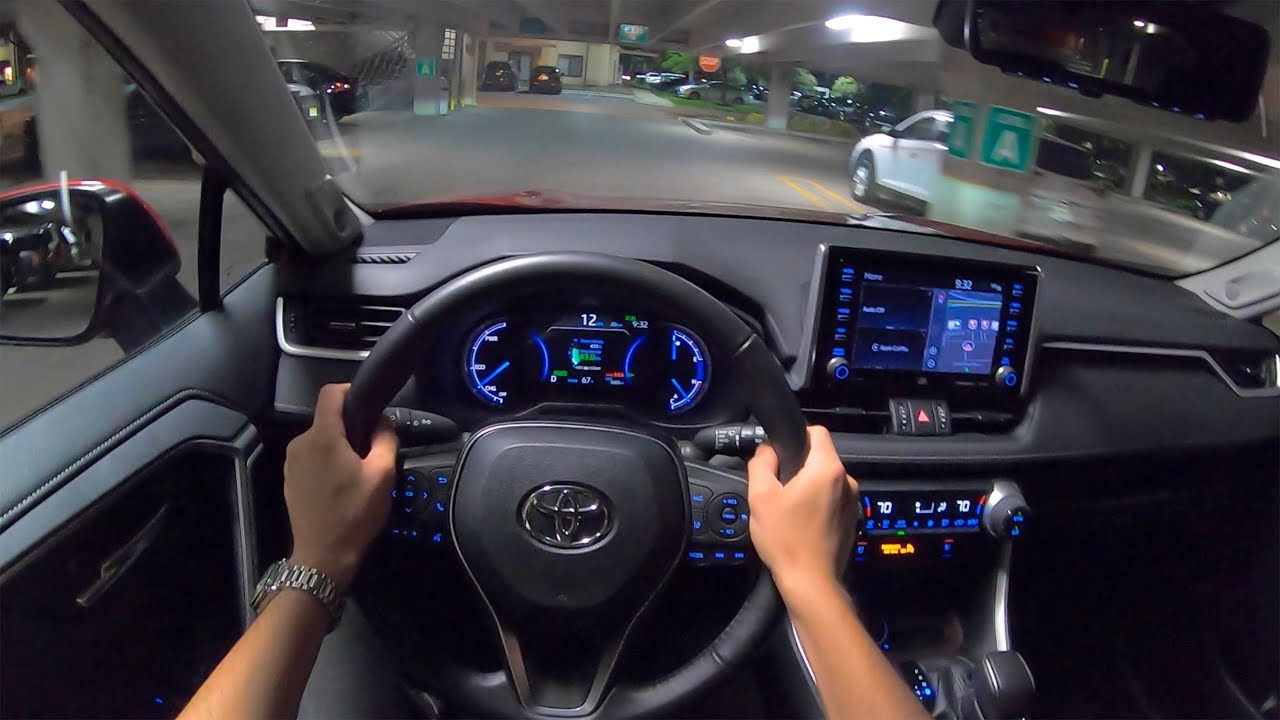


Toyota RAV4 Hybrid 2019 combines 222 hp, efficient hybrid consumption, ample space, and a price below many zero-km SUVs.
In a market dominated by increasingly expensive compact SUVs, the Toyota RAV4 has once again gained prominence by bringing together characteristics difficult to find in the same package: a larger size than the Corolla Cross, powerful hybrid engine, relatively low consumption, and prices that, in the used car market, are already approaching zero-kilometer mid-size SUVs currently sold in Brazil.
Globally launched in its fifth generation in 2018 and consolidated in 2019, Toyota’s hybrid model drew attention for delivering up to 222 hp in European AWD versions, 0 to 100 km/h acceleration in about 8 seconds, ample interior space, and official consumption that can exceed 20 km/l in certain international measurements.
RAV4 Hybrid 2019 became larger than the Corolla Cross and changed its global standing
The fifth generation of the RAV4 marked an important change in Toyota’s strategy. The model ceased to be just a traditional family SUV to adopt a more technological and global positioning.
-
Electric Revolution: Watts W125 Motorcycle Offers 160 km Range, 90 km/h Speed, and Affordable Price Starting at $3,000

-
General Motors Replaces Over a Thousand Workers with 50 Cobots at Electric Vehicle Plant, UAW Union Criticizes Move Amid Industry’s Automation Push

-
Bosch and Nikon 3D Print Entire Aluminum V8 Engine Block, Sparking New Competition in the Automotive Industry

-
Honda and Nissan Form Alliance to Tackle Competition from Chinese Automakers After $9 Billion Loss


With approximately 4.60 meters in length and a wheelbase of about 2.69 meters, the SUV became larger than the Toyota Corolla Cross currently sold in Brazil.

Furthermore, the project brought a more robust look, an enlarged cabin, and a trunk that can reach close to 580 liters depending on the configuration.
Hybrid system delivers up to 222 hp and acceleration close to turbo SUVs
The hybrid powertrain was one of the most important points of the model’s global success. According to Toyota Europe itself, the Dynamic Force Hybrid system delivered up to 222 hp in European AWD-i versions and about 218 hp in front-wheel-drive variants.
The powertrain combines:
- 2.5 naturally aspirated engine;
- electric motors;
- e-CVT transmission;
- hybrid electronic management.
Even though it was focused on efficiency, the SUV could accelerate from 0 to 100 km/h in approximately 8.1 seconds in AWD versions.
This placed the RAV4 Hybrid at a performance level close to various mid-size turbo SUVs currently sold.
Hybrid consumption still impresses years after launch
Another central factor in the model’s success was precisely its consumption. International data indicates official combined averages between approximately 4.4 and 4.7 liters per 100 km, equivalent to something close to 21 to 22 km/l in certain European homologations.
In the United States, the EPA recorded numbers close to:
- 41 mpg city;
- 38 mpg highway;
- 40 mpg combined.
Even considering differences between international measurement standards and real-world use, consumption remained extremely competitive for a mid-size SUV with over 200 hp.
Toyota transformed the RAV4 into one of the best-selling hybrids in the world
The model quickly consolidated in markets such as:
- United States;
- Europe;
- Japan;
- Canada;
- Australia.
Toyota even reported that most European RAV4 buyers were already choosing hybrid versions during the first years of the new generation.


This helped the SUV become one of the global benchmarks in hybrid electrification outside the premium segment.
Interior space became one of the SUV’s major differentials
Besides efficiency, the RAV4 gained fame for its interior space. The TNGA platform brought better cabin utilization, a more comfortable rear seat, and a spacious trunk.

In family markets, this greatly increased the model’s appeal for those who needed:
- space for children;
- long trips;
- luggage;
- urban comfort;
- elevated driving position.
Hybrid SUV also drew attention for its high range
With a tank close to 55 liters and relatively low consumption, some international measurements indicated a range exceeding 900 km and even over 1,000 km under certain ideal conditions.
This became one of the strongest arguments for those looking to reduce fuel costs without giving up a large SUV.
In AWD-i versions, the hybrid system also added electronic all-wheel drive. According to international technical data, a rear electric motor assisted in power distribution between the axles.
This improved:
- grip;
- stability;
- behavior in rain;
- slippery surfaces;
- quick starts.
Interior focused more on robustness and functionality than exaggerated luxury
The RAV4 Hybrid never tried to compete directly with German premium SUVs. Toyota’s proposal was different:
- ergonomics;
- functionality;
- reliability;
- efficiency;
- space.
The finish featured a robust design and practical solutions aimed at daily and family use.
Reputation for reliability helped SUV age well
Another point that strengthened the model in the used car market was precisely Toyota’s mechanical reputation. The brand’s hybrid system had already accumulated years of development before the arrival of the fifth generation RAV4.
This helped reduce distrust about battery durability and the electrical system. In several international markets, and also in some Brazilian offers of independent import or premium used cars, the 2019 RAV4 Hybrid appears costing values close to or lower than those charged for current new medium and compact SUVs.
The contrast is striking because many new models:
- deliver less power;
- consume more;
- have less space;
- use smaller turbo engines.
RAV4 became a symbol of the hybrid transition before the explosion of electric vehicles
When the fifth generation was launched, the global market had not yet fully entered the current phase of 100% electric vehicles.
Toyota then bet on a more conservative, but extremely efficient, hybrid strategy. The result was an SUV that managed to:
- reduce consumption;
- maintain high range;
- avoid charging dependency;
- preserve traditional practicality.
SUV showed that efficiency didn’t have to mean a small, weak car

For many years, economical vehicles were associated with compact, low-power cars. The RAV4 Hybrid helped change that perception. The model showed that it was possible to combine:
- more than 220 hp;
- family space;
- medium size;
- efficient consumption;
- high range.
This helped transform the SUV into one of the global benchmarks of the modern hybrid era.