






 Portuguese
  Spanish





The New National Rule Changes the Way IPTU Is Charged and May Affect Taxpayers with Small Debts. The Notary Protest Becomes Required Before Tax Enforcement and Has Immediate Effects on Credit and Properties.
Starting in 2025, the prior protest of the Active Debt Certificate (CDA) will become the rule for IPTU collection before filing for tax enforcement.
The guidance stems from the judgment of Topic 1184 by the Supreme Federal Court and Resolution 547/2024 of the National Justice Council, amended in 2025, which condition new actions on the prior extrajudicial collection attempt and the protest, except in cases of waiver provided for in the regulation itself.
In practice, the notary office can issue the protest within three business days after notification without payment, with immediate repercussions on the debtor’s CPF or CNPJ.
-
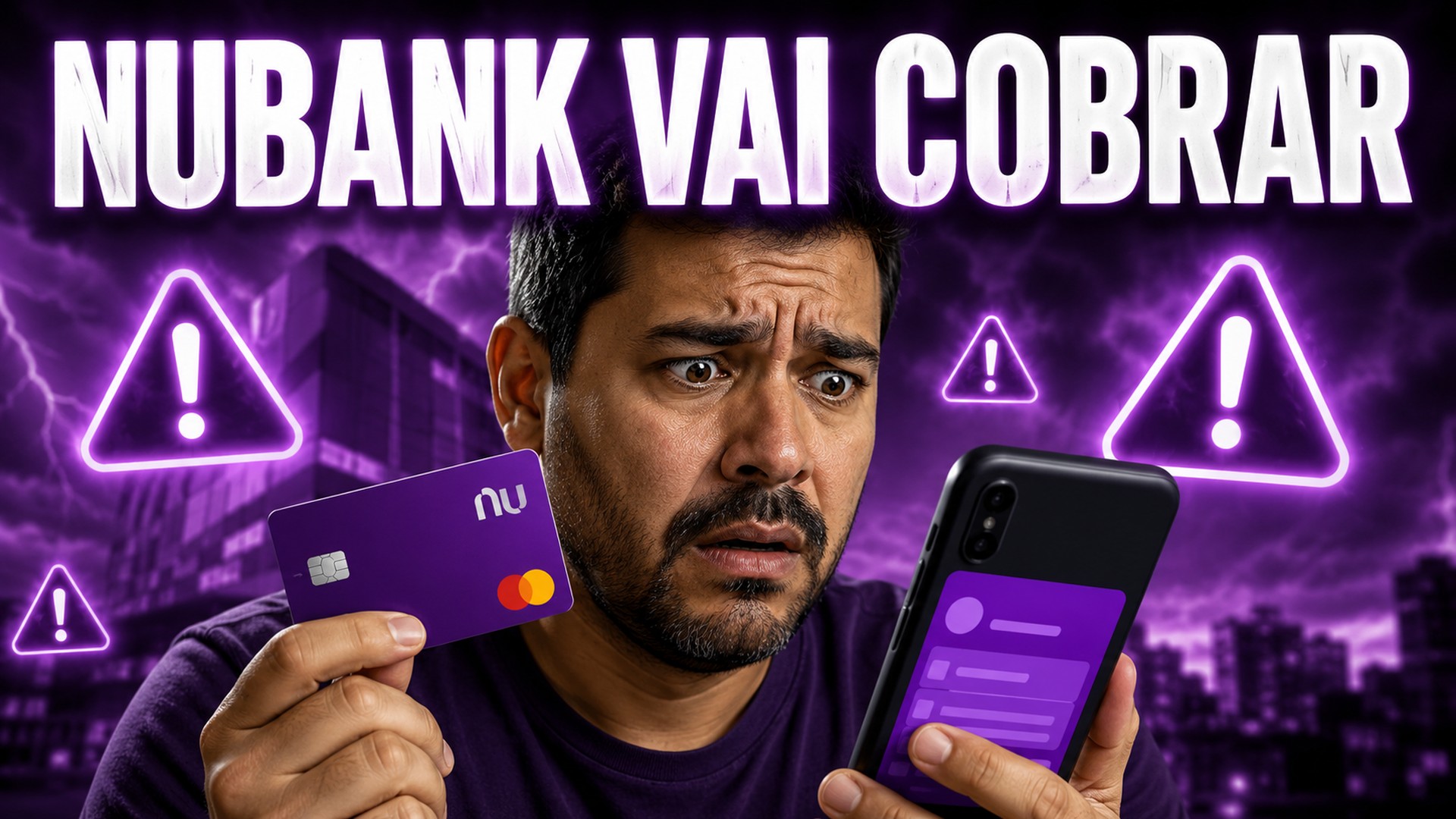
The perks at Nubank are over: the bank announces a monthly fee for HBO Max, which was “free,” with a 12-month term on Ultravioleta, 6 months on Nubank+, and the fee starting from January 2027.

-
The Chamber releases R$ 10 billion to hold the price of diesel until December and proves that Brazilian fuel remains tied to Congress.

-
Has the charge for sitting together ended? Anac confirms that minors under 16 have the right to a seat next to their guardians without an extra fee, and airlines may be penalized for failing to comply with the new rule.

-
After nearly two decades in operation, the Grupo Dass shoe factory ends production, confirms 150 layoffs, and shows how the drop in orders changed everything.



What Changes with STF and CNJ
The STF established that the Treasury must prioritize extrajudicial means of recovery before resorting to the judiciary.
In line with this, the CNJ linked the courts to the requirement of prior measures: conciliation or administrative solution, and, as a rule, the protest of the CDA.
Tax enforcement is only justified after these steps have been demonstrated, and courts are already implementing procedural filters that reject petitions lacking the required proof.
Additionally, the 2025 regulatory update included situations where the protest can be waived, such as when there is registration of the CDA in property records, indication of attachable assets, or inclusion of the debt in official registries like Cadin.
Three-Day Deadline: How the Protest Works
The procedure is standardized.
The city hall sends the CDA to the notary office, the debtor is notified, and if no payment is made, the notary registers the protest within three business days from the date of filing.
The registration will then appear in the databases of notary offices and credit protection entities, affecting the risk assessment by banks and financial institutions.
In many locations, the notification arrives via email or SMS; if the debtor cannot be located, notification by announcement is used.
Sale, Financing, and Registration: When There Is a Real Restriction
The protest impacts credit and makes financing difficult almost immediately, because the debtor’s name is negatively impacted.
In the real estate market, this often stalls the approval of bank credit for purchases and prevents new guarantees until regularization occurs.
However, it is important to distinguish effects: the protest, by itself, does not result in an automatic block of the property’s registration.
The annotation in the registration depends on other instruments, such as the pre-executory registration of the CDA to publicize the debt in property records or the unavailability of assets by court order.
The Supreme Court validated the registration as a means of publicity and prohibited administrative unavailability without a court decision.
Thus, the sale is only effectively blocked in the registry when there is unavailability or restriction noted.
Without this, the denial of credit and legal risk make the transaction unfeasible at banks, but do not “lock” the registration automatically.
Small Debts Also Count
The public policy aims to relieve the judiciary from low-value collections.
Nonetheless, there is no legal minimum for protest.
Municipalities can register any delinquent debt as an active debt and direct the CDA to the notary office, including small amounts.
In these cases, in addition to the tax with interest and fines, notary fees are added.
Conversely, judicial enforcement of very low debts tends to be blocked, following the parameters set after Topic 1184 and CNJ regulation.
Why Collection Moves to Notary Offices
The focus is on efficiency.
Studies cited by the STF indicate that the minimum cost of a tax enforcement exceeds the value of many municipal credits.
The São Paulo Court of Justice reports that a large part of the historical stock involved very low-value IPTU, which pressured the congestion rate and immobilized resources.
By shifting the initial collection to notary offices, municipalities can achieve quick responses and, when necessary, take to the judiciary only cases with a greater prospect of recovery.
Recovery by Notary Offices Advances
Since the consolidation of the new framework, revenue collection through protests has increased.
Between March 2024 and April 2025, the CNJ recorded tens of billions of reais recovered by public entities using notary protests and related extrajudicial measures.
The main effect derives from the incentive to immediate regularization: upon seeing their name negatively impacted, taxpayers seek settlement, installment, or payment in full to clear the record and regain access to credit and financial services.


Local Procedures and Removal of the Protest
Cities that already adopt the protest as routine tend to quickly enroll the debt as active debt and send the CDA to the notary office.
If the debt is settled within the notification period, the protest is not recorded.
If there is a record, the taxpayer pays the debt and requests the removal.
As a rule, the city hall issues the letter of consent, and the interested party bears the cancellation fees at the competent notary office.
After cancellation, the removal of the notation from the protest databases and credit bureaus occurs on average within three to five business days.
When there is any notation in property records from pre-executory registration or from a decision of unavailability, the removal requires the proper procedure with the registration authority.
Updated Legal Framework
Three pillars support the change.
The first is the decision of the STF on Topic 1184, which guides the extinction of low-value tax enforcements and requires the adoption of extrajudicial collection instruments before filing.
The second is the Resolution 547/2024 of the CNJ, improved in 2025, which made this guideline a binding procedural rule, stipulating the prior protest of the CDA as a condition for new enforcements and listing cases for waiver.
The third is the Complementary Law 208/2024, which amended Article 174 of the National Tax Code to include extrajudicial protest as a cause for interrupting the prescription, expanding the time window for the administrative recovery of credit.
Impacts under Discussion
Experts in tax law see gains in efficiency and reduced litigation.
Still, there are questions about proportionality when fees and charges exceed the value of the IPTU itself.
Another concern is effective communication with the taxpayer: with electronic notifications and announcements when registration data is outdated, some debtors only discover the problem when trying to sell or finance the property.
Registration updates and communication between notary offices and city halls, required by recent rules, are likely to reduce these cases, but the transition will require administrative adaptation.
If extrajudicial collection accelerates regularization, to what extent does the immediate protest of modest IPTU debts improve compliance without imposing disproportionate effects on families with tight budgets?





GRANDE **** SO CRIAM LEI PRA FERRAR COM O BRASILEIRO
Façam o L comigo!!! Vamos lá!!!
****, não foi o L que provocou a dívida, há anos que são enviadas débitos para os cartórios cobrarem.
Sobre a cobrança de IPTU atrasado nas mãos de Cartórios: Há casos e casos, sabemos também que os cartórios não perdoam e que suas taxa de cobranças são absurdamente caras que dificultam os devedores. É super cômodo para o capital e prefeitos capitalistas agirem desse modo, deixa os donos de imóveis mais encalacrados em dívidas e ainda correndo no risco de perda de seu bem maior que pode ser o seu único bem maior, ou seja o seu único imóvel. Prós super ricos ou prós devedores contumazes, pode não afetar tanto, mas prós assalariados… Há umas orientações e até algumas possibilidades de recursos a respeito, mas a experiência nos mostra no dia-dia como agem e sempre saímos perdendo. Além de termos que arcar com a dívida do IPTU, juros altíssimos, ainda vamos com certeza ressarcir os cartórios pelos seu empenho, etc.
Um absurdo!!!
R conheço que existem imóveis caindo aos pedaços oferecendo riscos físicos, ocupações indevidas etc, mas há casos e casos e não devem de modo algum nos colocar todos no mesmo saco em nome de dívida ativa. 🤦🏿♀️🤦🏿♀️🤦🏿♀️🤦🏿♀️😭😭😭😭😡😡😡