





 Portuguese
  English
  Spanish
  2 min of reading


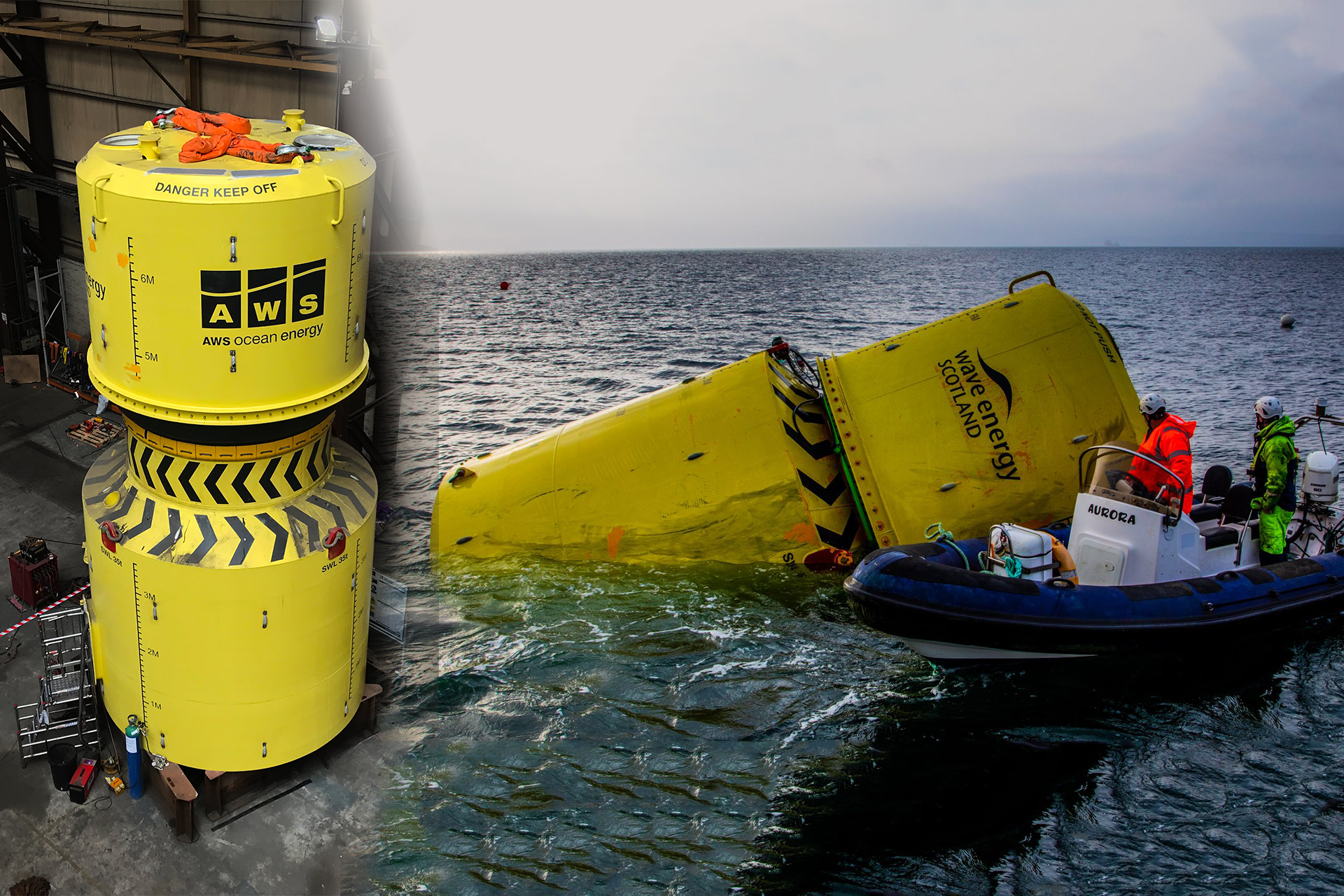
A Scottish company called AWS Energy has created and is testing a prototype of a wave energy generator called Waveswing. The metal buoy, which has been undergoing ocean tests at the European Marine Energy Centre (EMEC) in Orkney for the past six months, has surprised researchers. The device achieved a 20% better energy generation efficiency than expected.
The Waveswing is a type of metal buoy in the shape of a cylinder that is fixed in one location on the ocean floor. During operation, it maintains a submerged position and reacts to pressure changes caused in the water by waves. When a wave passes over the device, the pressure that builds up pushes the “floating” upper part of the device downward. This causes it to slide down relative to the lower section, and a rolling seal ensures that no water enters.
Watch This Video to See How the Waveswing Works, the Wave Energy Generating Buoy Created by AWS Energy
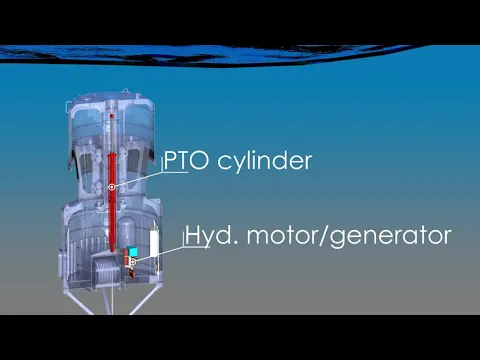

The linear motion causes the air inside the Waveswing mechanism to be compressed, forming an air spring that acts to push the floating piece back as the wave advances. The up-and-down movements of the buoy activate a hydraulic motor that, in turn, translates the linear motion into rotation. With the rotational motion, a standard electric generator produces energy from the upward and downward movements.
-
A former 27-year-old engineer gave up everything, went to live in a trailer in the middle of Texas, and created the largest telescope ranch in the world: clients from anywhere control about 550 devices bolted to concrete under a sky with no light pollution via computer.

-
Imagine walking into a dealership to buy a humanoid robot instead of a car: this is exactly the future that BYD is designing, leveraging the same batteries, motors, and artificial intelligence from their vehicles to create autonomous machines, although there is no release date yet.
-
Scientists found hidden within the plants a DNA archive that survived intact for more than four hundred million years.

-
NASA astronauts have captured from the International Space Station rare lightning that shoots upwards instead of falling to Earth, like the giant jet photographed in 2025 by astronaut Nichole Ayers, high-altitude electrical phenomena almost impossible to see from the ground.


Tests with AWS Energy’s Waveswing Surprise Researchers
According to AWS, the Waveswing managed to capture an average of 10 kW of energy, with peaks of up to 80 kW, despite having a rated capacity of only 16 kW. The test also revealed that the device can be completely deployed from the dock to become fully operational in less than twelve hours and that it can withstand extreme weather conditions, such as a strong gale, for example.
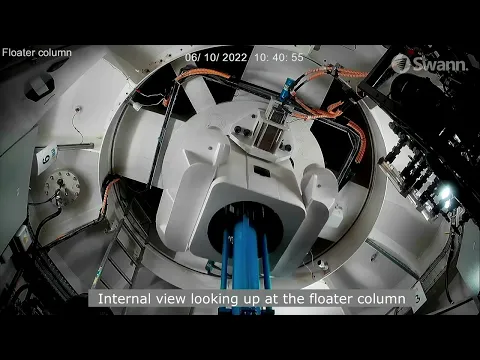
This energy generation capacity of the Waveswing prototype may not seem commercially promising. However, according to AWS, these units will be customizable for power outputs ranging from 15 kW to 500 kW. In the following video, you can see a more realistic operation of the wave energy generating buoy.







Be the first to react!