





 Portuguese
  English
  Spanish
  6 min of reading
  0 comments


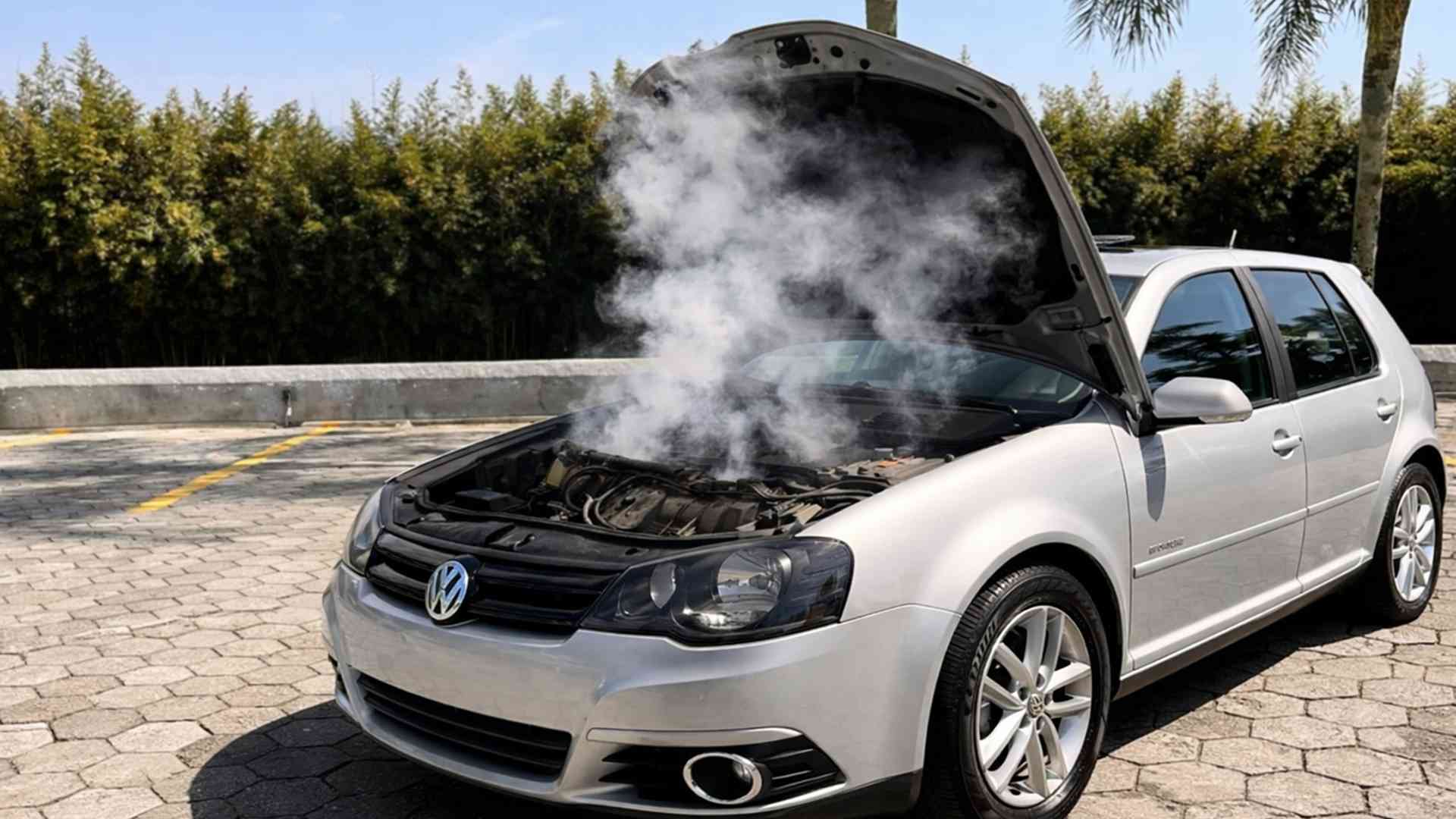
The engine overhaul of a Golf Sportline 1.6 revealed signs of previous workshops without a definitive solution, with excessive glue, inadequate parts, carbonization, rust, 28 new components, and a process that ultimately raised the question of when it is worth buying a car below the Fipe
Channel Cars with Tiago showed the disassembly and mechanical reconstruction of a Golf Sportline 1.6 with serious operational failures, in a process that exposed errors from previous repairs, significant internal wear, and the need for an engine overhaul with extensive component replacement.
The car arrived smoking, consuming oil, knocking, and without having the problem resolved, even after visits to other workshops.
The vehicle was part of a project that had already undergone painting and suspension work before the mechanical stage. The new phase began with the removal of the air filter, followed by the removal of the fuel injectors, which would also be checked to ensure better operation of the assembly.
-
New Honda City with a hybrid engine of up to 126 hp features a sporty RS look, 10-inch screen, 360° camera, new wheels, and a price equivalent to R$ 129,000 before the official debut in Brazil in August.

-
No automatic car: Renault Niagara 2027 will have a manual version for work, 1.3 turbo flex engine with up to 163 hp, 4×4 options, EDC transmission in the expensive versions, six airbags, and ADAS package to compete with Fiat Toro in Brazil.
-
BYD prepares to bring intelligent driving technology to Brazil in 2027 and promises to equip cars sold in the country with features that assist drivers in driving, parking, and handling traffic more safely.

-
BNDES opens billion-dollar credit of up to R$ 50 million per client for the purchase of trucks, buses, and equipment and promises to accelerate the renewal of the heavy fleet on Brazilian roads.




Next, the intake manifold was disassembled, and the throttle body appeared quite dirty, as did other parts of the system. The water manifold also drew attention, particularly due to the presence of glue in a spot where the application was deemed unnecessary and inappropriate.
With the removal of the catalytic converter, the engine was practically free to be removed. The disassembly progressed to the opening of the assembly, with the expectation of identifying the extent of the damage and confirming what would need to be included in the engine overhaul.
The engine overhaul began after complete disassembly of the assembly
Upon opening, the engine showed clear signs of wear. The sides of the cylinders were mirrored and wavy, while the pistons showed marks of irregular oil burning, with dark areas in the center and lighter ones at the edges.
One of the pistons appeared wetter than the others, indicating a worse burning condition in that cylinder. The assessment made during disassembly indicated that the necessary service involved a general overhaul, including the top part, bearings, rings, and head analysis.
The inspection also found signs of previous maintenance. The water pump and belt appeared to be new, reinforcing the perception that the engine had already been to other workshops before reaching that point, without the main problem being eliminated.
The visible screws in the assembly were no longer original. The water pump itself, although appearing recent, was discarded for reuse because it showed a leak at the breather and could lead to a new return to the workshop after reassembly.
Excess glue, inadequate gasket, and carbonization worsened the situation
With the cylinder head removed from the block, the internal condition of the engine became even more evident. There was heavy carbon buildup, scratched parts, and a risk that the head would not be salvageable, in addition to the need to measure the height of the part, as it showed signs of having been previously machined.
The gasket found was not the one indicated for that assembly. Instead of the original iron sheet gasket, there was an asbestos gasket, deemed inappropriate for the correct assembly between the block and the head.
There were also signs of overheating in the engine. The additive used previously was not in good condition, and the presence of rust in the galleries reinforced problems in the cooling system, with a risk of losing efficiency in water circulation.
The excess glue reappeared in several areas. Part of this material had advanced to regions where water circulates, which could cause blockages in small passages and further compromise the engine’s cooling.
At the bottom, the opening of the oil pan revealed a lot of accumulated sludge and a torn screen in the pickup. The punctured part was treated as a makeshift solution associated with lubrication problems, while the crankshaft remained standard and the bottom part showed no signs of having been tampered with before.
New and original parts guided the assembly
After disassembly, the process moved to the workbench with the block already overhauled and the definition of the parts that would be used in the service. The list included oil pump, flywheel seal, timing belt kit, water pump, original cylinder head screws, filter, pickup, water manifold, appropriate glue, new head, and oil.
The explanation about the engine overhaul highlighted the importance of cross-hatching in the block. This finish was presented as crucial to prevent the engine from continuing to consume oil after the service, a problem that can arise when the honing is circular due to lack of proper tooling.
The block also showed persistent rust. The origin was associated with the use of water and poor additive, resulting in sludge formation that was difficult to remove even after cleaning and immersion in soda, requiring further maintenance in the cooling system to continue cleaning the residues.
Another point emphasized was the fastening of the cylinder head. The replacement of the screws was deemed essential, as reusing this material in repeated disassemblies compromises the gasket compression and favors new burning, especially when tightening is done without a torque wrench.
During the installation of the flywheel seal, the tone wheel received special attention. The correct positioning required a specific tool, as the rotation sensor depends on this reading for the control unit to recognize the position of the pistons and the engine’s operating moment.
The assembly continued with a new oil pump and appropriate gasket, without the use of glue at this point. In the block and the overpan, the sealing was applied only where it should be, in controlled quantity, to avoid new leaks and repeat errors seen during disassembly.
The difference between original and aftermarket appeared in several components
Throughout the service, other parts were included as the assembly progressed. A new clutch, flame arrestor, and exhaust manifold gasket arrived, along with a direct comparison between a weaker aftermarket part and the original, described as having precise fit and more robust construction.
The original cylinder head gasket was installed without glue, followed by the new head and tightening with the correct torque. The reference used for this procedure came from a paid application, used to follow the appropriate specification for that engine.
The chosen water pump had a pressed rotor, not plastic. This option was justified by the risk of the plastic rotor coming loose with heating, causing the shaft to spin without moving the water and leading to overheating.
A broken cover near the belt was also replaced, even though it was a small detail. The assessment was that the entry of dust or stones at that point could wear the belt and compromise all the work done up to that point.
The engine then returned to the Golf’s engine bay, with part of the assembly already completed, threads redone in a stripped area, and a new clutch installed. After fitting with the transmission and reconnecting the systems, the assembly approached the final stage.
Correct oil, final start, and budget closed at the end
At the conclusion, a viscosity of 5W40 was indicated as correct for the EA 111 engine, with the requirement of VW5088 specification. It was also informed that changes should be made every 8,000 kilometers, or every 5,000 in severe use, with a warning about the frequent use of thicker and cheaper oils in this type of engine.
On the fourth day of monitoring, the engine was already in the car and ready to start. The vehicle would still undergo a review of part of the electrical installation, electronic adjustment, and ABS verification, but the main assembly was already functioning, with a renewed cooling system, replaced oil sender, and new battery.
The budget was presented only at the end of the process, after the engine start and the display of the replaced parts. The total reported for the maintenance, including labor, was R$ 13,870, resulting from an intervention with 28 new and original parts around the engine overhaul of the Golf Sportline 1.6.





Be the first to react!