Portuguese
  Spanish




Inequality Still Challenges Economic Growth in 2025
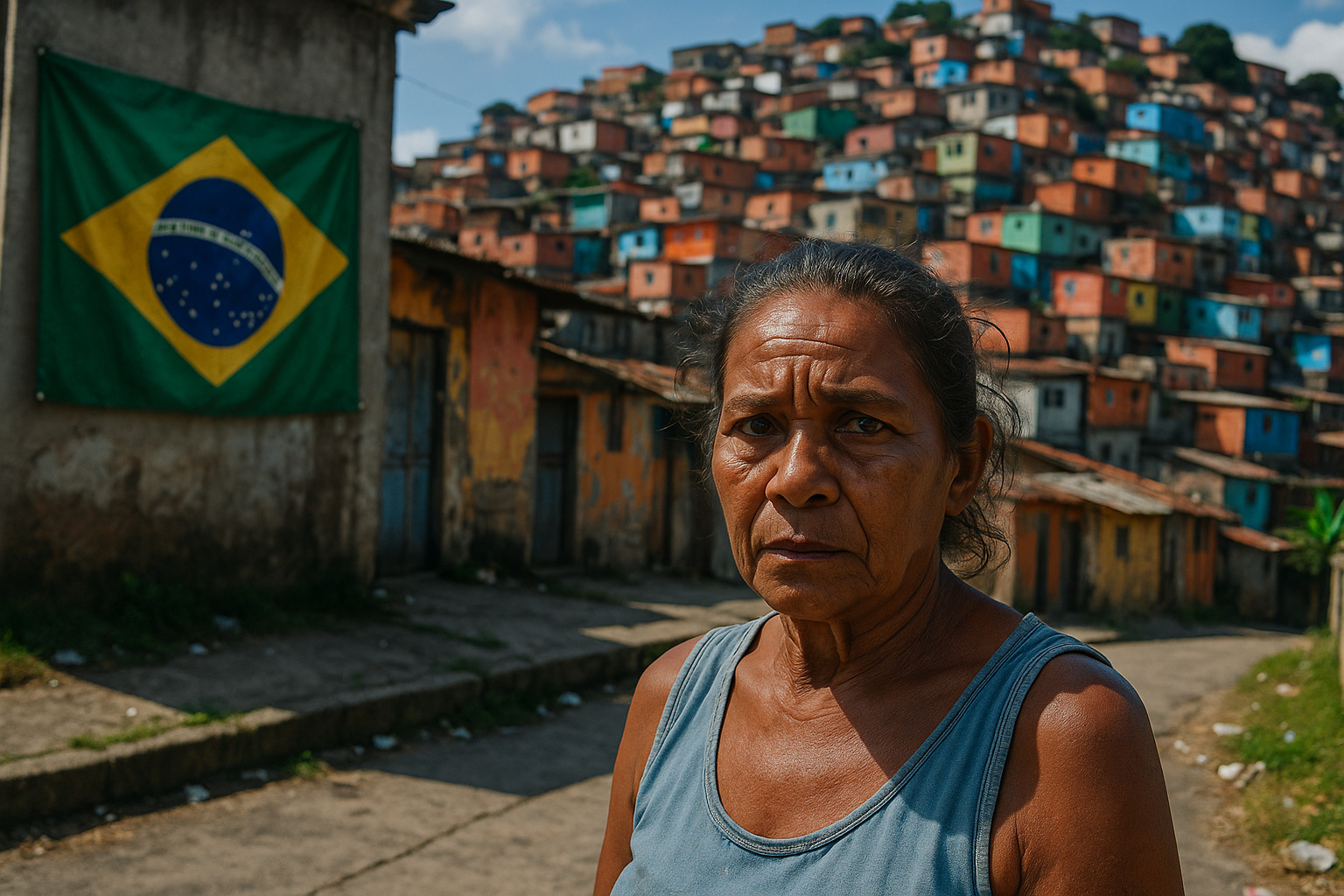
Brazil, according to data from the Brazilian Institute of Geography and Statistics (IBGE), released on July 5, 2025, faces a scenario of alarming inequality.
Although Gross Domestic Product (GDP) grew by 2.5% in 2024, much of this growth did not reach the most vulnerable populations.
Thus, the country dangerously approaches integrating the group that comprises 50% of the world’s population with the lowest income.
-
Brazilian Workers and Instructors to Train in China on Electric Car Technology Ahead of New Factory Opening in Brazil

-
Viral Message Claiming Government Will Deposit Money for Registering CPF as Pix Key Debunked

-
Embraer Acquires Full Control of Mexican Aircraft Interiors Manufacturer EAI to Reduce Supplier Dependence and Protect Margins Amid Global Aviation Competition

-
Controversial Amazon Highway BR-319 to Receive $1.3 Billion for Road Upgrades and $570 Million for Territorial Governance in Brazil


According to the Getulio Vargas Foundation (FGV), even with income transfer policies, wealth concentration still restricts structural advances.
Average Income Stagnates While Poverty Grows
Although emergency measures have been implemented since 2022, experts point out that household per capita income has remained virtually stagnant.
In June 2025, IBGE highlighted that the average monthly income stayed around R$ 1,625, just above the level recorded in 2019.
This way, the post-pandemic recovery is losing momentum, exposing millions of Brazilians to new situations of vulnerability.
Data from the Institute of Applied Economic Research (Ipea) reinforce that the poverty index rose again in 2024.
The index reached 33.2% of the population, the highest level since 2015.
Thus, the social impact of this scenario concerns multilateral organizations, such as the World Bank.
Factors That Maintain Wealth Concentration
Among the main factors keeping Brazil in the poorest half of the planet are high structural unemployment and low productivity.
Although the labor market generated 1.8 million formal jobs in 2024, according to the General Registry of Employed and Unemployed (Caged), informality remains high.
Informality affects more than 39% of workers, limiting access to rights and hindering the advancement of average income.
At the same time, FGV indicates that delays in basic education jeopardize the future of new generations.
Additionally, poorly distributed tax incentive policies widen the gap between rich and poor.
This assessment is by the National Confederation of Industry (CNI).
Measures to Reverse the Scenario
To face this reality, the federal government has been discussing since January 2025 the expansion of programs like Bolsa Família.
According to the Ministry of Social Development, about 21 million families have already been assisted.
Analysts advocate for integration with job generation policies.
The National Education Plan, revised in March 2025, also aims to reduce regional inequalities.
The focus is on strengthening technical education.
At the same time, the Institute for Industrial Development Studies (Iedi) points out that modernizing the industry is necessary.
This modernization is essential to create quality jobs.
Therefore, experts assert that combating inequality requires coordinated and long-term policies.
Perspectives for the Future
While economists, such as those from FGV and Ipea, emphasize the importance of structural reforms, the debate on taxing large fortunes is gaining momentum.
Since April 2025, Congress has been discussing proposals to make the tax system more progressive.
Reports from IBGE indicate that resuming sustainable growth depends on measures that combine incentives for productivity and professional qualification.
It is also essential to ensure income redistribution.
Thus, Brazil can move away from the poorer half of the world, ensuring real opportunities for millions of citizens.
However, experts warn: without concrete actions, the risk of regression will continue to loom over the national economy.