






 Portuguese
  Spanish
  4 min of reading
  1 comment


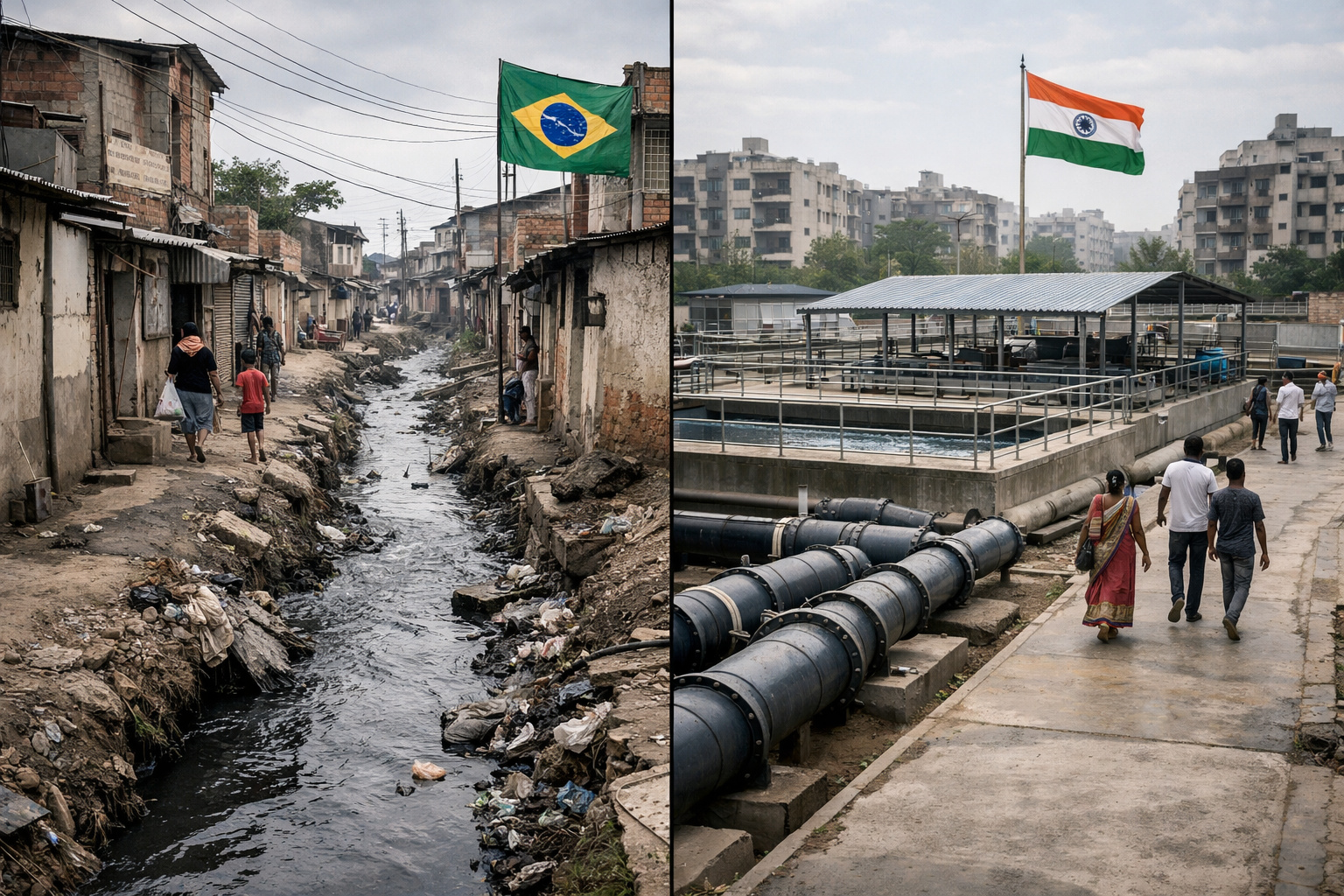


Even With A Larger Economy, Brazil Has Sewage Coverage Lower Than That Of India And Iraq; Official Data Reveals Direct Impact On Health, Environment, And Inequality.
Basic sanitation has become one of the clearest indicators of structural delay in Brazil. Even though it is one of the largest economies in the world, the country falls behind nations with much lower per capita income, such as India and Iraq, when it comes to access to sewage collection and treatment. Official numbers show that the problem is neither isolated nor recent: it is a historical failure that affects public health, economic productivity, and environmental quality on a large scale.
The Reality Of Sanitation In Brazil In Official Numbers
According to the 2022 IBGE Census, only 62.5% of Brazilian households have access to the general sewage network. This means that over 37% of the population lives without adequate collection, relying on rudimentary septic systems, precarious systems, or direct dumping into rivers and soil.
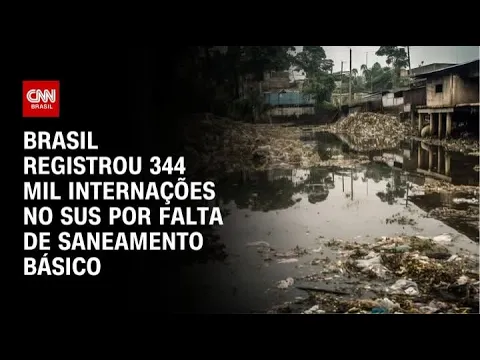

The data becomes even more alarming when it is observed that about 24% of households use solutions considered inadequate, according to international sanitation criteria. In absolute terms, this amounts to tens of millions of Brazilians living daily with elevated sanitary risks.
-
Survivor of 1966 SS Daniel J. Morrell Shipwreck in Lake Huron Recounts 38-Hour Ordeal in Extreme Cold

-
The Greatest Hoax in World Cup History? The Film That Denied Brazil’s 1958 Victory and Exposed How Fake Evidence Can Seem Convincing on TV
-
Fake South Korean Online Stores Offer Shopping Thrill Without Spending Money or Receiving Products
-
The War of Jenkins’ Ear: How a Severed Ear Sparked One of the 18th Century’s Most Unusual Conflicts


How India And Iraq Surpassed Brazil
The international comparison highlights the extent of Brazil’s delay. According to consolidated data from the World Bank and the World Health Organization (WHO), India has surpassed the milestone of 70% access to improved basic sanitation, after two decades of massive investment in sanitary infrastructure, especially in rural areas.
The Indian case is noteworthy because, in the early 2000s, the country had much lower indices than Brazil. In about 20 years, the scenario has reversed. Iraq, even facing armed conflicts and political instability, also shows a higher percentage of access to sanitation than Brazil, supported by projects focused on urban areas and infrastructure reconstruction.
The Direct Impact On Public Health
The lack of adequate sanitation is not just an urban comfort problem. It is directly associated with infectious diseases such as diarrhea, hepatitis A, worms, and leptospirosis. Studies in the public health sector indicate that every real invested in sanitation generates multiple savings in the health system, reducing hospitalizations and infant mortality.
In Brazil, regions with lower sewage coverage coincide with higher rates of waterborne diseases, burdening the SUS and perpetuating cycles of poverty.
Regional Inequality Deepens The Delay
Sanitation in Brazil is not only insufficient; it is deeply unequal. While some southeastern capitals approach indices comparable to those of developed countries, states in the North and Northeast show coverage below 30% in several municipalities.
This disparity means that the Brazilian delay is, in practice, the sum of extremely distinct realities within the same national territory, something that countries like India faced with centralized policies and aggressive national goals.
Treated Water Advances, But Sewage Remains A Bottleneck
It is common to hear that Brazil has good access to drinking water — and this is partially true. About 83% of the population has access to treated water, according to sector data. However, water without sewage does not solve the problem, since rivers, aquifers, and springs end up contaminated due to the lack of proper treatment.
This imbalance creates a paradox: the country captures, treats, and distributes water, but returns to the environment raw sewage, increasing future costs and degrading entire ecosystems.
Why Brazil Fell Behind
Experts point out three main factors for Brazil’s delay:
- Low historical investment, with decades of insufficient prioritization of sanitation;
- Institutional fragmentation, with thousands of municipalities lacking technical or financial capacity;
- Slow and expensive works, often hindered by regulatory and political obstacles.
Meanwhile, countries that now surpass Brazil have adopted long-term national plans, with clear goals, continuous funding, and a focus on measurable results.
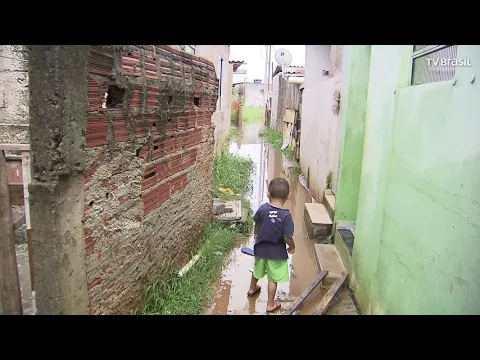
What Changes With The New Sanitation Framework
The New Legal Sanitation Framework, approved in 2020, established the goal of universalizing access by 2033. This means achieving 99% access to drinking water and 90% sewage collection and treatment. However, analysts warn that the current pace is still insufficient to meet the schedule without a drastic acceleration of investments.
If the country fails to advance, the risk is clear: to continue being surpassed by poorer nations, while facing ever-increasing economic, sanitary, and environmental losses.
A Delay That Costs The Country Dear
Falling behind India and Iraq in basic sanitation is not just a symbolic comparison. It is a portrait of how Brazil still fails to ensure the minimum essential infrastructure for its population. Sanitation has ceased to be merely a social issue — it has become a direct limiter of national development.
The question that remains is inevitable: how many more years will it take for the country to address something as basic as its own sewage?





Mas para a Cultura tem 16 bilhões. Prioridade de pobre metido a rico.