






 Portuguese
  Spanish
  3 min of reading
  0 comments


Lula Calls on BRICS Countries to Respond to Trump’s Tariff, Which Could Generate Billion-Dollar Losses in Global Trade and Raises Alarm Against U.S. Protectionism.
The Brazilian government went into maximum alert mode after Donald Trump’s announcement to impose 50% tariffs on Brazilian exports. The measure, officially announced in July by executive order from the White House, affects strategic sectors and deepens the trade crisis between the two countries.
Trump’s decision, controversially justified as a response to what he called a “witch hunt” against Jair Bolsonaro, provoked an immediate reaction from President Luiz Inácio Lula da Silva. Brazil has called for an emergency virtual meeting with BRICS countries next Monday (9/8), aiming to discuss a joint response to U.S. protectionist measures.
The Role of BRICS in the Crisis
The call comes at a time of strengthening for the bloc, which currently includes 11 countries: South Africa, Saudi Arabia, Brazil, China, Egypt, United Arab Emirates, Ethiopia, Indonesia, India, Iran, and Russia. Together, these countries account for over 40% of the world’s population and a large share of global oil and gas reserves.
-
Brazilian Joins Homeownership Consortium, Faces Decade of Dual Payments Totaling $141,000, Surpassing Traditional Mortgage

-
Land Rover to Halt Production in July, Putting 371 Jobs at Risk, as Chinese Automaker Negotiates to Convert Factory to 100,000 Vehicles Annually by 2027

-
Mexican Pest Threatens U.S. Cattle Herds at Historic Lows, Potentially Boosting Brazilian Beef Exports as Burger Prices Soar

-
Brazilian Freight Bill Progresses in Congress with $5,000 Minimum Wage, 70% Advance Payment, and Fines Up to $1 Million, as Agriculture and Industry Warn of Rising Costs and Legal Uncertainty


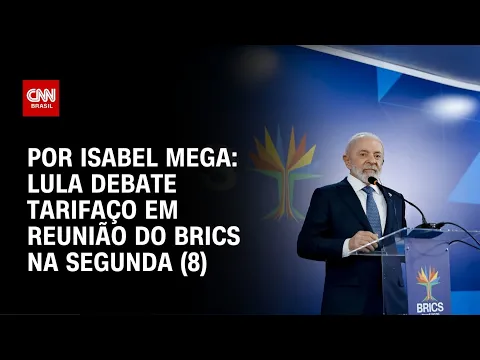

At the last summit, held in Rio de Janeiro in July, the leaders had already issued a statement criticizing the “indiscriminate increase in tariffs” in global trade. Without directly mentioning the U.S., the document reinforced the commitment to multilateralism and advocated for strengthening the Global South.
With Trump’s tariff escalation, expectations are that the meeting called by Lula will result in a stronger joint statement, condemning American protectionism and discussing coordinated retaliation measures.
The Impact on Brazil
The 50% tariffs imposed by the U.S. have the potential to cause billion-dollar losses. Products such as steel, aluminum, footwear, and meat are among the most affected, in sectors that employ hundreds of thousands of Brazilians.
According to estimates from the National Confederation of Industry (CNI), the tariff could represent a loss of up to 0.2 percentage points in GDP and the risk of 100,000 jobs. This forecast has sparked an internal debate about the need to expand trade partnerships outside the American orbit.
Lula has intensified diplomatic contacts not only within BRICS but also with leaders such as Emmanuel Macron (France) and heads of state from Nigeria, Ecuador, and Panama, seeking political support and new trade routes.
The Escalation Between Lula and Trump
The atmosphere between the two presidents has never been one of rapprochement, but the situation has worsened with recent episodes. In addition to imposing tariffs, Trump threatened to tax by 10% countries aligning with the “anti-American” policies of BRICS.
Lula, for his part, has emphasized in various international events that “Brazil does not humiliate itself” and that the country will defend its commercial interests together with its strategic partners.
The message has resonated among emerging economies, which see BRICS as an alternative to the dollar-dominated system and traditional financial institutions.
What Is at Stake
The call for the meeting is not just an emergency response. For Brazil, it is an opportunity to reaffirm its role as a leader in the Global South and enhance diplomatic relevance in the international arena.
If there is consensus, BRICS could adopt coordinated measures ranging from tariff retaliations to strengthening new trade mechanisms in local currencies, reducing dependence on the dollar.
Trump’s tariff move opens a new chapter in trade tensions between the U.S. and the emerging bloc led by Brazil, China, India, and Russia. While the immediate impact raises concern for the Brazilian industry, on the other hand, the crisis may accelerate the search for new markets and strategic alliances.
Monday’s meeting will be crucial in assessing the degree of cohesion of BRICS in the face of American pressure. More than tariffs, what is at stake is the role of the bloc in reshaping the global economic order.





-

1 person reacted to this.