






 Portuguese
  Spanish


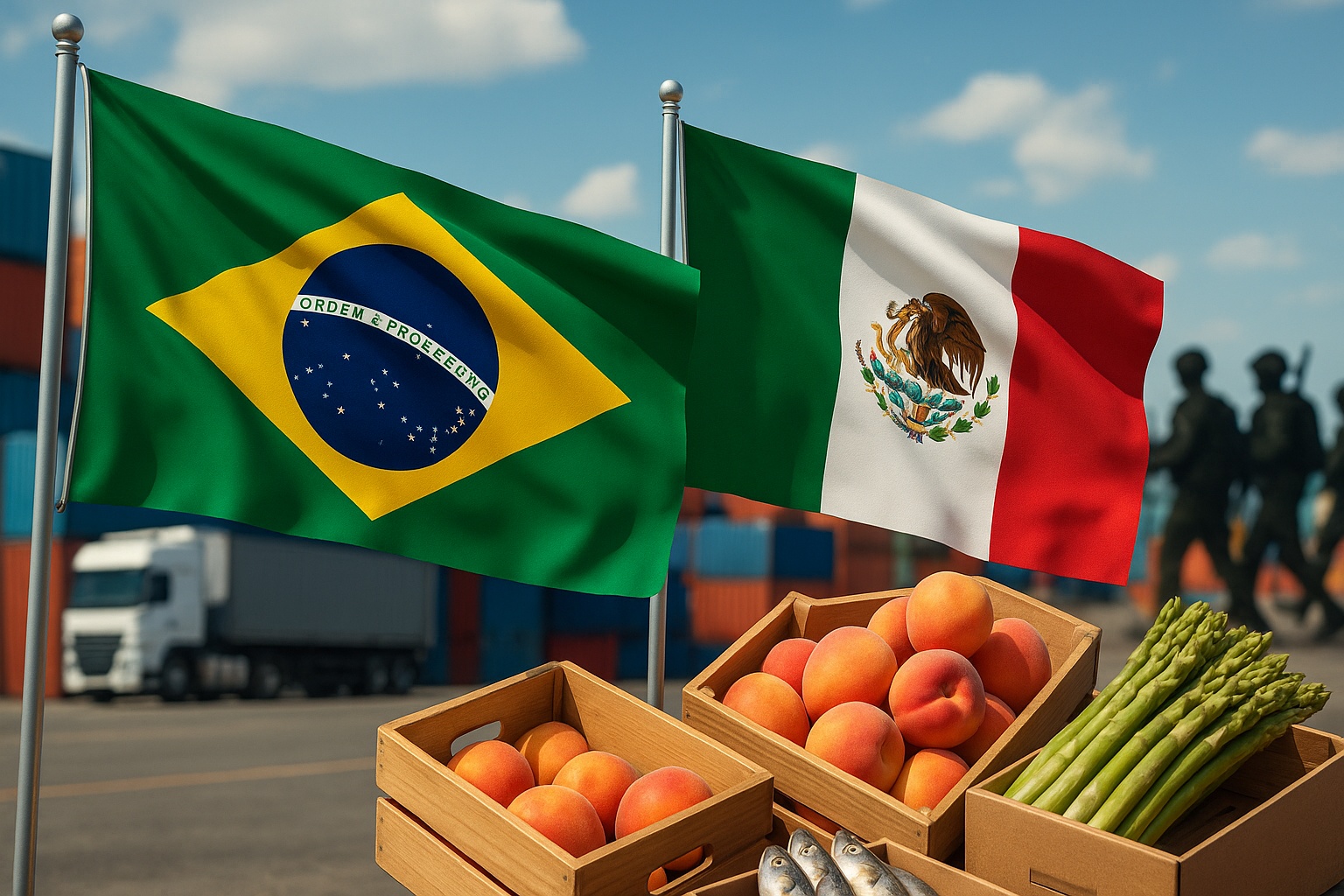
Brazil and Mexico Expand Commerce of US$ 13.6B: New Agreements Free Peaches, Asparagus, Tuna, and Feed, Opening New Phase of Regional Integration.
In August 2025, during an official visit to Mexico led by the Vice President and Minister of Development, Industry and Trade, Geraldo Alckmin, Brazil signed new bilateral agreements that expand trade between the two countries. The agenda marked a historic step: the market opening for Brazilian peaches, asparagus, and tuna derivatives, as well as the release of animal feed flour to Mexico. These measures strengthen the relationship between the two largest markets in Latin America, which in 2024 already recorded US$ 13.6 billion in bilateral trade.
Market Opening: Peaches, Asparagus, and Tuna Derivatives


The agricultural products included in the new package were longstanding demands of the Brazilian exporting sector. The fruit and vegetable — peach and asparagus — faced sanitary and tariff barriers that prevented their entry into Mexico.
Now, with the approval of Mexican authorities, Brazilian producers gain access to a consumer market of over 130 million inhabitants, highly integrated into international trade through USMCA (trade agreement between Mexico, the USA, and Canada).
-
India’s Sugar Export Cuts and Ethanol Shift Amid El Niño Threat Could Impact Global Prices and Stocks

-
Quarantine Pest Threatening Palm Trees Puts Brazilian Authorities on Alert, Prompts Monitoring at University of Taubaté and Potential Control Measures Across São Paulo
-
Global Alert: Report Finds 159 Pesticides in Coffee Beans Sold in Europe, Posing Serious Risks to Millions of Farm Workers
-
Low-Demand Brazilian Beef Offal Gains Popularity Abroad: Indonesia Purchases $19.5 Million, Boosting Revenue and Reducing Waste



Another highlight was the opening for tuna derivatives, a sector that creates thousands of jobs in the northern and northeastern states of Brazil. This achievement broadens the diversification of the export agenda, which until now has been dominated by soybeans, corn, meat, and iron ore.
Animal Feed Flour: Direct Impact on Livestock
Among the Brazilian gains is the release of animal feed flour. This input is strategic for the livestock sector, as it can be used to feed cattle and pigs, segments where Brazil is already a global leader.
By entering the Mexican market, the Brazilian product strengthens integrated productive chains and can open space for technological partnerships in animal genetics, health, and sustainable production.
Bilateral Trade: From US$ 10B to US$ 13.6B in Three Years
According to official data, trade between Brazil and Mexico surged from US$ 10 billion in 2021 to US$ 13.6 billion in 2024, a growth of 36% in just three years.
Among the main items exported by Brazil to Mexico are:
- Soybeans and derivatives;
- Beef and chicken meat;
- Chemical and petrochemical products;
- Automotive vehicles.
On the Mexican side, Brazil mainly imports:
- Light and heavy vehicles;
- Electronic components and auto parts;
- Chemical products and fertilizers.
With the new agreements, the expectation is that bilateral trade will exceed US$ 15 billion by 2026, increasing the share of high-value-added agricultural products.
High-Level Meetings and Future Commitments
The official visit included meetings between Geraldo Alckmin and the Secretary of Economy of Mexico, Raquel Buenrostro, as well as meetings with business leaders from both countries.
During the talks, not only agricultural topics were discussed, but also cooperation in aviation, renewable energy, defense, and technological innovation. According to Alckmin, the agreements reflect “mutual trust between the two largest economies in Latin America and the pursuit of greater integration in global production chains.”
Regional Benefits for Brazil
The opening for peaches, asparagus, and seafood will have a direct impact on Brazilian producing regions:
- Southern Brazil: Rio Grande do Sul and Santa Catarina are major peach producers, which now gain international scale.
- Southeast and Northeast: irrigated areas in the São Francisco Valley and São Paulo countryside can expand asparagus production for export.
- North and Northeast: fishing and processing of tuna gain a new market, creating more jobs and strengthening the local industry.
This movement represents the diversification of the export agenda, something that experts consider essential to reduce Brazil’s vulnerability during periods of fluctuation in traditional commodities.
The Geopolitical Weight of the Brazil–Mexico Partnership
Besides the economic figures, the rapprochement has strong strategic value. Brazil and Mexico are the two largest economies in Latin America, together accounting for over US$ 4 trillion in GDP.
With the new agreements, the countries signal that they intend to act as strategic partners, balancing the weight of relations with the United States, Europe, and Asia. This integration can give more prominence to the Latin American bloc in international negotiations on agricultural trade, climate, and food security.
Projections for the Next Years
Economists project that the trade flow between Brazil and Mexico will continue to grow in the coming years, especially due to the expansion of agricultural products and the strengthening of integrated industrial chains.
Among the projections:
- Trade flow exceeding US$ 15 billion by 2026.
- Expansion of air and logistics lines between the countries.
- Possible inclusion of new agricultural products in the export list.
- Cooperation in aircraft and clean energy, which could add new billions to the exchange.
The agreement signed in August 2025 between Brazil and Mexico represents much more than the release of new products: it is proof that the two largest markets in Latin America are committed to deepening their economic and geopolitical integration.
With US$ 13.6 billion in bilateral trade already recorded in 2024 and the expectation of new records starting in 2026, the partnership strengthens as a strategic axis for the future of agriculture, industry, and regional diplomacy.







-

-

-

-

9 people reacted to this.