Portuguese
  Spanish


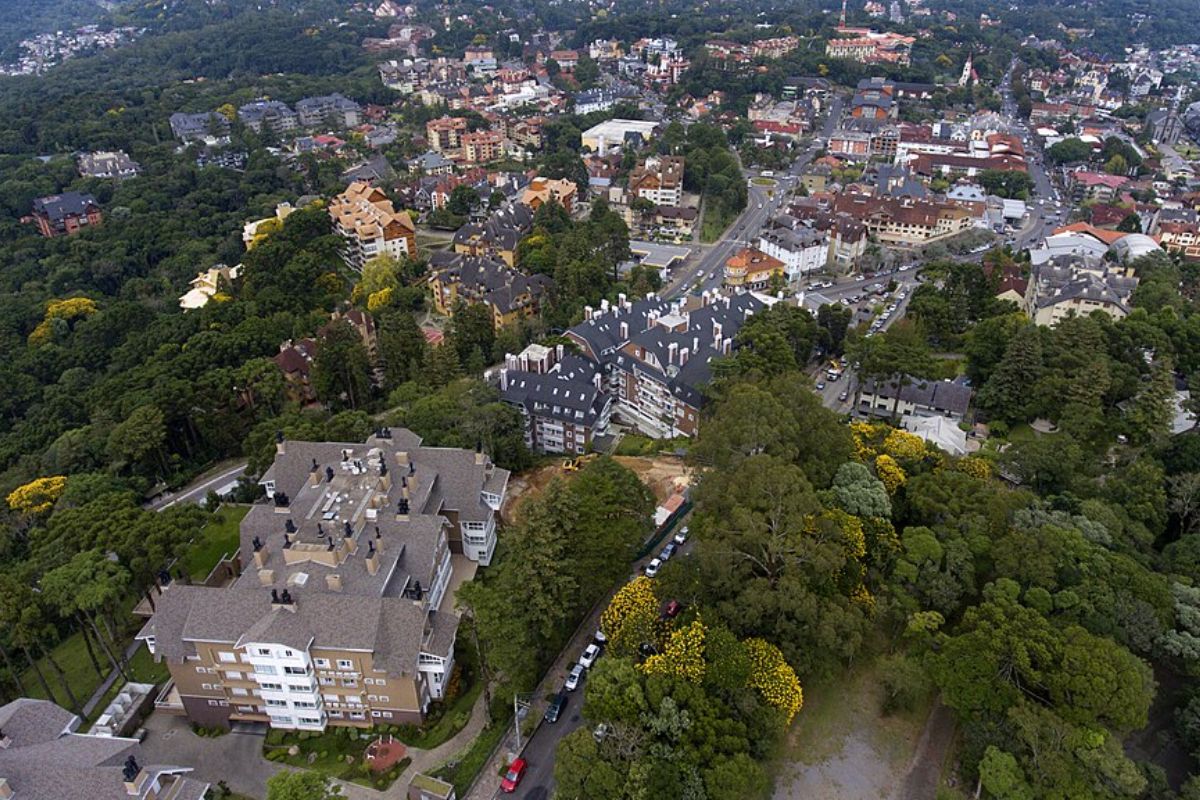


City of Serra Gaúcha Stands Out in Global Ranking of Quality of Life, Combines Immaculate Streets, Rare Safety in Brazil, Efficient Public Services and Planned Neighborhoods That Surpass Many European Capitals in Daily Well-Being
Right from the early hours of the morning, before six o’clock, it becomes clear why the quality of life in Gramado has become a reference both inside and outside Brazil. The day hasn’t yet fully brightened, and people are already occupying the sidewalk of Mirante Belvedere to watch the sunrise over the Quilombo Valley, in a setting of mountains, light mist, and the silence of a small town. There is no tension, no frantic rush, no constant fear of being approached on the street. There is time, landscape, and a routine that organizes itself around living well.
Throughout the day, the impression is confirmed in other parts of the city. Clean streets, well-kept sidewalks, flowerbeds, standardized building facades, free drinking water in public fountains, and a hospital that serves SUS and insurance plans with the same visual and welcoming standard. Instead of merely flaunting income figures, Gramado shows how to transform wealth into quality of life visible to those who live there and to visitors.
Quality of Life Far Beyond GDP

The starting point of the narrative is a simple and direct provocation: nobody eats GDP. A high gross domestic product, isolated, does not guarantee safe streets, preserved green areas, or functioning public services. In Gramado, the idea of a wealthy city appears in another form.
-
Neon Blue Glow in Brazilian Waters Captivates Locals and Goes Viral, Unveiling Rare “Sea Fire” Phenomenon

-
Forgotten Map Leads Diver to Shipwreck with Gold, Rare Jewels, and Secrets Hidden for Nearly 350 Years
-
Furong: The 2,000-Year-Old Chinese City Built on a 60-Meter Waterfall Becomes a Global Tourist Phenomenon

-
YouTube Inventor Dubbed “Real-Life Tony Stark” Builds Robotic Legs for Father’s Day, Creating a Wheelchair That Conquers Stairs and Rough Terrain



Quality of life materializes in low walls, in houses without excessive bars, in streets where pedestrians cross calmly, in residents walking with a cellphone in hand without constantly looking over their shoulders.
The discussion about wealth gains substance when observing that what makes a difference for the average resident is not a number on an economic ranking, but the feeling that the city works.
Gramado markets itself as “the richest city in Brazil,” but what truly impresses is the wealth in daily quality of life, which manifests in details such as constant cleanliness, absence of coarse graffiti, and preserved squares.
Impeccable Streets, Cared-For Aesthetics and Rare Sense of Safety
Walking through the central area helps translate quality of life into concrete images. The avenues are wide, the sidewalks are symmetrical and well-paved, the flowerbeds have flowers and planned landscaping, the lamp posts have a classic style, and the buildings follow a visual standard that mixes alpine architecture, European influences, and local identity.
The bus station looks like a typical house of the region, with a wooden roof and a structure harmonized with the surroundings.
Pharmacies, markets, and chocolate shops follow the same logic, with discreet facades, neutral-colored signs, and absence of aggressive visual pollution. Even the wooden street signs reinforce the sense of aesthetic unity.
But the element that weighs most heavily on the perception of quality of life is another. Everyday safety appears in the accounts of those who walk at night without fear, cross on the crosswalk trusting that cars will stop, park their cars on the street without the constant feeling of risk.
In many stretches, crime practically does not pertain to the visible daily experience. For those coming from large urban centers marked by constant tension, this completely changes the way they relate to public space.
Strong Tourism, but with Real Daily Life Behind the Facade
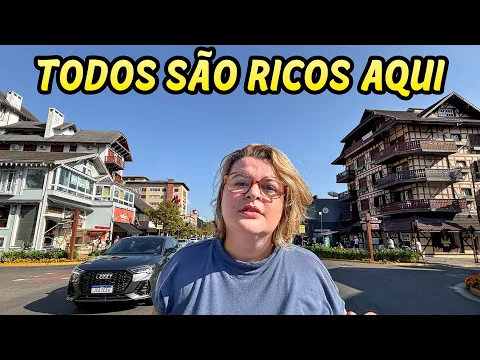

Gramado is a tourist powerhouse, full of restaurants, chocolate shops, cafes, hotels, fondue, crooked street and covered street, but the video that serves as a basis for this analysis shows something important. There is a real city behind the tourist facade, with residents who use the same streets, frequent the bus station, the market, the hospital, and the parks.
On the same avenue where tourists take photos, there are people running early, residents walking their dogs, hospitality and gastronomy workers going back and forth for shifts. Quality of life is not just set up for the camera, but sustained by a routine that mixes visitor and local.
This mix is decisive. In purely tourist cities, everything is geared towards sales. In Gramado, the strong presence of permanent residents forces the government to maintain schools, hospitals, neighborhood infrastructure, sports facilities, and communal spaces. This ensures that the city operates year-round, not just in high season.
Public Services, Health and Small Gestures That Change Everyday Life
One of the most striking parts of the narrative is the experience with the city’s hospital. According to reports, the SUS service is provided in the same structure where insurance patients arrive, with clean, organized environments and attentive staff.
For those who are already familiar with the visual and structural differences between good part of public and private hospitals in Brazil, this stands out.
Quality of life appears here in the form of access to healthcare that does not humiliate or segregate. The wait time is acceptable, the service is considered efficient, and the environment conveys a sense of care, not abandonment.
Another strong symbol of how Gramado treats public space is the drinking fountains spread throughout the city.
In the central area and in points of circulation, there are structures where anyone can fill their bottle with cold or hot water, in addition to specific containers for pets.
It’s a simple gesture, but it points to the idea that the pedestrian has value, that the city was not designed only for cars or those who can pay for every cup of water.
Squares with benches, trees, shade, playgrounds, well-maintained public restrooms, and tourist signage with QR codes complete this scenario.
The feel is of a city that invites people to stay on the street, to sit, observe, talk, and breathe, rather than just rushing from one point to another.
High Cost of Living and Desirable City to Invest and Live In
All this quality of life comes at a price. Gramado is a city with a high cost of living in various aspects, especially in housing.
Renting and purchasing properties are considerably more expensive than the national average, especially in the more central and tourist areas.
At the same time, the city’s tourist vocation generates a robust job market in sectors such as hospitality, gastronomy, seasonal property cleaning, investment apartment administration, and commerce aimed at visitors. This opens doors for those looking to work in these segments, although competition is also fierce.
A common strategy mentioned in the video is to live in nearby towns, like Canela or Nova Petrópolis, where property prices and rents are usually more accessible, and commute daily to work or enjoy the structure of Gramado.
The short distance makes this arrangement viable, allowing more people to experience part of the quality of life in the region without bearing the full cost of the most sought-after city.
Parks, Nature and Time as Components of Quality of Life

Lago Negro is one of the best examples of how Gramado integrates nature and urban planning to generate real quality of life. The park offers trails around the lake, tall trees, colorful hydrangeas, inviting lawns, and a temperature a few degrees lower than in the center on hot days.
There, people run, walk, have picnics, relax on wooden benches, watch the pedal boats on the lake, and simply pass the time.
In winter, the combination of fog, water, and pine trees creates an almost cinematic atmosphere. In summer, the same space becomes a cool refuge, with children playing on the grass and adults lying down enjoying the late afternoon.
The fact that a public park of this size is preserved, well taken care of, and accessible, with marked parking spaces, shaded sidewalks, and support kiosks, shows how the city views leisure as part of basic infrastructure, not luxury. Gramado does not just offer services; it offers quality time outdoors.
Gramado, Quality of Life and What It Means to Be a Wealthy City
When everyday safety, efficient public hospital, clean streets, consistent urban planning, nature integrated into the city, vibrant commerce, and spaces designed for pedestrians come together, the conclusion is clear.
Gramado achieves a quality of life that stands out from a great part of Brazilian cities and, for this reason, appears in global rankings alongside places in Switzerland and Canada.
The issue is not just the money that enters the economy, but what is done with it. Instead of invisible wealth for the majority, the city translates resources into state presence in public space, into a sense of safety, into urban comfort, and into opportunities linked to tourism and services.
The question remains for you to reflect and comment: knowing all this about the quality of life in Gramado, would you consider paying more to live in a city like this, or do you still prefer to stay in your current city, even with more problems, but with bonds, routine, and lower cost of living?