Portuguese
  Spanish



Conversations Involve Coffee, Rare Earths and Continental Stability; Lula Government Tries to Reverse Tariffs and Resume Economic Integration with Washington
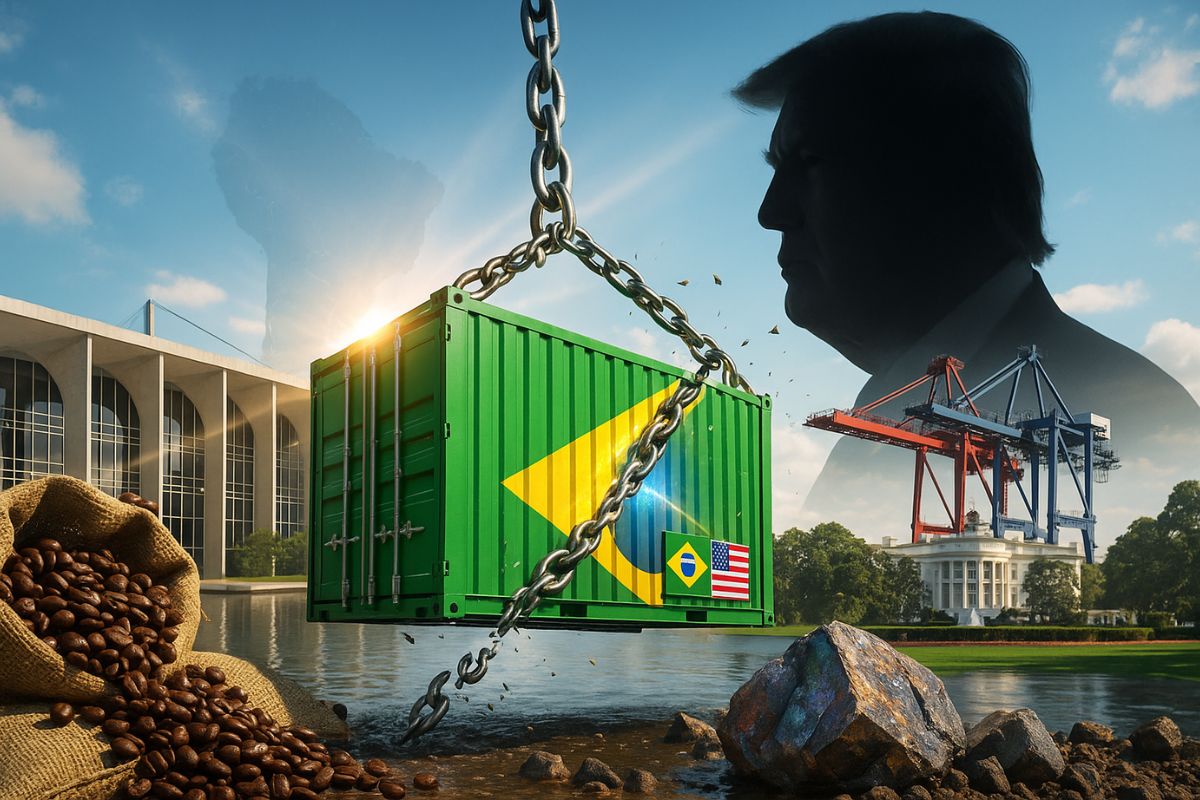
After months of stalemate, Brazil returned to the negotiating table with the United States to discuss the suspension of the 50% export tariff imposed by the Trump administration. The meeting between Foreign Minister Mauro Vieira and Secretary of State Marco Rubio, in Canada during the G7 meeting, signaled the first real progress to unlock dialogue between the two countries.
The tariff, applied in August, directly affected Brazilian products and heightened political tension. Now, with signs of flexibility from Washington, the Lula government seeks to transform the crisis into an opportunity to discuss strategic minerals, rare earth production, and long-term trade agreements.
Origin of the Crisis and Impact on Bilateral Relations
The 50% export tariff was adopted by Donald Trump as a political retaliation for the condemnation of Jair Bolsonaro in Brazil.
-
Brazilian Job Market Surprises: Unemployment Falls to 5.6%, Hits Record Low for May, Brazilian Incomes Rise, and Underemployment Reaches Lowest Level Ever Recorded by IBGE

-
Chinese E-commerce Giant Predicts Robots Will Replace 700,000 Delivery Workers as Autonomous Vehicles Expand to 200 Cities, Offering Training for Workers to Maintain Their Machines

-
Trump warns Europe with 100% tariff threat on digital tax, potentially impacting wine and trade agreements
-
As Homeownership Becomes Unattainable in Brazil, Japanese Municipalities Offer Abandoned Houses for as Low as $3,000 to Revitalize Aging, Emptying Cities


The White House’s justification was based on an alleged legal persecution of the former president, a claim rejected by Brasília, which classified the measure as “unjustified and without economic basis.”
In practice, the tariffs impacted various sectors, with limited effects on the trade balance — already favorable to the U.S. — but profound effects on diplomacy.
The U.S. government even revoked visas for Brazilian authorities, increasing political isolation.
The tension forced the two heads of state to resume dialogue in October in Malaysia, guiding their teams towards concrete advances.
Negotiation Involves Coffee and Rare Earths
The Brazilian strategy relies on the immediate suspension of tariffs to protect exporters while a broader agenda is built.
The country also proposes to discuss the exploration of rare earths and strategic minerals, a sector considered sensitive and extremely valuable geopolitically.
Brazil is among the few countries with the potential to expand the production of these critical inputs, essential for the battery, semiconductor, and defense industries.
A trade agreement in this field could open the door to a new stage of integration between the two largest economies on the continent.
Brazilian Coffee Enters the American Agenda
In recent days, Trump publicly suggested the removal of tariffs on specific products, citing coffee — one of the main items on Brazil’s export agenda.
The measure was interpreted as an attempt to curb domestic inflation in the U.S. and signal goodwill to Brasília.
Although coffee was initially left off the list of products exempt from the tariff, like meats, any formal progress in this regard is seen as significant.
Mauro Vieira emphasized that confirmation through diplomatic channels will be “very welcome” and reiterated the sector’s importance to the national economy.
Diplomatic Climate Is Still Unstable
Despite positive signs, the environment remains delicate.
Sanctions and cross-retaliations have created an unprecedented scenario in recent bilateral relations.
Even so, Brazil hopes that its presence at the G7 and the appeal for regional economic stability can help turn the page.
With a new meeting between the foreign ministers scheduled for the coming weeks, Brasília is trying to keep the dialogue open and prevent backtracking.
A possible broader trade agreement could mark the strategic re-approachment between Brazil and the United States, after a period marked by political strain and trade shocks.
Do you think Brazil should agree to include strategic minerals in the deal to suspend the 50% export tariff? Or would this create new reliance on the U.S.? Comment below!