






 Portuguese
  Spanish


The advancement of Pix reorganizes the financial system, expands banking access, and shows that credit and debit cards remain relevant in Brazil
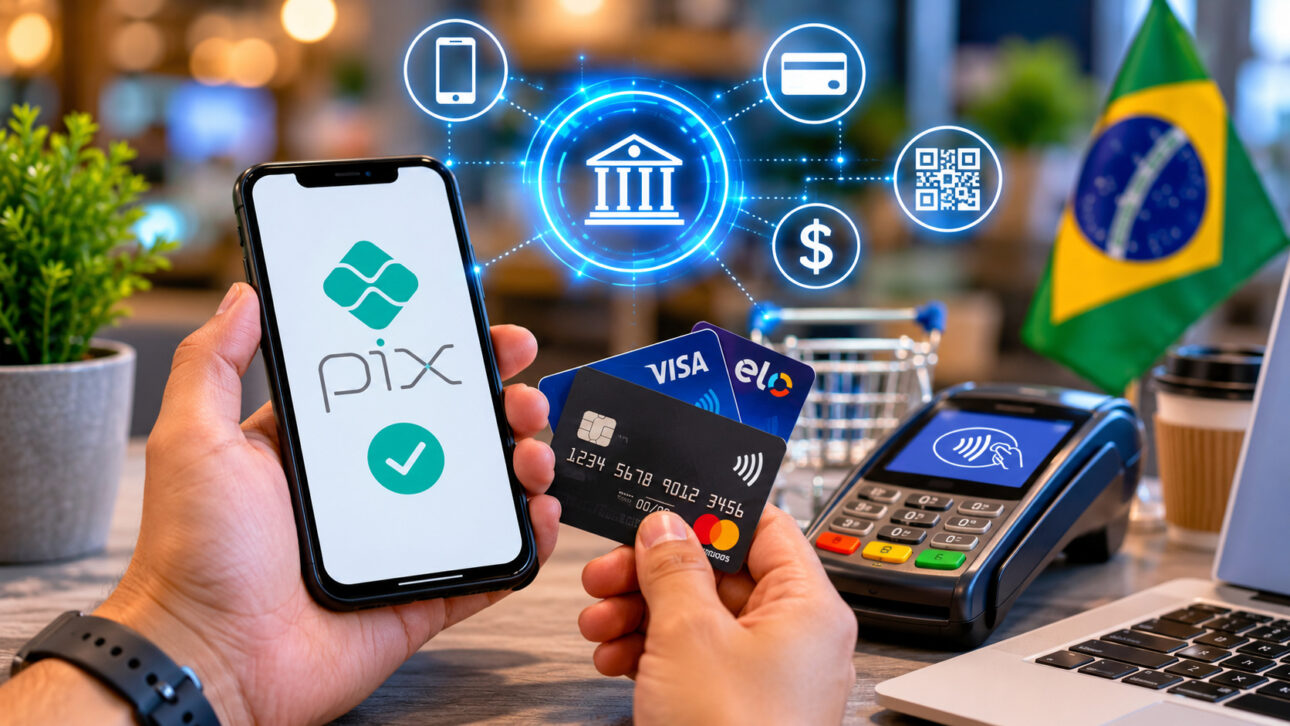
An important change in the Brazilian financial market gained momentum after new sector data showed that Pix did not reduce the relevance of cards. The share of credit and debit cards in the Brazilian economy reached 35.1% of the Gross Domestic Product (GDP) in the first quarter of 2026, according to the Brazilian Association of Credit Card and Services Companies (Abecs). The index represents a growth of 0.2 percentage points compared to the same period in 2025. This movement indicates that the instant payment system has come to coexist with cards in a complementary way, expanding the options available for consumers and companies.
Technical data reveal simultaneous advancement of cards
The expansion of cards occurs even after the implementation of Pix, launched in 2020. In that year, Brazil recorded 324 million active cards. By the end of 2025, this volume reached 477 million, an increase of 47.5%. Abecs, an entity representing companies in the sector led by brands like Mastercard, Visa, and Elo, assesses that the popularization of Pix did not cause a replacement of cards. The sector’s interpretation is that multiple payment arrangements benefit consumers, companies, and society, as they allow different choices depending on the type of transaction.
Market interprets growth as a sign of maturity
The simultaneous growth of cards and Pix has been interpreted as a sign of the maturation of the Brazilian financial system. The country has started to offer more alternatives for different user profiles, from quick low-value operations to installment purchases, benefit programs, and credit operations. This scenario reduces the idea of direct competition between the modalities and reinforces the coexistence between instant payments and traditional financial market instruments.
-
Brazilian Multinational WEG to Supply 600 Motors for World’s Largest Lithium Reserve at Thacker Pass, a $2.2 Billion Project in Nevada Funded by U.S. Department of Energy

-
Brazilian Civil Servant Earns $2,800 Monthly but Seeks Legal Help as Bank Loans Consume Nearly 80% of Income

-
Brazilian Pet Industry Giant with $6 Billion Valuation Targets 24 Million Customers, Launches Franchise Model with Six Revenue Streams and $7.80 Subscription Plan for National Expansion

-
Daughter of a Mechanic, Roberta Pirolla Turns Passion for Cars into a Million-Dollar Vehicle Wrapping Business Set to Grow 75% in a Male-Dominated Industry


Financial inclusion gains strength with Pix
Pix has also established itself as a gateway for millions of Brazilians into the financial system. The ease of transferring amounts and receiving payments has boosted access to digital accounts and other banking services. Many users who started using Pix later began to consume more sophisticated financial products, including credit lines and cards. This behavior helps explain why the advancement of the instant system has not eliminated the growth of other payment methods.
Elo sees progress in users’ financial journey
Elo shares this assessment of the complementarity between payment methods. João Vitor Ferreira, executive manager of Investor Relations and Data Analytics at the company, stated that the advancement of Pix has contributed to bringing new users into the banking system. According to him, this base tends to evolve in their financial journey, with greater access to credit products, including cards. The statement reinforces that Pix has not replaced cards but has expanded the use of payment methods and allowed consumers to choose the most suitable instrument for each transaction.
Google expands presence in the Pix ecosystem
The expansion of Pix has also attracted large technology companies. Google expanded its operations in the Brazilian market through the integration of the system with Google Pay and the Chrome browser. In April 2026, the company reached more than 21.4 million daily transactions through integration APIs, according to data cited in the report. In December 2024, the American company accounted for about 13% of these API calls. The advancement shows how Pix has become strategic infrastructure for technology companies, financial institutions, and digital platforms operating in Brazil.
The future of payments involves integration
The Brazilian payment market is moving towards a model where Pix, cards, and other digital solutions operate in an integrated manner. Consumers use Pix for instant and lower-value transactions, while cards remain relevant for installment purchases, benefits, and credit. This dynamic shows that innovation has not eliminated already established instruments but has reorganized the use of each modality within the financial routine.
Given this joint advancement, will the future of payments in Brazil be increasingly marked by the integration between Pix, cards, and digital platforms?


