Portuguese
  Spanish


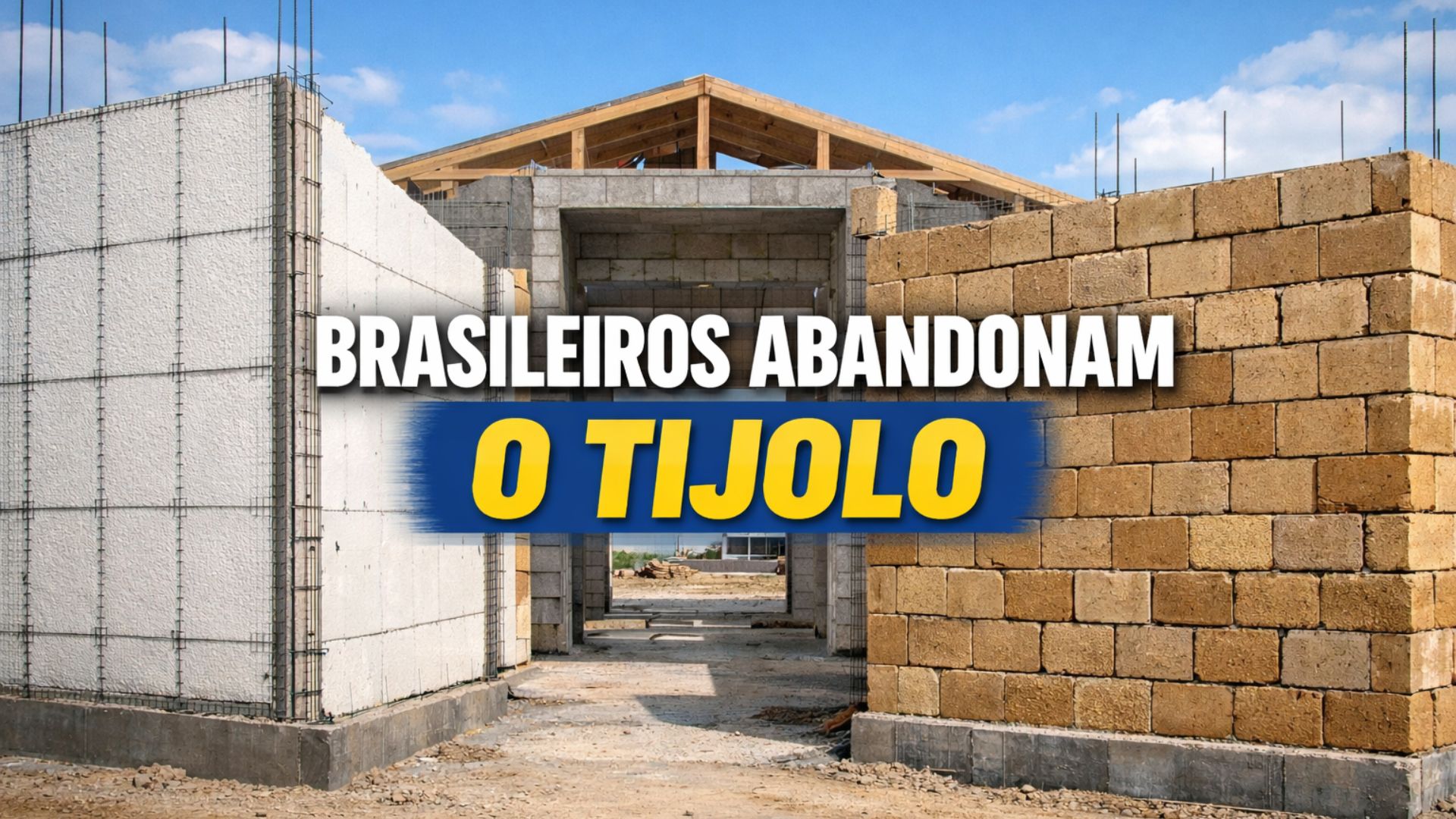


Construction With EPS and Ecological Brick Accelerates Works, Reduces Waste, and Changes Site Planning, Promising Lower Total Cost and Greater Thermal Comfort.
The search for faster and more predictable works has been increasing, in different regions of Brazil, the interest in systems that replace traditional ceramic brick masonry.
Among the alternatives that are advancing are EPS (expanded polystyrene) panels and soil-cement blocks, known in the market as ecological bricks.
The promise, repeated by manufacturers and construction companies, is to shorten deadlines, reduce losses on site, and improve the thermal performance of the house, with a direct impact on the energy bill.
-
Tired of Seeing Homelessness, New Westminster in Canada to Open Region’s First Tiny Home Village: 30 Container Homes with Central Kitchen, Meals, and Facilities

-
Brazil’s Santa Catarina Port Drives 770 Tons of Steel Piles into the Sea, Reaches Midpoint of $100 Million Project to Dock Two Ships Simultaneously by October
-
Expanded Polystyrene Gains Ground as a Lightweight Alternative to Traditional Masonry in Construction
-
Abandoned Brazilian Coastal Stadium, Once Hosting Major Soccer Matches, to Be Demolished for $10 Million NASCAR-Inspired Racetrack


This movement occurs amid a scenario in which the final cost of a work does not depend only on the price of the “brick”, but on the set of stages that come after: mortar, corrections, breaking to embed installations, plastering, debris transport, and, mainly, labor for more months.
It is at this point that modular and interlocking systems tend to gain ground, as they reorganize the work to produce less rework and waste.
Ecological Soil-Cement Brick and Leaner Construction
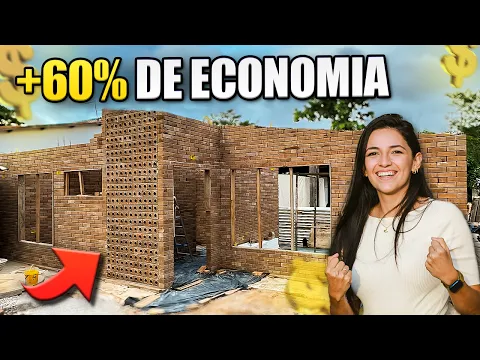

Made from soil, cement, and water, the soil-cement brick is pressed and generally does not require burning in kilns, which changes the production process compared to ceramic bricks.
Furthermore, many models are manufactured in a modular pattern, with joints and internal holes that facilitate the alignment of the layers and assist in the passage of installations.
In practice, the main savings pointed out by industry entities and companies comes from a cleaner site and a lower consumption of mortar and finishing materials.
An article from Sinduscon-Rio, for example, describes that the modular format and interlocking reduce the use of mortar and may decrease the need for finishing such as plaster, depending on the project and the desired aesthetic result.
Nonetheless, the financial performance is not standard.
There are market publications that mention a reduction in the total cost in different ranges, varying according to square footage, structural project, local labor costs, and finishing choices.
Some of these estimates cite savings of up to 30%, while others mention up to 40% in specific scenarios, reinforcing that the number depends on the entire project and not just the material.
Construction With EPS (Foam) and Reinforced Walls
In the case of EPS, the technology applied in construction is not the foam used for packaging, although the raw material is the same.
In systems like the monolithic one, expanded polystyrene panels work with metal meshes and receive a mortar coating, forming a wall that serves as a seal and, depending on the solution, with defined structural participation in the project.

This detail changes the perception of fragility associated with the material in common sense.
EPS, in the construction system, is not exposed: it is combined with a layer of mortar applied to the surfaces and metal reinforcements, which transforms the panel into a structure with its own performance.
Another frequent argument is the lower weight of the system compared to traditional solutions, which can influence foundation choices and construction logistics.
However, the gain needs to be calculated on a case-by-case basis because it depends on the soil type, architectural design, and structural sizing.
Thermal Insulation and Impact on the Energy Bill
The appeal of thermal comfort appears both in the discourse of manufacturers and in technical publications and specialized media.
The explanation is that EPS acts as a thermal insulator, reducing the heat exchange between the internal environment and the exterior.
On hot days, this can reduce the need for artificial cooling; in cold periods, it can reduce heat losses.
There are materials that cite studies and measurements of reduced internal temperature in comparisons with conventional walls, as well as references to energy savings associated with better thermal performance of the building envelope.
These results, however, vary with solar orientation, ventilation, roofing, window type, and usage habits, which prevents transforming the benefit into a “fixed percentage” for any house.
When focusing on ecological bricks, the argument of thermal comfort is often accompanied by the idea of a more regular wall and a site with less waste.
Industry entities also point out advantages related to the construction process and the reduction of stages, impacting indirect costs such as construction time and expenses with corrections.
Clean Site, Less Waste, and More Predictable Schedule
Those advocating for the replacement of the traditional method often emphasize predictability.
In a conventional site, material losses, cuts, excess mortar, and wall breakage to embed installations can appear as “invisible costs.”
By working with modularity and interlocks, the trend is to reduce some of these losses and accelerate services, as there is less need for adjustments along the way.
In the case of EPS, the process of creating pathways for installations follows a different logic than breaking masonry, and there are technical descriptions of how grooves can be made in the material to accommodate pipes before the coating, within the guidelines of the adopted system.
Like any method, this requires planning and execution compatible with standards and project guidelines to avoid improvisations that jeopardize performance and safety.
As for the ecological brick, the internal holes and dimensional standardization act as facilitators in the passage of installations and alignment, reducing corrections.
Still, the final result depends on the quality control of the material, the placement, and the project, especially when there are specific requirements for finishing or for acoustic and thermal performance.
Construction Savings: What Impacts the Overall Budget
Industry publications and market content mention savings ranges reaching 30% or 40% under certain conditions, usually associated with lower spending on mortar, reduced plaster in some projects, faster execution, and decreased waste.
At the same time, the materials themselves show that savings are not automatic: they depend on the type of system, the project, the team, regional costs, and finishing choices.
In EPS, for example, there are comparisons that indicate cost reductions in specific phases, such as the one related to the phase equivalent to plaster in certain works, but this does not eliminate the need for coating, as the system normally requires mortar on the panel surfaces.
In other words, the more accurate discussion is about changing methods and rationalizing stages, not about “work without coatings” in any scenario.
Whatever the alternative, the common point is that the decision involves more than just swapping one material for another.
It requires comparing the complete budget, schedule, type of available labor, compatibility with the project, and assessing technical support, guarantees, and compliance with applicable standards.
In your city, what weighs more in the choice: the price of the material, the project timeline, or thermal performance to reduce energy costs over the years?