Portuguese
  Spanish



Export of tons of monazite to Canada puts Brazil back on the map of rare earths and critical minerals
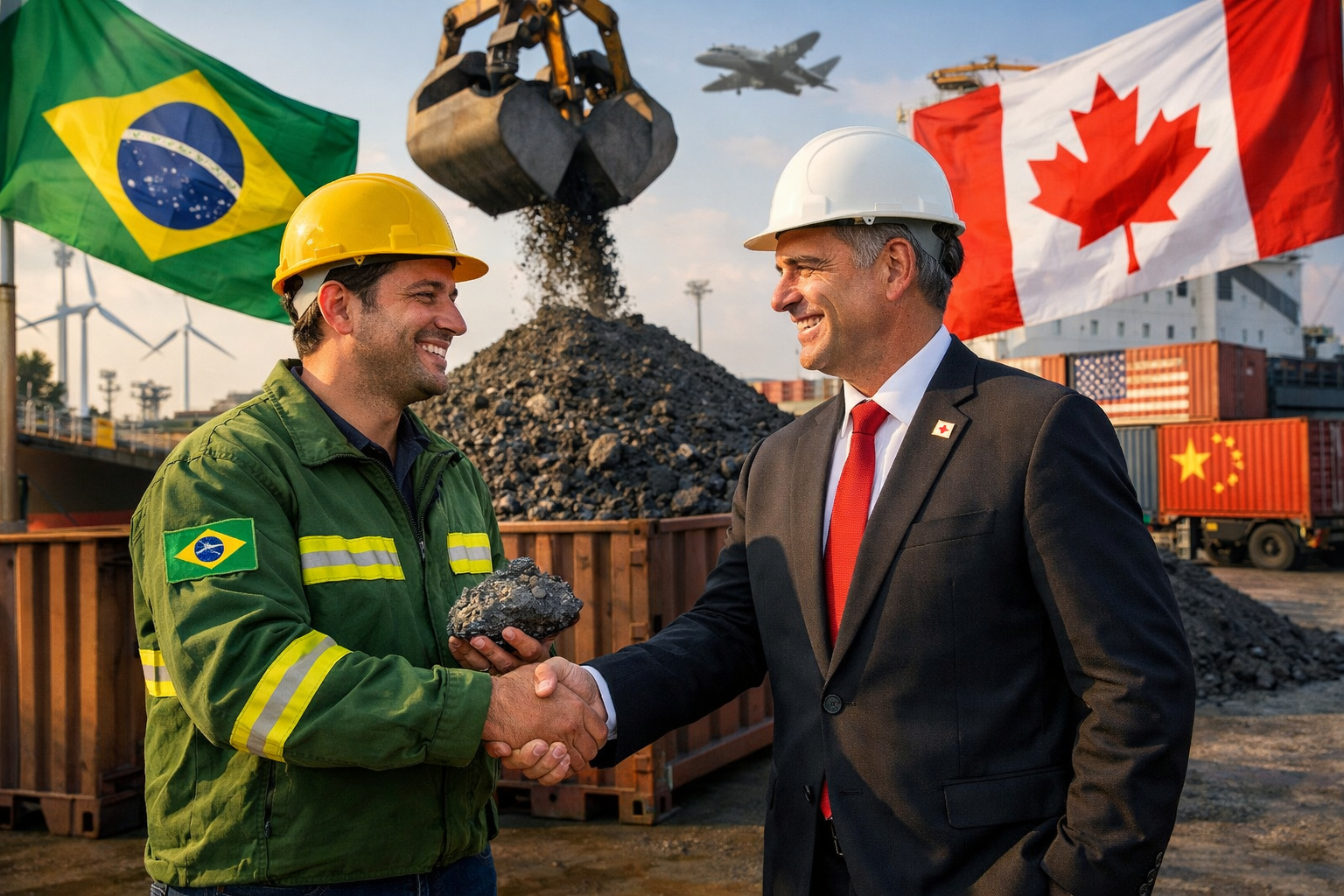
Brazilian mining gained significant momentum on April 5: ADL Mining, a company based in São Paulo, carried out the first international shipment of monazite to Canada from the Buena operation in São Francisco de Itabapoana, in Northern Fluminense. This shipment pushes Brazil back into a global conversation that mixes industry, technology, energy, and geopolitics.
The inaugural cargo is noteworthy not only for its destination. It marks the advancement of private initiative in a market considered strategic due to its involvement with rare earths and critical minerals used in permanent magnets, electronics, electric vehicles, wind turbines, nuclear energy, and defense. It arrives with a defined goal: to export between 500 and 1,000 tons by the end of 2026 and reach about 3,000 tons shipped in two years.
Buena exits the local map and enters the race for critical minerals
What once seemed like a regional operation now occupies a much larger space. The Buena unit, historically linked to INB, has become the starting point for an export that impacts one of the most sensitive chains in the global economy. It is not an exaggeration: when monazite is shipped, it carries the strategic weight of rare earths.
-
Brazil’s July Bolsa Família Payments May Include Extra $150 and $50 for Families with Children, Pregnant Women, and Updated CadÚnico Registration

-
Brazilian Woman Buys €1 House in Sicily, Clears 50 Truckloads of Debris, and Transforms Ancient Ruin into Inspiring Life Project by 2026

-
Havan Competitor Expands in Brazil with 170 Stores, Offering Everything from Stationery to Asian Food and Focusing on Affordable Products to Attract Shoppers

-
Norway’s $2 Trillion Dilemma: How Oil Revenue Created a Massive Savings Fund with Too Much Money to Spend




The change also helps explain why this shipment resonates beyond the mineral sector. Brazil appears, at the same time, as a source of raw material, a new private link in a strategic chain, and a potential supplier to markets such as Canada, the United States, and China.
What happened with the export of monazite to Canada
The operation marks the first international shipment of monazite made by ADL Mining and gains significance by opening a new phase for the sector. The market’s stronger reading is simple: Brazil reappears with concrete exports in a chain that had been concentrated in a few actors and under strong regulatory scrutiny for years.
The cargo left the Buena structure in São Francisco de Itabapoana, an area that already had a mineral history and is now back at the center of industrial conversation. The project also helps consolidate ADL’s presence in an activity that mixes extraction, processing, and marketing of strategic minerals.
Why monazite became central in the competition for rare earths and critical minerals
Monazite has entered the radar because it is one of the most important sources of rare earths, a group of elements that feed high-complexity industrial chains. Without this input, it becomes much more difficult to sustain the production of components that are now considered strategic by governments and large companies.
That is why the mineral is linked to permanent magnets, electronics, electric vehicles, wind turbines, nuclear energy, and defense. The latest analysis from the International Energy Agency reinforces this weight by showing that permanent magnets concentrate the most strategic application of this chain by value and that global production remains heavily concentrated.
In the study published in April 2026, the IEA points out that China accounted for about 60% of global mining of magnetic rare earths in 2024, 91% of refining, and 94% of permanent magnet manufacturing. When a Brazilian shipment of monazite occurs, it does not enter just any market. It enters precisely a chain where diversifying supply has become a matter of industrial security.
What changes for Brazil with this export of rare earths
The export has a direct effect on the country’s image within the rare earth mining sector: Brazil stops appearing only as a geological promise and reappears with real shipments. This is especially relevant because the federal government already treats critical minerals as a strategic axis for industry, energy transition, and technological advancement.
The Ministry of Mines and Energy states that Brazil could enter the group of the largest global producers of rare earths in the coming years. The ministry’s reading helps to give dimension to what Buena represents: it is not just about an external sale, but a sign that the Brazilian mineral chain is trying to gain strength in a sector considered strategic.
The Buena base and the new role of ADL Mining
The story of this export goes through the Buena structure. On its official page, INB informs that it signed a 30-year onerous concession contract with ADL Mining for the Buena unit in 2024. The model allows the use of the plant and facilities for processing minerals linked to the mining rights of the ceding company.
The unit now operates with a new administrator, while the state-owned company receives a fixed monthly share and royalties on production. Historically, Buena operated in the separation and marketing of ilmenite, zircon, rutile, and monazite, which helps explain why the region has regained relevance in this.
The external movement did not just start now. In July 2025, INB itself released a note about ADL’s contract with a Chinese company for the sale of pre-concentrated heavy minerals produced in Buena. The record shows that the international front of the operation had already been built before the current shipment to Canada.
Canada, China, and the United States enter the route of the new phase of Brazilian mining
The first destination of the cargo was Canada, but the plan announced by the company is broader. The projection includes the United States and China as markets served by the end of 2026. This shows that ADL is not looking at a one-off operation, but rather a more stable commercial presence in a chain that is increasingly valuable.
This detail changes the size of the news. Canada and the United States are currently among the countries seeking to reduce external dependence on critical minerals, while China remains the major center of gravity in this chain. When Brazil begins to ship monazite more regularly, it approaches an international competition that involves supply, technology, refining, and industrial power.
Still, the most important message is not just in the initial volume. It is in the fact that the export puts the country back in the game at a time when almost everyone wants to reduce vulnerabilities in rare earths, but few can deliver production regularly.
The most striking point: the shipment is not only valuable for the initial volume. It is valuable because it shows Brazilian mining entering more forcefully into a global chain where supply, refining, and technology are still highly concentrated outside the country.
To check the original information and understand the full context, it is worth visiting the official ADL Mining page, viewing the company addresses, consulting the official INB page about Buena, reading the INB note about the sale to China, checking the analysis from the Ministry of Mines and Energy, and following the study from the International Energy Agency on the global competition for rare earths.
And you: does this export show that Brazil can finally gain real space in the rare earth market, or is the country still far from leveling up in this chain? Comment and share with those who follow mining, industry, and critical minerals.