Portuguese
  Spanish


Brazil breaks solar and wind energy generation records every month — and at the same time charges increasingly more for the kilowatt that reaches the consumer’s outlet, with adjustments reaching up to 23% in 2026 and R$ 52 billion in charges embedded in the bill
According to data released by ADVFN in April 2026, electricity bill adjustments in Brazil have already reached up to 23% in distributors like Roraima Energia and are approaching 20% in concessionaires like Copel (Paraná) and CPFL Santa Cruz.
At the same time, the country has never generated so much clean energy in its history.
Therefore, the paradox that millions of Brazilians cannot understand arises: if Brazil produces more energy than it consumes — and increasingly more of this energy comes from the sun and wind, which are free — why does the electricity bill keep rising?
-
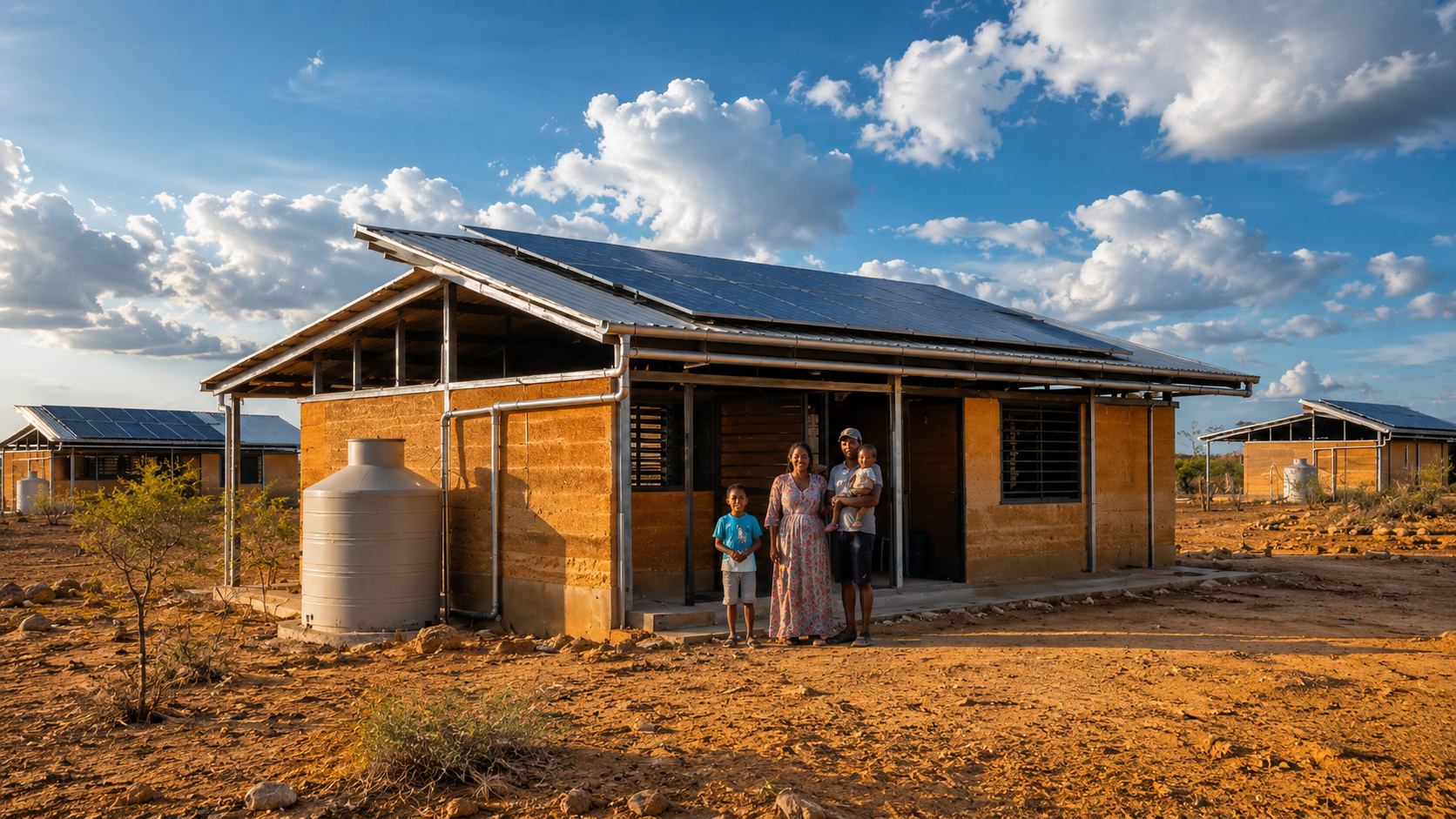
In Colombia’s desert, 30 families receive 80 m² homes with solar panels, waterless toilets, and rainwater collection systems amid water and energy shortages.

-
Engie Secures 10-Year Use of 625 MWh in Batteries to Store Excess Solar and Wind Energy in Spain by 2028
-
Qantas and Airbus Invest in Company Aiming to Convert Unsorted Household Trash into Jet Fuel
-
Giant Batteries Take Center Stage in Chile Auction as Company Offers 960 GWh of Solar Energy for Nighttime Use, Aiming to Stabilize Solar Power Supply


The alarming numbers: up to 23% adjustment
According to O Sul, ANEEL’s average projection for 2026 was an 8% adjustment.
However, the reality of approvals shows much higher numbers in specific distributors.
In Roraima, the approved adjustment was 23.2%. However, this is not an isolated exception.
Copel, in Paraná, is in public consultation with a 19.2% adjustment for 5 million consumer units.
Similarly, CPFL Santa Cruz, which serves regions of São Paulo, Minas Gerais, and Paraná, projects around 19%.
Consequently, about 35 million consumer units — approximately 40% of the national total — are already facing or will face adjustments in the first half of 2026.
Furthermore, ANEEL’s director-general, Sandoval Feitosa, acknowledged the problem in a recent interview.
According to Feitosa: “Electricity bills always rise much more — double, sometimes triple the IPCA. For 2026, our forecast is an average increase of 8%. It is indeed a worrying number.”
In this sense, the projected inflation for 2026 is only 4.1%. Therefore, the average 8% adjustment is almost double inflation — and extreme cases of 19-23% are almost six times higher.

The invisible villain: R$ 52 billion in hidden charges on the bill
To understand the paradox, one must look at what is inside the electricity bill beyond consumption.
In 2025, sectoral charges represented between 17% and 18% of the total tariff value.
However, as explained by the Acende Brasil Institute, for 2026 this share jumps to 20%.
The main charge is the Energy Development Account (CDE), which will cost R$ 52 billion in 2026.
Thus, for every R$ 100 the consumer pays on the electricity bill, R$ 20 is not for energy consumed — it is for subsidies that finance everything from discounts for low-income consumers to incentives for renewable sources.
Ironically, part of these subsidies goes to the same solar and wind energy that should make electricity cheaper.
Furthermore, in 2025 President Lula approved full exemption for low-income consumers — a social measure whose cost is shared among all other consumers via CDE.
Therefore, those who do not fit the low-income profile end up paying more to subsidize those who do.

While the bill rises, Brazil wastes energy
On the other hand, the problem goes beyond subsidies.
Brazil is generating renewable energy that it cannot use.
As we previously reported on this portal, curtailment — when plants are shut down because the grid cannot handle the generated energy — has already caused estimated losses of R$ 5 billion in recent years.
Thus, the consumer pays for the construction and subsidies of the plants, but part of the energy they produce is simply cut.
Still, the paradox deepens: if the country invested in expanding transmission lines, the curtailed energy could meet demand and potentially reduce tariffs. But this investment would also be financed by the consumer — via the tariff.
Likewise, according to Em Dia ES, there is also the risk of a red tariff flag in 2026, which could add an extra R$ 7 billion to bills — should hydroelectric reservoirs fall below expectations.

How other countries solve the same problem
In contrast, countries with high renewable penetration deal with curtailment in different ways.
In Germany, the average energy adjustment in 2025 was around 5%, even with strong reliance on wind and solar.
Similarly, in the United States, the average increase was 3 to 4%, according to the EIA (Energy Information Administration).
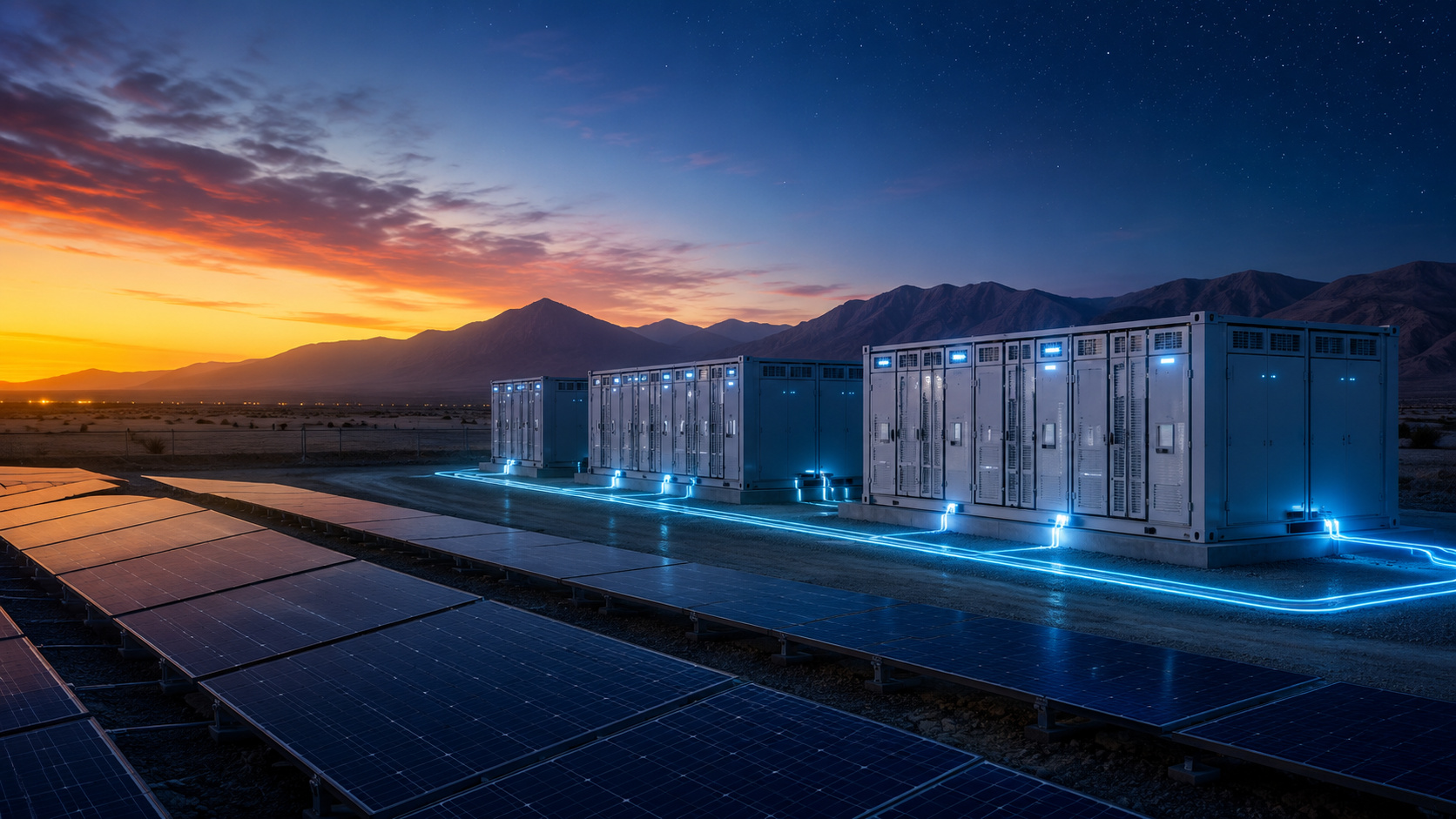
The difference lies in storage. While these countries invest heavily in large-scale batteries to store surplus energy, Brazil has practically no installed storage capacity.
Above all, the lack of batteries forces the Brazilian system to activate thermal power plants — which burn natural gas and diesel — precisely when the sun sets and the wind stops.
These thermal plants are expensive. And the cost goes to the consumer’s bill.
The reform that may — or may not — change the game
Given this, the federal government sent a bill for electricity sector reform to Congress.
The proposal seeks to reduce embedded subsidies in the tariff and rationalize charges.
However, any reform in this sector faces resistance from all sides: distributors, generators, industrial consumers, and the renewables lobby itself, which depends on CDE subsidies.
Despite this, the Itaipu bonus — a balance of R$ 1 to R$ 1.5 billion that should alleviate tariffs in 2026 — is insufficient to offset the R$ 52 billion in charges.
Therefore, the scenario for the Brazilian consumer in 2026 is clear: the country generates plenty of clean energy, breaks solar and wind records month after month, but the bill keeps rising because the problem is not generation — it is infrastructure, regulation, and a mountain of charges that has accumulated for decades.
The question 35 million families ask every time they open their bill is simple: if the sun and wind are free, why is electricity so expensive?
The answer, like almost everything in Brazil, lies in what is not seen — in the 20% of invisible charges that no one asked for and everyone pays.