Portuguese
  Spanish


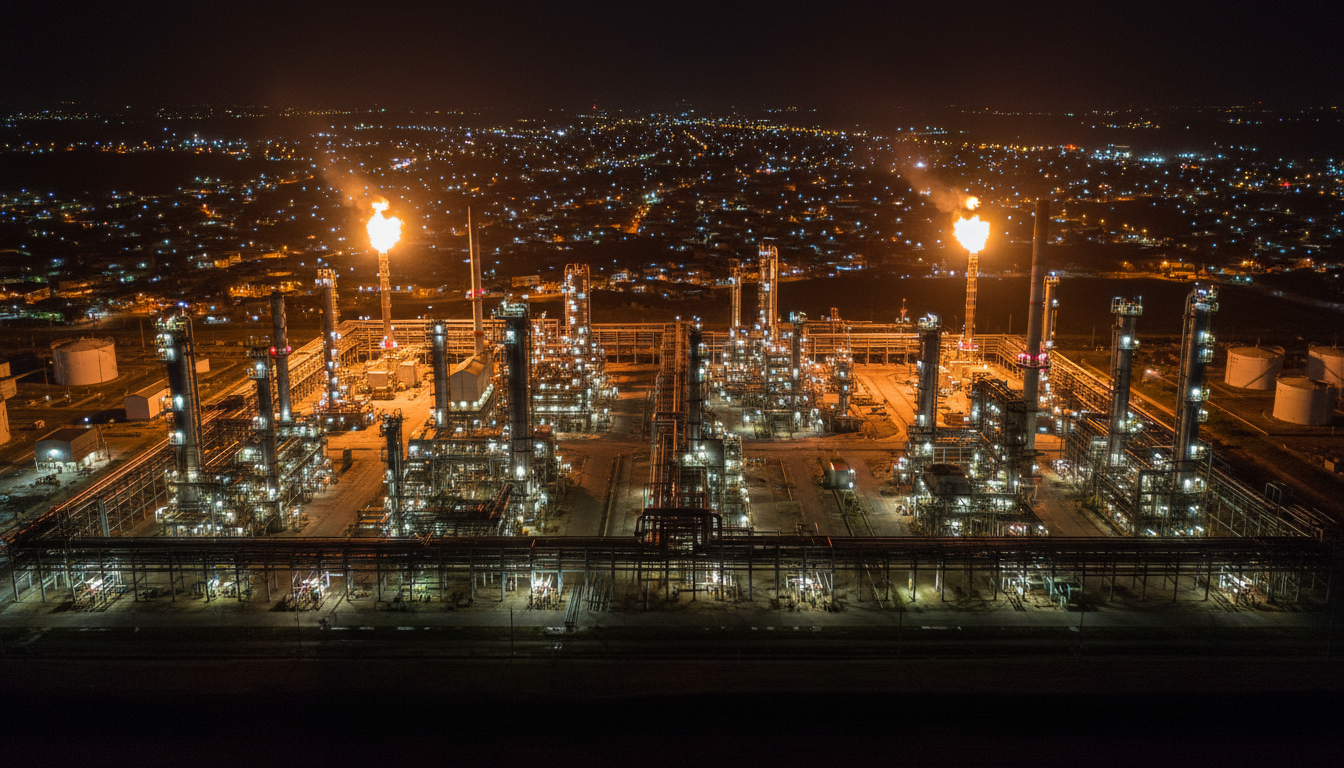

Brazil is the 8th largest energy producer in the world — and yet, the electricity bill weighs more on the Brazilian’s pocket than in countries that import 100% of the energy they consume
According to consolidated data from the National Petroleum Agency (ANP), Brazil produced 5.304 million barrels of oil equivalent per day in February 2026 — a new historical record that consolidates the country among the 10 largest energy producers on the planet.
However, this energy wealth is not reflected in the daily lives of most Brazilians.
Moreover, the country has one of the cleanest electricity matrices in the world: 83% of electricity comes from renewable sources — hydroelectric, wind, solar, and biomass combined.
-
Tired of Seeing Homelessness, New Westminster in Canada to Open Region’s First Tiny Home Village: 30 Container Homes with Central Kitchen, Meals, and Facilities

-
Brazil’s Santa Catarina Port Drives 770 Tons of Steel Piles into the Sea, Reaches Midpoint of $100 Million Project to Dock Two Ships Simultaneously by October
-
California Project Aims to Store Heat Underground in Former Oil Reservoir to Generate 100 kW of Electricity for Over 12 Hours

-
French Port Harnesses Industrial Waste Heat to Power Up to 30,000 Homes


Nevertheless, the Brazilian electricity bill is among the most expensive in all of Latin America, with tariff flags, sector charges, and taxes that make the consumer pay much more than the energy actually costs to generate.
Thus, Brazil occupies a paradoxical position in the global energy scenario: rich in resources, but expensive for consumers.

While breaking production records, 35 million Brazilians live in energy poverty — without adequate access even to refrigeration and lighting
According to studies published by the Energy and Environment Institute of USP, about 35 million Brazilians live in energy poverty.
This means that these people cannot keep their homes adequately lit, cooled, or heated — even while living in a country that produces enough energy to supply entire nations.
Consequently, low-income families end up spending up to 8% of their monthly income just on the electricity bill — while in European countries with predominantly fossil matrices, this percentage is around 3 to 4%.
On the other hand, the government maintains programs such as the Social Electricity Tariff, which offers discounts to low-income families — but the benefit reaches only a fraction of those in need.
Similarly, the problem is not the lack of generation: Brazil produces more energy than it consumes at many times of the day. The bottleneck is in transmission, distribution, and regulatory costs that artificially inflate energy prices.
In this sense, the paradox is double: there is excess energy at the source and a shortage at the endpoint — because the wires connecting one to the other are insufficient or nonexistent.
Brazil wastes renewable energy because it lacks wires to carry it from where it is generated to where it is consumed
As reported by the analysis of Click Petróleo e Gás, the country regularly cuts generation from solar and wind plants because the existing transmission lines cannot handle all the electricity produced.
In 2025, the estimated waste reached R$ 5 billion in clean energy that was generated but never reached the consumer.
Therefore, while solar plants in the northeastern backlands produce electricity at almost zero cost, families in São Paulo pay one of the highest electricity bills on the continent.
Furthermore, investment in transmission lines grows more slowly than the installation of new plants — creating an imbalance that worsens each year.
In fact, the situation is so absurd that Brazil pays NOT to generate energy at times: when the lines are saturated, plants are shut down and receive financial compensation for what they failed to produce.
As a result, the consumer pays twice: for the energy they consume AND for the energy that did not reach them.

Exports record oil to China, but imports gasoline and diesel because it does not refine what it extracts from its own soil
In the first quarter of 2026, Brazilian exports of crude oil grew 31%, totaling US$ 12.5 billion — with China as the main buyer.
However, at the same time that it breaks crude export records, Brazil imports up to 25% of the diesel and 10% of the gasoline it consumes, according to OEC data.
Still, this cycle has persisted for decades: the country sells the raw material cheaper and buys back the more expensive refined product — something engineers from the AEPET (Association of Petrobras Engineers) call a “colonial energy route”.
Likewise, Petrobras — which operates 89% of national production — recorded billion-dollar profits and distributed record dividends, but did not invest enough in refining capacity to eliminate import dependency.
Despite this, the country’s refining capacity has been practically stagnant for over 10 years, with the last major expansions dating from the pre-salt era — and some of them abandoned before completion.
Produces as an energy power, but 30 million Brazilians do not have clean water to drink
According to the 2026 Sanitation Ranking of the Trata Brasil Institute, published in March, more than 30 million Brazilians do not have access to potable water.
Additionally, approximately 90 million people live without sewage collection — dumping waste directly into rivers, streams, and springs.
As a consequence, diseases linked to the lack of sanitation — such as diarrhea, leptospirosis, and hepatitis A — continue to kill thousands of Brazilians each year, especially children in the North and Northeast regions.
Above all, more than half of the 100 most populous municipalities in the country invest less than R$ 100 per capita per year in sanitation — when the minimum necessary would be R$ 225 annually.
However, the royalties from the oil that Brazil produces in record volumes could, in theory, finance the entire universalization of sanitation — if they were directed for this purpose.

The synthesis of the paradox in numbers that every Brazilian should know
Brazil is the 8th largest energy producer in the world: 5.3 million barrels of oil per day, 83% renewable electricity, export records quarter after quarter.
At the same time, 35 million live in energy poverty, 30 million do not have clean water, 90 million do not have collected sewage, and the electricity bill consumes up to 8% of the income of the poorest families.
Moreover, the country wastes R$ 5 billion in renewable energy per year because it lacks wires to transport it, and imports fuel that could be refined internally.
The account is cruel and simple: Brazil exports US$ 12.5 billion in oil per quarter, but cannot provide clean water to 30 million of its citizens.
Will the country continue to be an energy power living as a developing country — or will the wealth that comes from the subsoil someday transform into infrastructure that reaches the tap?