






 Portuguese
  Spanish


In recent days, the Civil Defense of Cuba released a guide with protection guidelines for the population in case of a possible military intervention by the United States, instructing families to prepare backpacks with supplies for three days, a first aid kit, and identification documents, as well as to identify shelters against air attacks in basements, tunnels, and trenches. According to G1, the document, published on the agency’s social media, states that the USA “threatens to attack militarily and destroy our society”.
The guidance comes amid an escalation of tensions between Havana and Washington that experts consider the most serious in decades. Since the capture of former Venezuelan President Nicolás Maduro in January, the United States has been pressuring Cuba to implement deep reforms in the economic system and political regime, demands that the Cuban government rejects citing national sovereignty. To intensify the pressure, Washington imposed an oil embargo that worsened the island’s energy crisis, and on May 1st, Trump signed an executive order expanding economic, financial, and commercial sanctions that have lasted more than six decades. Trump himself declared that Cuba “is next,” a phrase that experts interpret as a signal that military action against the island is considered plausible by the American government following events in Venezuela and Iran.
The guide that teaches Cubans to survive an attack
The Cuban Civil Defense document is direct and practical. The guidelines instruct each family to prepare a backpack containing ready-to-eat food sufficient for three days, potable water, a first aid kit, personal identification documents, a radio, candles, matches, a flashlight, hygiene products, medications for chronic conditions, and toys for small children. The list reveals the seriousness with which the Cuban government treats the possibility of an attack: it includes items that assume days without basic infrastructure.
The guide also instructs families to pre-identify the designated shelter for protection against air attacks in their neighborhoods. When an alert sounds, the population should head to basements, semi-basements, tunnels, or trenches deep enough to offer protection against shock waves. Those who cannot reach a safe shelter in time should avoid open streets, public squares, and not seek refuge in damaged buildings, under bridges, road tunnels, or gas stations. The document also includes guidelines on how to provide first aid to those injured with fractures and hemorrhages.
-
Artesian Well Becomes Lifeline for Small Brazilian Farm: Drilling Reaches 60 Meters, Finds Marble, Navigates Rock Fissures, and Strikes Fresh Water

-
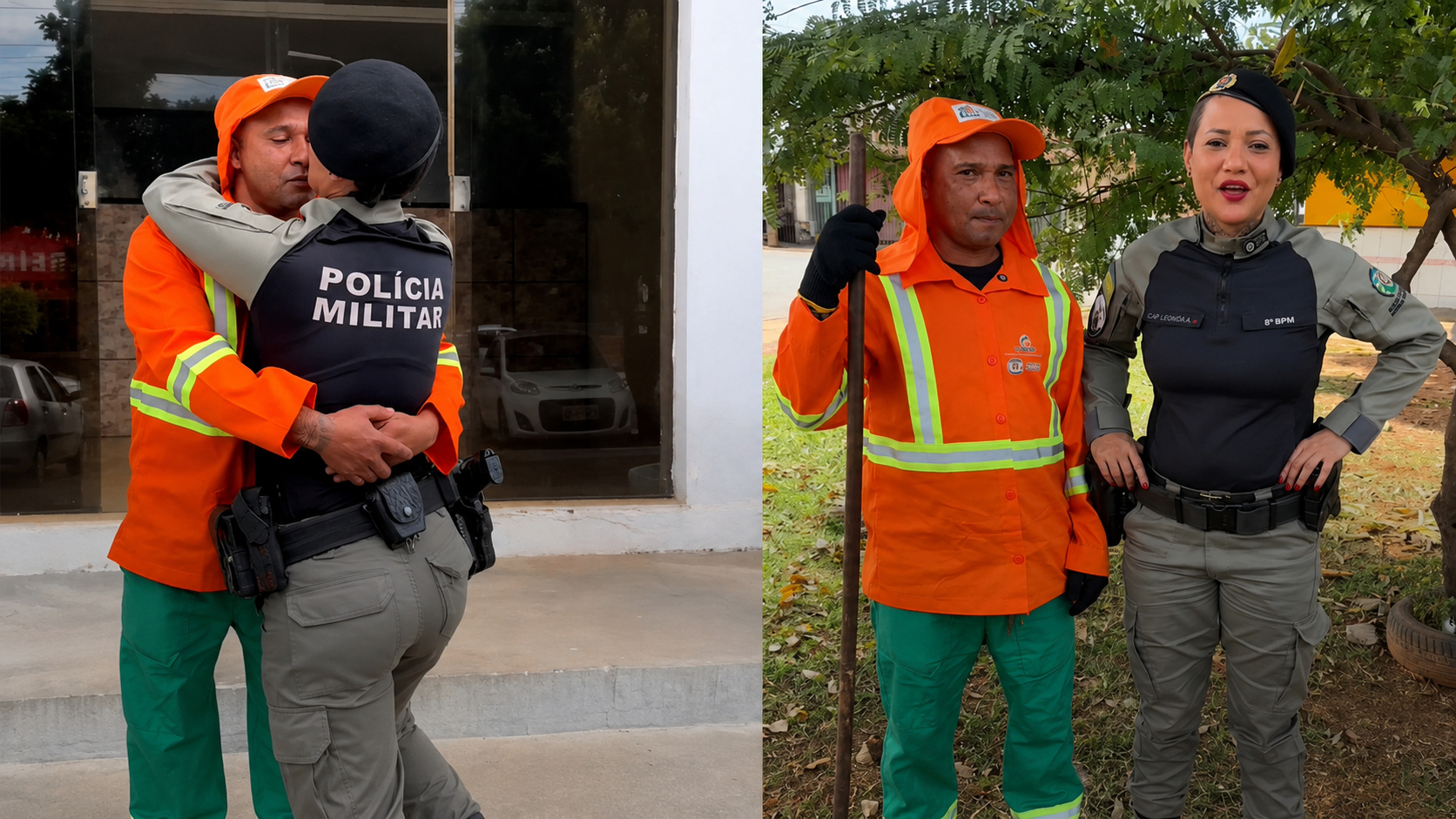
Street Cleaner in Brazil Finds Discarded Books That Helped His Wife Pass Civil Service Exam and Become Police Captain
-
July’s Night Sky to Feature Planetary Alignments, New Moon, Venus at Sunset, Buck Moon, and Two Meteor Showers

-
Fisherman Catches 18kg Catfish Near Brazil’s Itaipu Lake, Among Largest Recorded in Recent Years



Special attention to those who cannot protect themselves alone
The Civil Defense guide of Cuba dedicates a specific section to the most vulnerable people in case of an attack. The guidelines call for special attention to people with disabilities, elderly who are not self-sufficient, children, and pregnant women, groups that would have difficulty quickly moving to a shelter or carrying survival backpacks. The mention of toys for small children in the supply list reveals that the guide was not written in abstract language: it considers what a real family with children would need in an emergency situation.
For a population that already faces blackouts of up to 22 hours a day and shortages of food and fuel, preparing a survival backpack with three days of supplies is an additional challenge. Many Cuban families do not have regular access to ready-to-eat food, bottled water, or medications, items that the guide recommends as essential. The gap between what the document advises and what the population can gather is the most accurate measure of the vulnerability in which Cuba finds itself.
“Cuba is next”: the phrase by Trump that motivated the guide
The publication of the guide by Civil Defense is not institutional paranoia. The President of the United States, Donald Trump, publicly declared that Cuba “is next,” a phrase spoken after American military operations in Venezuela and the escalation of the conflict with Iran. For international relations experts, the declaration signals that a military action against the Caribbean island is considered plausible by the American government, even if it has not yet been formalized as policy.
The context reinforces Cuban concern. In January, the US captured former Venezuelan President Nicolás Maduro in an operation that demonstrated Washington’s willingness to intervene militarily in the region. Since then, the pressure on Cuba has intensified with a petroleum embargo, expansion of sanctions, surveillance drone flights over the island, and the visit of the CIA director to Havana. For the Cuban government, each of these signals confirms that preparing the population is not an exaggeration, but a precaution in the face of a scenario that deteriorates each week.
The petroleum embargo that is already a war by other means
Even without firing a single shot, the United States is already causing a humanitarian crisis in Cuba through the petroleum embargo. The fuel that powered Cuban thermal power plants stopped arriving, and electricity became available for only one or two hours a day in most of the island. Hospitals depend on generators that also need fuel. Food spoils without refrigeration. Public transport stops functioning when buses have no diesel.
The executive order signed by Trump on May 1st expanded economic, financial, and commercial sanctions that have lasted more than six decades. The embargo is not just about oil: it affects the trade of goods, access to international financing, and Cuba’s ability to import basic inputs for the economy. For many analysts, the embargo is the stage of maximum pressure before a possible military action, and the Civil Defense guide is the response of a government that believes the next stage could be violence.
Five signs that Cuba has entered the US radar
Besides Trump’s declaration and the oil embargo, other indicators reinforce that Cuba is at the center of American foreign policy attention. American surveillance drones have been spotted flying over the island, the CIA director met with Cuban authorities in Havana, Justice Department prosecutors plan to indict former leader Raúl Castro, and the US has pushed for reforms during direct talks in the Cuban capital. Each of these events, individually, could be interpreted as pressure diplomacy. Together, they form a picture that the Cuban government interprets as preparation for an intervention.
The Cuban government declared that the United States is on a path that “could lead to bloodshed” on the island, language that raises the tension to a level where minor incidents can quickly escalate. For the Cuban population, already living without electricity, without fuel, and with food shortages, the possibility of a military conflict is a scenario that adds to a crisis that already seems unbearable.
Survival backpacks in a country already struggling to survive
Cuba has released a Civil Defense guide teaching families to prepare backpacks with supplies for three days, seek shelters against air attacks, and provide first aid to the wounded, while Trump declares that the island “is next.” The guidance comes in a country already facing 22-hour blackouts, an oil embargo, and sanctions that have lasted six decades. For 11 million Cubans, the guide is not an abstract document: it is the official confirmation that the government considers the possibility of a US attack real.
What do you think about a government advising its population to prepare for a military attack? Tell us in the comments if you believe the US might indeed intervene in Cuba, how you assess the role of the embargo in the humanitarian crisis, and if the international community should do more to prevent an escalation. We want to hear your opinion.


