Portuguese
  Spanish


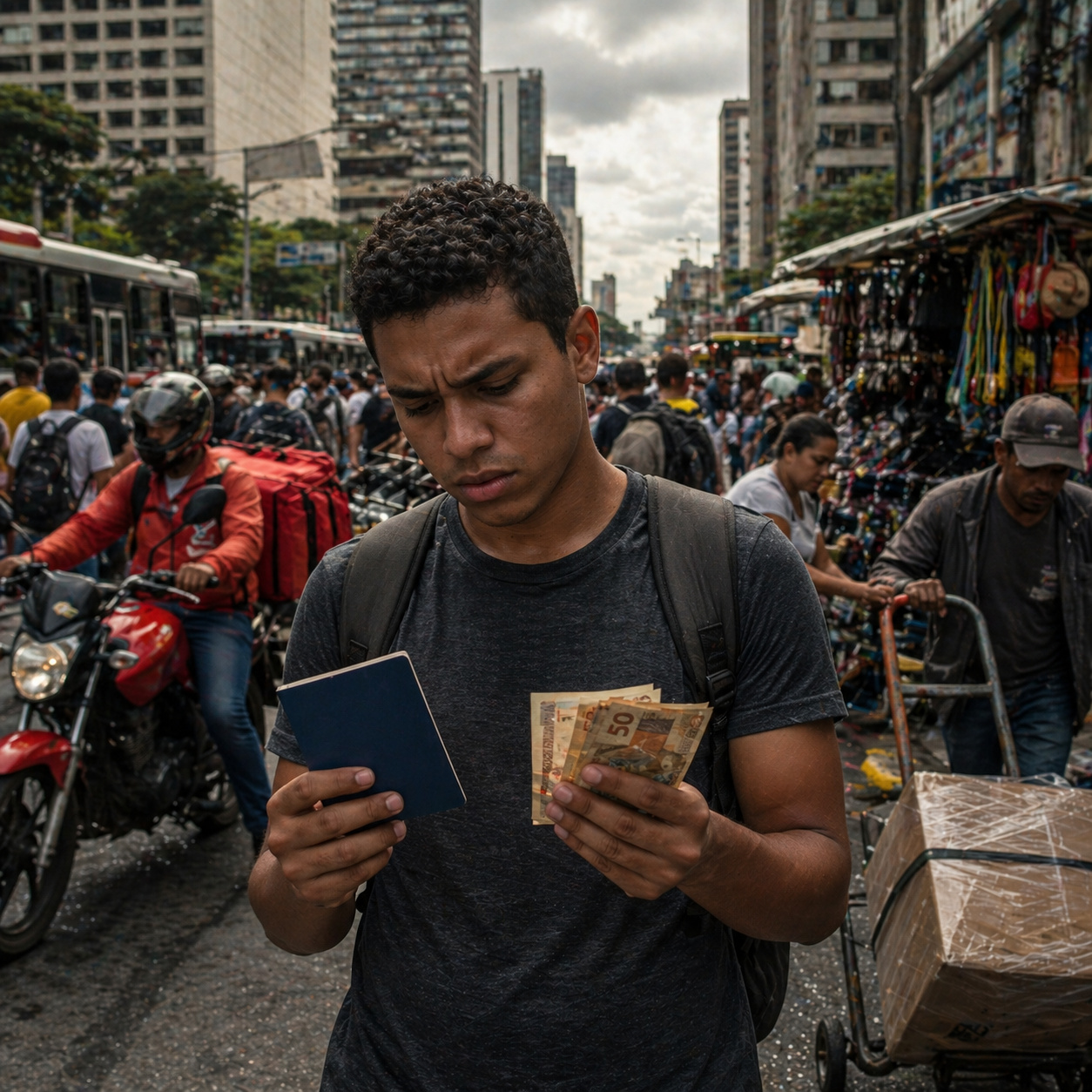

Brazil surpasses 38 million in informality, and the advance of unregistered work pressures the traditional employment model and ignites economic debate.
In 2026, Brazil once again recorded one of the largest contingents of workers outside formality since the beginning of the recent historical series: more than 38 million people working without a formal contract or employment bond, according to IBGE data released throughout the first quarter of the year. This number consolidates a movement that has been gaining strength since the pandemic and is now being analyzed not only as an economic effect but as a possible structural transformation in the labor market.
The most relevant data point is not just the absolute volume, but the persistence of this high level even in a scenario of relatively low unemployment. This indicates that a significant portion of the economically active population is engaged in forms of work without formal protection, such as freelancers, self-employed workers, individual micro-entrepreneurs, and informal occupations.
Continue reading below to understand what is behind this growth, what the real impacts are for the economy, and why the advance of informality has come to be seen as one of the main challenges for the Brazilian labor market.
-
As Brazil Expands Social Welfare, Survey Reveals 40% Blame Poverty on Laziness, While 58% Cite Lack of Opportunities

-
China Tightens Control on Antimony, Driving Prices from $22,000 to Nearly $40,000 per Ton as U.S. Rushes to Bolster Strategic Reserves

-
BlackRock Freezes $1 Billion in Brazilian Renewable Energy, Impacting 1.5 GW of Planned Projects and Highlighting Investor Concerns Over Infrastructure Bottlenecks Cutting Up to 25% of Solar and Wind Generation
-
Labor Shortage: Despite Record Average Salary, 90% of Brazilian Bar and Restaurant Owners Struggle to Hire Key Roles Like Sushi Chefs and Head Cooks


Over 38 million in informality place Brazil among the largest non-formal labor markets in the world
Brazil historically exhibits a high rate of informality, but the current level reinforces the dimension of the phenomenon. According to IBGE, informality includes private sector workers without formal contracts, unregistered domestic employees, self-employed workers without a CNPJ (National Registry of Legal Entities), and employers without formalization.
Within this universe, self-employed workers represent a significant portion, followed by private sector employees without formal contracts and informal domestic workers.
This group forms a mass of workers who, although economically active, operate outside the legal guarantees provided by the Consolidation of Labor Laws, such as paid vacations, 13th-month salary, FGTS (Severance Indemnity Fund), and social security protection.
Informality growth occurs even with historically low unemployment levels
One of the most relevant points in the current scenario is the coexistence of a low unemployment rate and high informality.
In previous economic cycles, informality tended to grow during crises and decrease when formal employment advanced. In the current scenario, this relationship has become more complex.
Even with the labor market showing relatively low unemployment levels, informality remains high, indicating that the creation of formal jobs has not been sufficient to absorb the entire available workforce or that some workers are opting for alternative paths.
This behavior suggests a deeper change in the market structure, which goes beyond conjunctural economic fluctuations.
Advance of unregistered work reflects a combination of economic, technological, and behavioral factors
The growth of informality cannot be explained by a single factor. It results from the combination of different transformations occurring simultaneously.
From an economic perspective, informality emerges as an alternative in a scenario of uneven recovery, where not all sectors can generate formal jobs at a sufficient pace.
In the technological field, digital platforms and applications have expanded access to immediate income streams, allowing workers to act as drivers, delivery personnel, service providers, and freelancers without the need for a formal employment bond.

From a behavioral perspective, there are indications that some workers value greater autonomy, flexible hours, and the possibility of multiple income sources.
This set of factors creates an environment in which informal work ceases to be merely a temporary solution and begins to occupy a structural space in the economy.
Immediate income and flexibility attract workers, but lack of protection creates long-term risks
One of the central elements of the current debate is the relationship between immediate gains and future security. In the short term, informality can offer advantages such as greater freedom of choice, flexible hours, and the possibility of variable earnings.
However, the absence of a formal employment relationship implies a lack of access to benefits such as retirement, sickness benefits, and unemployment insurance, which increases vulnerability in crisis situations.
This contrast means that the growth of informality is seen as an ambiguous phenomenon, capable of generating income in the present, but with the potential to weaken economic security in the long term.
Sectors such as services, transport, and commerce concentrate the majority of informal workers
The distribution of informality in Brazil is not homogeneous. Sectors related to services, commerce, and transport concentrate the majority of informal workers, especially in activities with low barriers to entry.
The growth of transport and delivery apps has also contributed to expanding this contingent, creating new forms of occupation that do not fit traditional employment models.


This sectoral concentration reinforces the idea that informality is strongly associated with activities that require less formal qualification but offer rapid market entry.
High informality impacts revenue, productivity, and labor market structure
The advance of informality has direct implications for the economy as a whole. From a fiscal perspective, informal workers contribute less to tax collection and the social security system, which can pressure public accounts in the long term.
In terms of productivity, informality is often associated with less access to credit, technology, and qualification, which limits the growth of economic efficiency.
Furthermore, the expansion of informal work can create competitive distortions, as companies operating formally face higher costs.
Debate on “preference” for informality requires caution and data-driven analysis
While there is a growing narrative that workers are “preferring” informality, this point requires careful analysis.
IBGE data does not conclusively support the claim of a deliberate and widespread choice by workers to abandon formal employment.
What is observed is a set of factors that influence individual decisions, including job availability, working conditions, remuneration, and alternative opportunities.
Therefore, interpreting the advance of informality as a simple change in behavior can oversimplify a complex phenomenon, which involves both structural limitations and market transformations.
Comparison with previous periods shows that informality remains resilient even in recovery cycles
Comparing the current scenario with previous periods of economic growth, it is possible to observe that informality shows greater resistance to decline.
Even with a partial economic recovery, the number of informal workers remains high, indicating that part of this contingent does not return to the formal market.
This behavior reinforces the perception that the Brazilian labor market is undergoing a transition, where traditional models coexist with new forms of occupation.