Those traveling by electric car in the Southeast received quite a boost this Wednesday. On July 8, 2026, WEG, a Brazilian multinational based in Jaraguá do Sul, Santa Catarina, and Rede Graal, one of the largest highway service station networks in the country, announced the expansion of the network of chargers for electric cars on the main roads of São Paulo, Rio de Janeiro, and Minas Gerais.
According to NSC Total, there are 47 fast chargers installed at 17 stations, with power ranging from 22 kW to 120 kW, in a move that places the Santa Catarina industry at the forefront of fast charging for electric vehicles in Brazil.
According to CanalVE, the partnership has made WEG responsible for about 80% of the fast chargers in the Rede Graal, a leap that changes the scale of electromobility on highways. The equipment uses CCS2 and Type 2 connectors, delivers energy in direct current of 120 kW and alternating current of 22 kW, and promises to get the car back on the road in about 30 minutes. For those used to waiting four to five hours on a regular outlet, the difference is striking.
WEG becomes responsible for 80% of the fast chargers in the Rede Graal
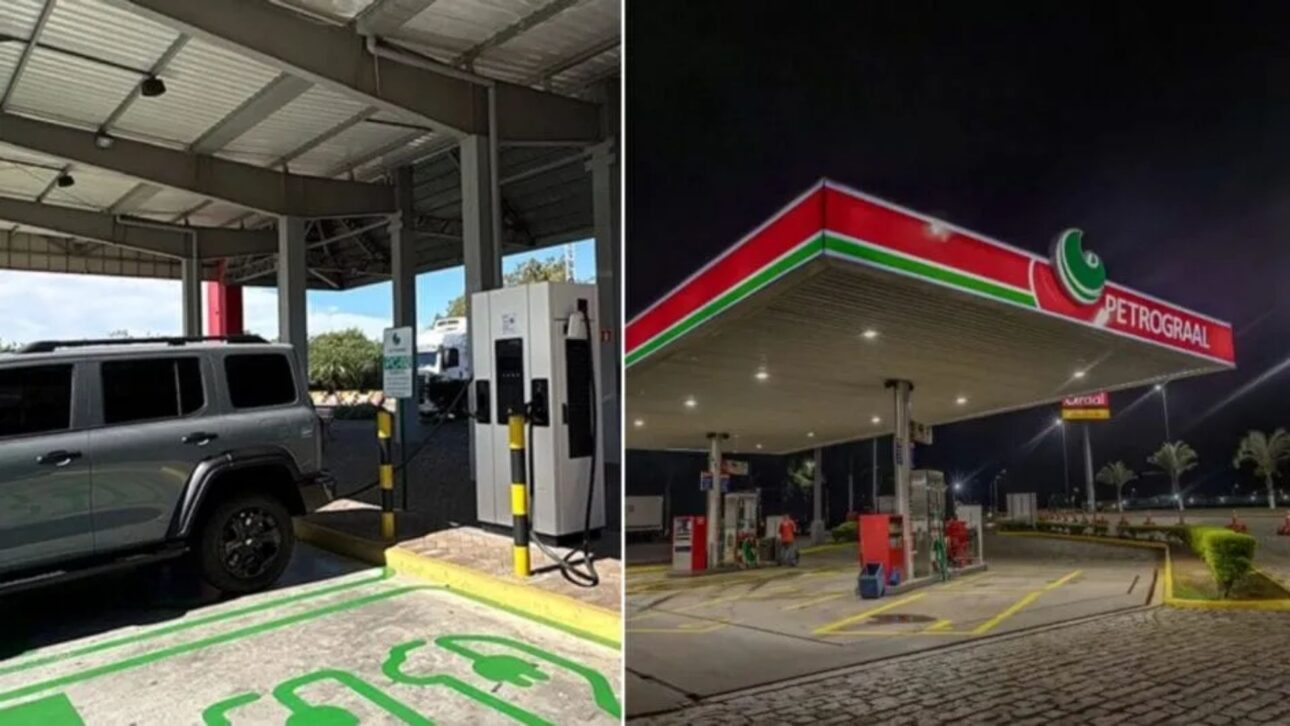
The partnership between the two companies is not new, but it has just reached another level. The Santa Catarina manufacturer has taken over about 80% of the fast chargers that the network operates on the roads, making it the main supplier of the technology behind these electric refueling points. It is the national industry occupying a space that, for a long time, depended on imported equipment.
-
From Slicing Cold Cuts at 11 to Leading Tech Firm Verity: Alexandro Barsi’s Journey to Projected $28 Million Revenue by 2028

-
Scientists Discover Super-Earth Just 25 Light-Years Away That Could Support Life Beyond Our Solar System: Meet GJ 3378b
-
17-Year-Old Develops Mind-Controlled Robotic Arm Using AI for Affordable Prosthetics

-
Brazil’s Most Famous Virtual Sales Assistant Drives $100 Million in Sales in 8 Months: Magazine Luiza’s AI-Powered WhatsApp Engages 7.7 Million Users and Triples Conversion Rates Compared to Other Digital Channels


Rede Graal has been active in electromobility since 2013, when few people in Brazil even considered switching from gasoline to electric. This head start gave the network a rare repertoire on the behavior of those driving electric on long trips. Now, with WEG as the main partner, the operation gains standardization, national assistance, and the robustness of those who manufacture the chargers for electric cars within the country itself.
The practical result appears on the road network. There are 47 fast chargers distributed across 17 stations, forming electric stations on high-traffic highways between São Paulo, Rio de Janeiro, and Minas Gerais. Each point becomes a safe stop to recharge, grab a bite, and continue the journey without the fear of running out of energy in the middle of the road.
How do the 47 chargers for electric cars on the highways work?
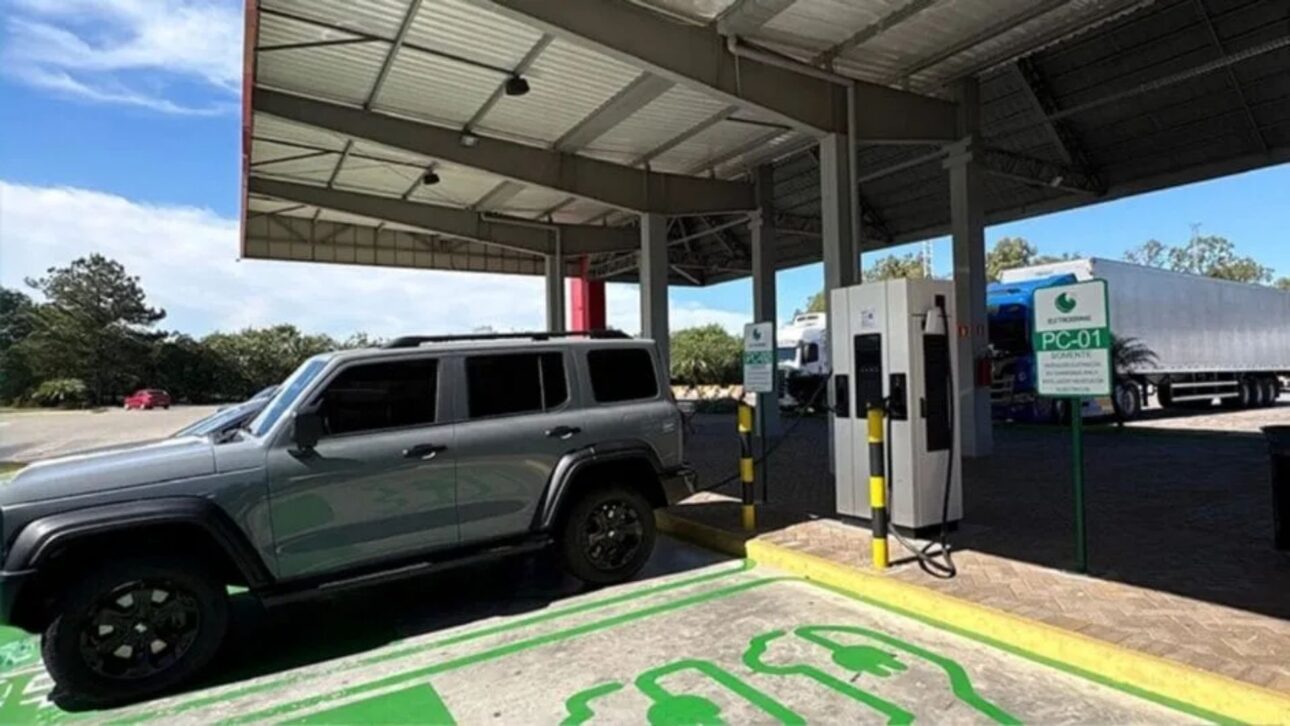
The logic is simple and designed for the road. The network’s electric car chargers are divided into two types of power, each for a different need. The 22 kW ones operate on alternating current and are classified as semi-fast, ideal for those who will have a more leisurely meal while the car recharges.
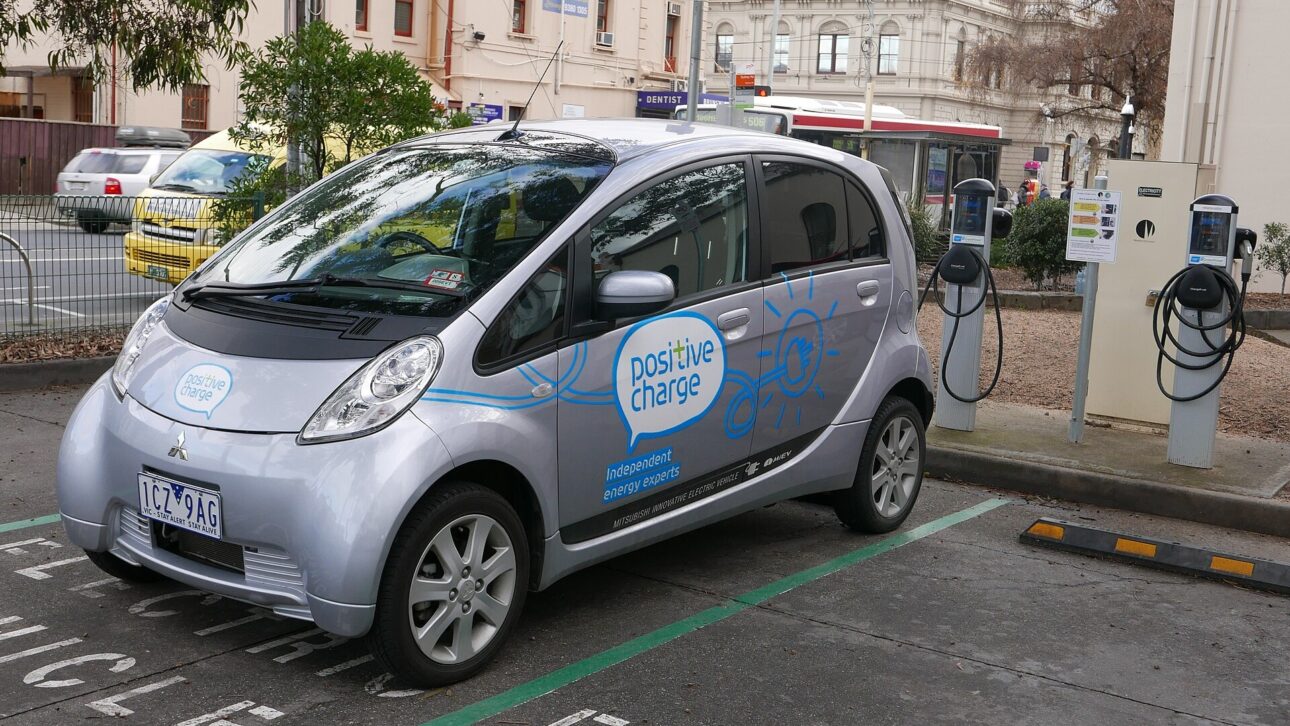
Those of 120 kW operate in direct current and fall into the category of ultra-fast. These are the ones that actually shorten the trip because they deliver energy at a much higher speed. One detail makes a difference during peak hours: each 120 kW charger has two connectors and can serve two vehicles at the same time, which reduces queue formation.
To accommodate the different models circulating in the country, the equipment features CCS2 connectors, the standard for direct current charging, and Type 2, used in alternating current. This combination broadens compatibility and prevents the driver from arriving at the point only to find that their car’s plug doesn’t fit.
From 22 kW to 120 kW: what changes between semi-fast and ultra-fast charging
It’s worth understanding the difference because it defines how long you stay parked. The power, measured in kilowatts, is basically the flow of energy: the higher it is, the faster the battery fills. Among the electric car chargers in the network, a 22 kW one is great but works at a calmer pace, while a 120 kW one is made for speed.
The electric current also changes everything. In alternating current, at 22 kW, the car itself converts the energy before storing it, which imposes a speed limit. In direct current, at 120 kW, the conversion happens inside the charger, and the energy goes directly into the battery. That’s why true fast charging of electric vehicles happens at direct current points.
Calling the 22 kW semi-fast and the 120 kW ultra-fast is not marketing fluff. These are technical categories that help the driver plan the right stop: a quick snack pairs with ultra-fast, a full meal calls for semi-fast. The Graal Network offers both types precisely to cover both travel scenarios at these highway charging stations.
Régis Bittencourt, Fernão Dias, and Anhanguera: the map of the 17 stations
The service area of a highway, viewed from the road, type of point where the charging stations are located. (Illustrative image) Credit: Bill Boaden / CC BY-SA 2.0 (Wikimedia Commons).
The choice of highways was not random. The electric car chargers are in corridors that concentrate part of the heaviest traffic in the Southeast. The Régis Bittencourt connects São Paulo to the South of the country, the Fernão Dias connects the São Paulo capital to Belo Horizonte, and the Anhanguera is one of the backbones of the São Paulo interior.
The list doesn’t stop there. The highway charging stations also appear on the Bandeirantes, Washington Luiz, and Marechal Rondon, all with intense flow of business and leisure trips. Together, these roads form a network that allows crossing long distances while stopping to recharge at strategic points.
Spreading 47 fast chargers across 17 stations in three states has an important psychological effect. The driver begins to see the trip as a sequence of possible stops, not as a leap into the unknown. It is this predictability that transforms the electric vehicle into a real option for hitting the road. It is also what drives the fast charging of electric vehicles in the country’s interior.
How long does it take to recharge the car at these highway charging stations?
This is the most frequently asked question, and the answer is encouraging. At 120 kW direct current points, these electric car chargers restore a good part of the range in about 30 minutes, the peak of fast charging for electric vehicles. It’s the time for a coffee, a bathroom break, and a snack, something almost everyone already does on a long trip anyway.
The comparison with the past explains the enthusiasm. At a regular outlet, the same car could take four to five hours to charge, something unfeasible in the middle of a journey. By cutting this time to about half an hour, highway charging stations eliminate the biggest bottleneck of electromobility, which has always been the wait.
With 22 kW semi-fast electric car chargers, the time is longer, and this is intentional. They serve those who will stop for a longer time, for lunch or an extended rest. The idea is to match the type of charger with the type of stop, so the driver is never waiting too long or in too much of a hurry.
WEMOB: the line of electric car chargers manufactured by WEG in Santa Catarina
Behind the equipment is the WEMOB line, WEG’s bet on electromobility. The company, headquartered in Jaraguá do Sul, Santa Catarina, is a Brazilian multinational known worldwide for electric motors and energy solutions, and it brought this expertise to the manufacturing of electric car chargers.
Producing electric car chargers within Brazil changes the game for several reasons. It reduces dependence on imports, shortens maintenance time, and ensures technical assistance in the same time zone and language as the customer. When a charging station stops working, having the manufacturer WEG in the same country speeds up the repair and keeps the network running.
The WEMOB line also gives WEG a symbolic role. It’s not just about selling metal boxes with plugs, but about anchoring in Brazil a technology that many people imagined would only come from abroad. It’s the industry of Santa Catarina helping to map out the fast charging network for electric vehicles in the country.
From the 2013 experience to the leadership of the Graal Network in fast charging for electric vehicles
The Graal Network did not just start dealing with this topic yesterday. The network has been involved in electromobility since 2013, a pioneering effort that few players in the service station sector can boast. This history explains why the current expansion is happening so naturally: the structure and knowledge have been built over more than a decade.
Nivaldo Ary Nogueira Jr., Graal’s expansion manager, is leading this growth. The charging operation is accessed through the movE platform, which organizes the use of chargers for electric cars and connects the driver to the charging stations available on the network’s highways. It is the digital layer that makes the entire system work seamlessly.
With WEG accounting for about 80% of the fast chargers, Graal achieves end-to-end standardization. The same type of equipment, the same maintenance logic, and the same user experience at all highway charging stations in the network. This is what turns isolated points into a true network.
What does the arrival of new electric car chargers have to do with Brazil?
It has everything to do with it, and the reason is quite concrete. The biggest obstacle to the popularization of electric cars in Brazil has never been just the price: it’s the so-called range anxiety, the fear of running out of battery far from home. Spreading electric car chargers along highways directly addresses this concern.
While charging was only available within cities, electric cars were for daily use, not for travel. By bringing highway charging stations to corridors like Régis Bittencourt, Fernão Dias, and Anhanguera, the WEG and Graal Network partnership changes this equation and opens up the country’s interior to electric car users.
There is also industrial pride. Seeing a Brazilian multinational from Santa Catarina leading the fast charging of electric vehicles on highways shows that the country doesn’t just need to import this transition; it can manufacture it. Each WEMOB charger installed is a reminder that electromobility technology can also have a Brazilian accent.
And you, would you take a long trip in an electric car?
And you, have you ever imagined hitting the road in an electric car and stopping for 30 minutes to recharge while having a coffee? With 47 electric car chargers installed at 17 stations, the trip that seemed risky is starting to become a possible routine. The missing infrastructure is being built, kilometer by kilometer.
The advancement of electric car chargers and highway charging stations shows that electromobility in Brazil has moved from discourse to practice. Now, we need to see how many drivers will embrace the change and how quickly other highways in the country will follow the same path.
Tell us in the comments: would you swap the fuel tank for the plug on your next long trip?