Portuguese
  Spanish


O resgate do Mazarrón II foi um esforço meticuloso, com cada peça do navio sendo cuidadosamente removida e transportada para Cartagena, onde passará por um processo de conservação extensivo.
Este projeto não só visa preservar um importante artefato histórico, mas também oferece uma oportunidade única para estudar as técnicas de construção naval dos fenícios, um dos povos marítimos mais influentes da antiguidade.
Os esforços de conservação em Cartagena garantirão que o Mazarrón II seja preservado para as gerações futuras, permitindo que pesquisadores e o público em geral apreciem e aprendam com este notável exemplo do patrimônio marítimo antigo.
-
113-Million-Year-Old Pterosaur Fossil in Brazil Holds Rare Molecules That Could Reveal Its Diet

-
Indian Inventor, 58, Develops Steering Wheel-Free Agricultural Machine Operated by Levers, Offering Cost-Effective Alternative to Expensive Tractors

-
Scientific Breakthrough: Bacteria Found in a Rio de Janeiro Lagoon Guide Mars Research After Scientists Identify Similarities to Extreme Environments, Expanding Understanding of Extraterrestrial Life Possibilities

-
Brazilian Mechanic Wins Indian Presidential Award for Inventing Fuel-Efficient Agricultural Machine



According to Carlos de Juan, it was more sensible to remove the vessel, treat it, and display it in a museum than to maintain the concern with each major storm.
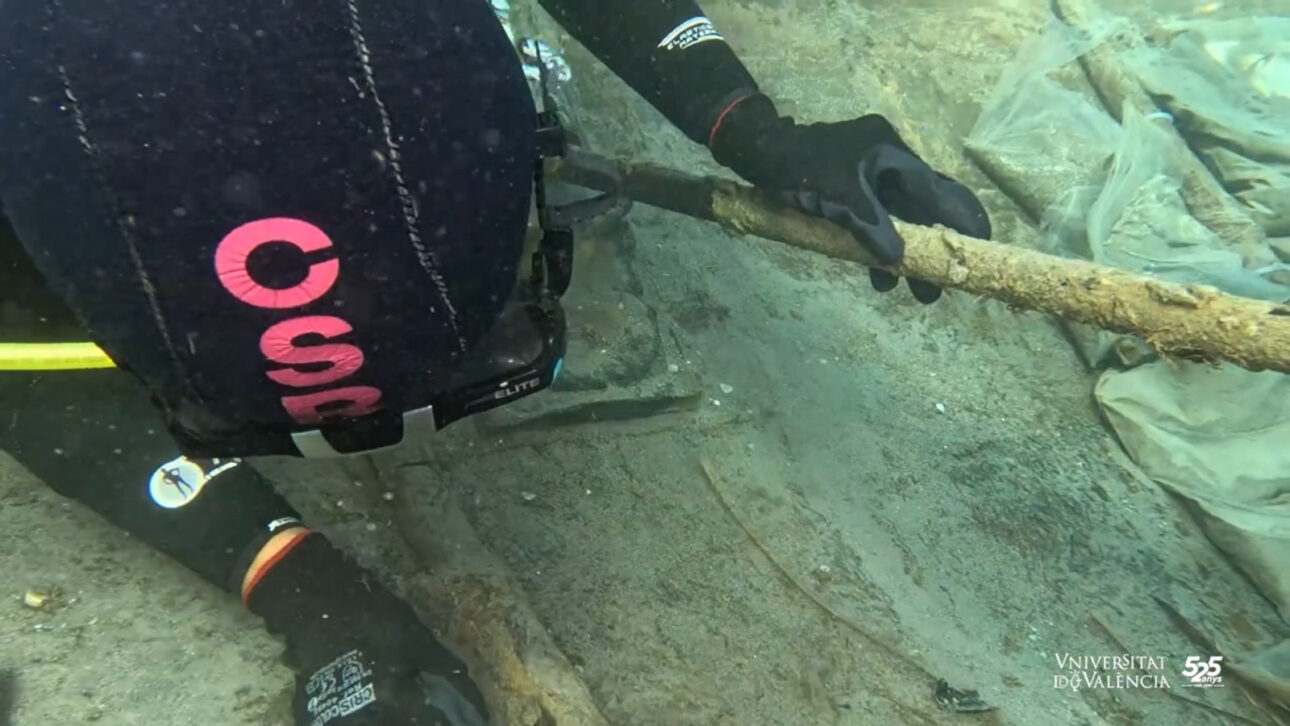
Rescue was carried out piece by piece by 14 divers
Between September and November 2024, a team of 14 divers carefully removed the wooden wreckage from the seabed, piece by piece.
The fragments will be taken to a laboratory at the Museum of Underwater Archaeology in Cartagena. The conservation and reconstruction work is expected to take at least four years.
The process should begin with the removal of salt from each piece. Then, specialists will apply resins to parts where the wood has decayed. Next, the fragments will be freeze-dried before the ship is reassembled.
Shipwreck may reveal details about the Phoenicians
Archaeologists believe that the Mazarrón II belonged to the Phoenicians, maritime traders who inhabited the eastern Mediterranean coast between approximately 1500 and 300 B.C.
The vessel is considered one of the few shipwrecks from the Phoenician era still practically intact. Therefore, it may help researchers better understand shipbuilding techniques and aspects of Phoenician culture.
Agustín Díez, a historian at the University of Valencia, stated that the study could indicate the types of wood used, where the boat was built, what navigation was like at the time, and how the wood degradation occurred.
Another shipwreck, called Mazarrón I, was found in the same area in 1993. It was removed from the water two years later and, after conservation, began to be exhibited at the National Museum of Underwater Archaeology in 2005.
This article was prepared based on information from CBS News, Reuters, El País, and statements from the University of Valencia, with data, numbers, and statements preserved as per the consulted material.