Portuguese
  Spanish


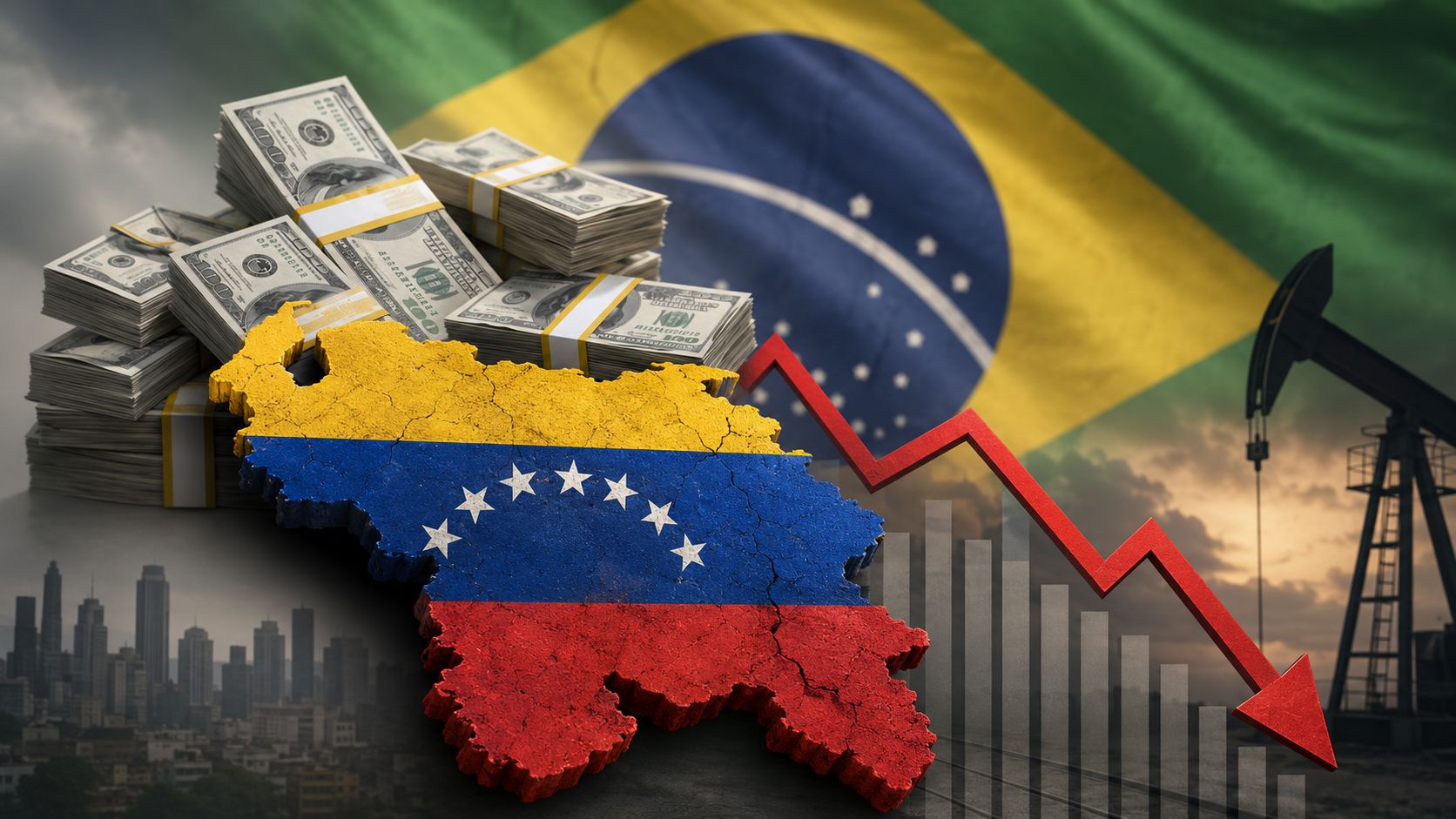

After Delcy Rodríguez’s inauguration in January 2026, Venezuela continued without presenting payment or public agreement to settle the billion-dollar debt linked to works financed with BNDES support, including subways and steelworks, according to data cited by CNN Brazil and other official sources
The inauguration of Delcy Rodríguez as interim president of Venezuela, on January 5, 2026, raised a new question about an old debt: after Nicolás Maduro’s departure from power, did the neighboring country pay, renegotiate, or present any schedule to settle the amounts owed to Brazil for works financed with BNDES support?
So far, public sources do not show payment, reduction, refinancing, forgiveness, or closed agreement after the change of command in Caracas.
What exists, in documented form, is a billion-dollar debt recognized by the Brazilian side, formed by amounts covered by the Union after default on export operations supported by the Export Guarantee Fund.
-
Abandoned Building in Brazil to Become Biotechnology Unit with $10 Million Investment, Bridging Science, Industry, and Public Health

-
Company Offering “Stones to Diamonds” Scheme Sells Ruined Italian Homes to Brazilians for 1 Euro, Disappears with Promised Renovations, Leaving Buyers in Debt to Italian Tax Authorities Until 2028 Without Property

-
Plastic Packaging Drives Santa Catarina Industry to 230% Growth, Aiming for R$ 500 Million by 2030 Amid Sector Crisis, with New Gearless Line Expanding in Southern Brazil to Compete in South America

-
Flamengo Star Invests in Brazilian Coastal Luxury Real Estate as Itapema Surpasses Balneário Camboriú in High-End Market Growth


According to Reuters, Delcy Rodríguez was formally sworn in as interim president of Venezuela on January 5, 2026, after Nicolás Maduro’s removal from power by a U.S.-led operation.
The agency reported that Rodríguez, until then vice-president and Minister of Petroleum, assumed the position in a ceremony conducted by Jorge Rodríguez, president of the Venezuelan National Assembly and brother of the new leader.
The power shift, however, did not appear in the available information as a milestone for resolving the financial issue with Brazil.
On the contrary: the day after the inauguration, CNN Brazil reported, based on data provided by the Ministry of Finance, that Venezuela’s debt to Brazil had ended 2025 at US$ 1.856 billion, equivalent to about R$ 10.1 billion at the exchange rate of the time.
Debt ended 2025 at US$ 1.856 billion
The information provided by CNN is relevant because it marks the debt situation immediately before Delcy Rodríguez took office. According to the report, the figure of US$ 1.856 billion corresponded to compensations already paid by the Union and accumulated default interest.
In practice, this means that the problem was not restricted to a charge between banks or companies. When an export operation covered by the Export Guarantee Fund defaults, the fund can compensate the creditor. After that, the Union seeks reimbursement of the amounts paid, plus the corresponding charges.
CNN also reported that there was no payment forecast. In other words, until that moment, the Brazilian government maintained the charge, but without a defined date to receive the amounts. This absence of an official schedule is one of the central points of the story: the debt existed, was quantified in data sent by the Ministry of Finance, and remained without a public solution.
In May 2026, CNN returned to the topic when addressing the debts of Cuba and Venezuela with Brazil. In the report, the outlet stated that Venezuela accumulated a debt of US$ 1.2 billion after defaulting on works financed by the development bank. The article mentioned projects such as the Caracas and Los Teques subways and the National Steelworks.
The difference between the values mentioned in January and May needs to be presented carefully. The figure of US$ 1.856 billion, reported in January, included compensations already paid by the Union and accumulated default interest. The value of more than US$ 1.2 billion, mentioned in May, appears associated with the debt covered by the fund in the Venezuelan case. In both cases, the reports indicate that the liability remained in the billions.
How the Default Became a Bill for the Union
The origin of the debt is linked to export operations of Brazilian goods and services, especially in the engineering sector. BNDES informs on its transparency page that it financed the commercialization of Brazilian goods and services to 15 countries over 20 years through the BNDES Exim Post-shipment line.
This modality allowed Brazilian companies to sell abroad and receive the funds in Brazil, while the external debtor assumed the commitment to pay the debt. BNDES itself explains that, in BNDES Exim Post-shipment, the exporting company receives the funds in Brazil after proving the export, and the debtor abroad starts paying the debt to the bank.
In the Venezuelan case, operations linked to infrastructure works became the target of public questioning after the default. BNDES’s own search gathers old records on financing related to Venezuela, including metro and infrastructure projects.
Brazilian Government Talked to Delcy, but Did Not Announce Agreement on the Debt
The change in Venezuelan power caused an immediate reaction in Brasília. According to Reuters, President Luiz Inácio Lula da Silva spoke by phone with Delcy Rodríguez after the United States’ action that ousted Nicolás Maduro. The Brazilian Presidency confirmed the call but did not disclose details about the conversation’s content.
There is no indication in the public information consulted that this conversation resulted in negotiations about the debt with Brazil. No official statement was found regarding a payment schedule, renegotiation, refinancing, or forgiveness of the amounts.
Therefore, the safest point for the article is to state that Delcy Rodríguez’s inauguration altered the Venezuelan political landscape but did not resolve, as far as available sources show, the financial issue linked to the Export Guarantee Fund.
Maduro’s departure changed the political environment but did not eliminate the restrictions
The arrival of Delcy Rodríguez to power also changed part of Venezuela’s relationship with Washington. According to Reuters, in January 2026, the new Venezuelan leader was trying to consolidate power internally while meeting U.S. demands to increase oil production.
In April 2026, the United States Department of the Treasury removed Delcy Rodríguez from the OFAC sanctions list.
The official OFAC database itself maintains a public consultation of sanctioned names and sanctions programs.
This movement opened the way for a partial normalization of relations with the United States but did not mean the end of all restrictions against Venezuela. The Venezuelan economy still bore the effects of years of crisis, sanctions, institutional instability, and a decline in external financing capacity.
World Bank data shows that Venezuela’s GDP was US$ 99.66 billion in 2025. The GDP per capita was US$ 3,494.80, and the annual growth was 1.6%.
These numbers help to gauge the challenge. A debt of US$ 1.856 billion with Brazil, when compared to an economy still weakened, represents a significant burden in a country that was trying to reorganize its internal policy, rebuild international relations, and restore economic capacity.
What is known so far
Based on the sources consulted, the answer to the central question is: there is no reliable public record that Venezuela has paid or renegotiated the debt with Brazil after Delcy Rodríguez’s inauguration.
What exists is a billion-dollar debt recognized in Brazilian data, reports based on the Ministry of Finance, and a history of default in operations covered by the Export Guarantee Fund. There is also a new political scenario, with Delcy Rodríguez in interim power, an attempt to reorganize the relationship with the United States, the persistence of restrictions, and a humanitarian crisis worsened by the earthquakes of June 2026.
For Brazil, the practical question remains the same: knowing if the amounts covered by the Union will return to public coffers.
For Venezuela, the challenge is even greater, because any negotiation will depend on economic capacity, political stability, access to external resources, and the interim government’s decision to treat the debt with Brazil as a priority.
Until there is an official communication of payment, renegotiation, or bilateral agreement, the most accurate information is that the debt remains pending.