Portuguese
  Spanish


Missing person case solved after five years draws attention to national data and reinforces the importance of integration between search systems and police action on highways.
A university professor who had been missing for five years was found on Tuesday, April 21, 2026, walking along the Washington Luís Highway, SP-310, in the Taquaritinga stretch, in the interior of São Paulo.
The approach was made by highway military police officers during a preventive action aimed at pedestrian safety on highways.
The man was in an area considered high-risk, a situation that led the team to interrupt their patrol to verify his identification.
-
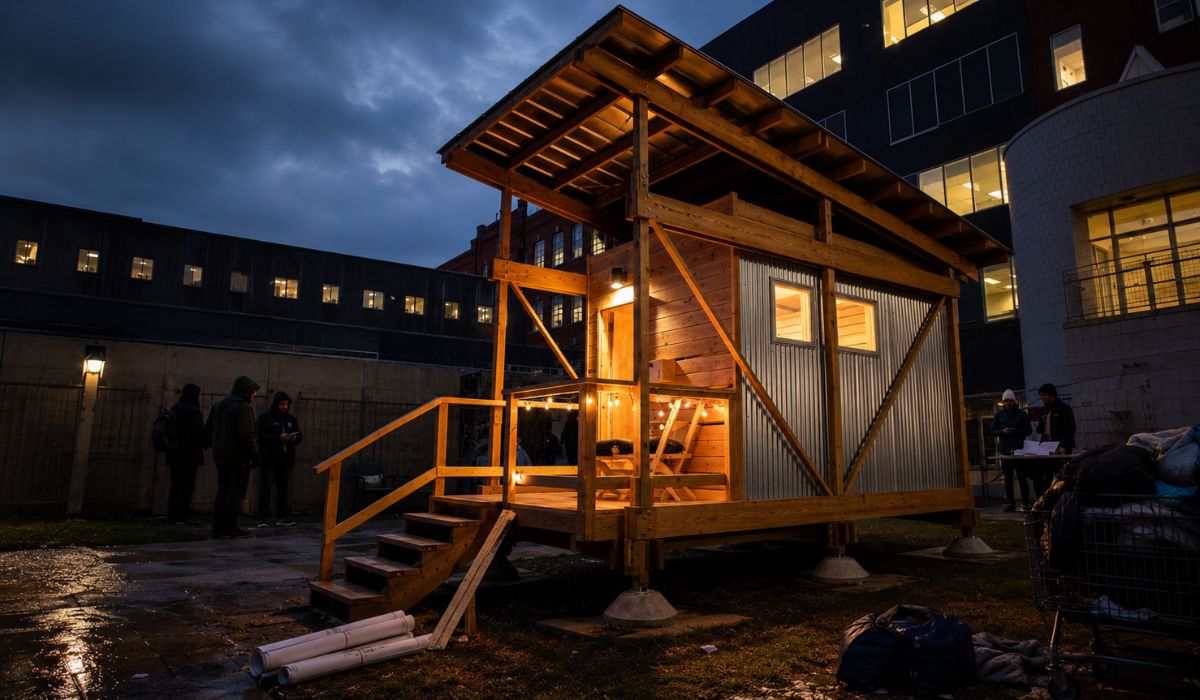
Architecture Students Design 8×12-Foot Microhouse for Homeless in Newark, Proposing Compact Shelter as Urban Solution Amid Housing Crisis

-
From Humble Beginnings to Industry Leader: The 30-Year-Old Scrap Dealer Transforming Brazil’s $1.8 Billion Metal Recycling Sector

-
From Hotel Porter to CEO: Brazilian Entrepreneur Leads Travel Agency Serving Major Brands and Generating $270 Million in Revenue

-
From Selling Cleaning Products in Vans to Over 300 Franchises: Entrepreneur Targets $30 Million by Expanding into Professional Cleaning Services and Laundries




Identification during highway patrol
Upon consulting the professor’s data, the police found that there was a missing person report registered about five years ago.
His family, residents of the state capital, had been looking for information since losing contact.
According to the information released, the professor’s identity was not revealed by the police.

Records indicate that he had distanced himself from family members after facing personal problems, with no official details provided about that period.
After confirmation in the system, the team contacted the family and forwarded the situation for the necessary procedures.
The reunion took place at the Operational Base of the Highway Military Police in Araraquara, also in the interior of São Paulo.
Family reunion moves after years without news
The professor’s 70-year-old mother went to the base after being notified about her son’s location.
According to the report given to the authorities, she no longer believed he could be found alive after so many years without news.
After the reunion, the family was advised to go to the Police District where the disappearance had been registered.
This measure is necessary to formalize the closure of the occurrence and update public security systems.
The case drew attention because it shows how routine approaches, when combined with identification systems, can help solve old disappearances.
It also highlights the importance of maintaining updated and integrated records among state and federal agencies.
Brazil registers over 81,000 disappearances in 2024

The professor’s location occurs amid a national debate about the search for missing persons.
In 2024, Brazil registered 81,022 disappearances, according to data released by the Ministry of Justice and Public Security.
Of this total, 55,159 cases were solved, representing a location rate of 68%.
The numbers indicate that thousands of families still live with a lack of information about missing relatives in different regions of the country.
National registry tries to accelerate location of missing persons
To address this scenario, the federal government launched the new National Registry of Missing Persons.
The tool gathers data from police reports and aims to facilitate the cross-referencing of information among security forces.
The National Registry of Missing Persons was established by Law No. 13,812, of 2019, which created the National Policy for the Search for Missing Persons.
The legislation determines that searches be treated as a priority and be urgent in nature.
The platform gathers georeferenced information and allows security agencies to share data more broadly.
The proposal is to reduce communication failures, accelerate identifications, and increase the chance of location in old and recent cases.
At the launch of the new system, the Ministry of Justice informed that federative units from the North and Northeast regions were among the first to directly feed the database.

Expansion to other states depends on technological integration and adherence to the available modules.
Data integration in São Paulo strengthens investigations
Although São Paulo is still in the process of formally adhering to new registry modules, the state has been sharing missing persons records with the federal government since 2019 through the Sinesp platform.
This integration is considered relevant because it allows data registered in one locality to be consulted by security teams in other regions.
In cases like that of the professor located in Taquaritinga, a quick check in the system was decisive in identifying the old occurrence.
Authorities advise that disappearances be reported as soon as possible, without waiting for informal deadlines.
Immediate registration of the police report increases the possibility of mobilizing teams and improves information cross-referencing.
The story of the professor located in rural São Paulo shows that updating databases and the integrated action of the police can change the outcome of prolonged searches.
For families, each active record represents a possibility of an answer.