Portuguese
  Spanish


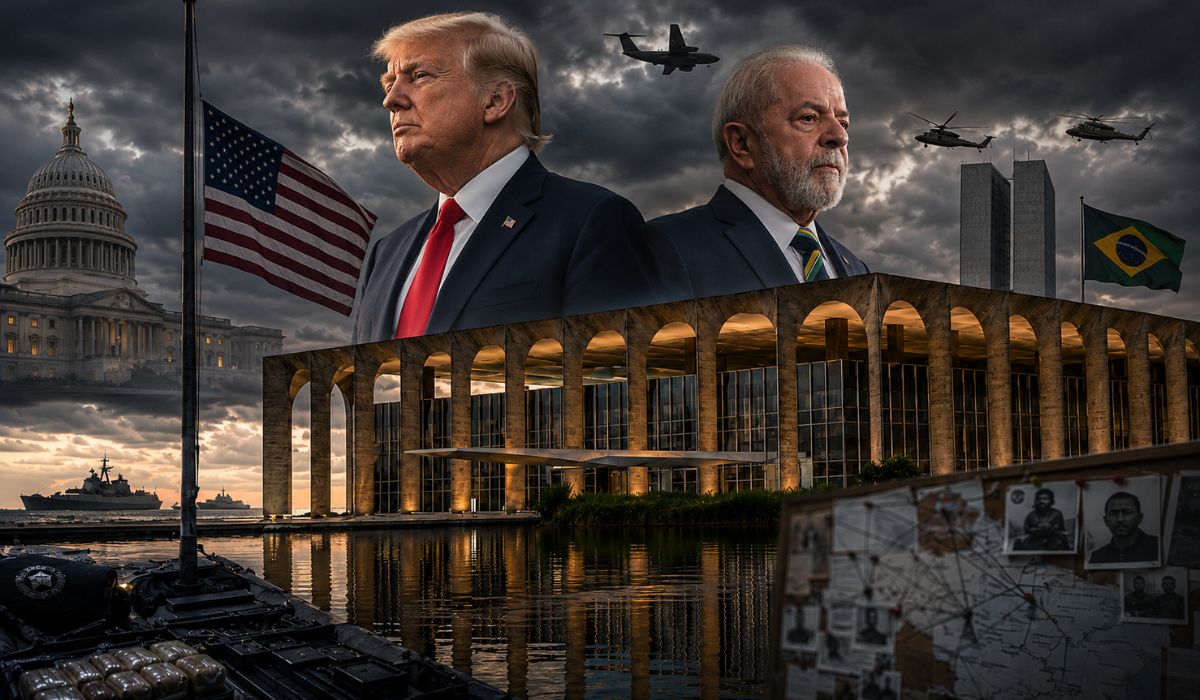

Response sent to the Chamber exposes Itamaraty’s assessment of the effects of the United States’ decision and rekindles the debate on sovereignty, international cooperation, and combating Brazilian factions with transnational operations.
The Ministry of Foreign Affairs stated to the Chamber of Deputies that the United States’ decision to classify the Primeiro Comando da Capital (PCC) and the Comando Vermelho (CV) as terrorist organizations could open the door for unilateral measures against Brazilians and for potential use of military force on national territory.
The assessment is included in an official letter signed by Chancellor Mauro Vieira in response to questions from Deputy Evair Vieira de Melo (Republicans-ES).
The statement was sent after the change adopted by Washington against the two Brazilian factions.
-
Brazilian Air Force’s Sole KC-30 Aircraft Completes Strategic Mission to Spain for 105mm Anti-Tank Ammunition for Leopard 1A5 Tanks

-
Brazilian Air Force Seeks to Acquire More Gripen Fighter Jets
-
U.S. Air Force Launches Air-to-Air Missile Project with Range of Up to 1,850 km for Indo-Pacific Operations

-
Australia to Deploy Up to 8 Nuclear-Powered Submarines in Indo-Pacific, Establishes Billion-Dollar Naval Chain Through AUKUS, Joining Elite Group Capable of Extended Underwater Missions


The United States Department of State announced on May 28, 2026, the inclusion of the PCC and CV as Specially Designated Global Terrorists and informed that the groups would also be classified as Foreign Terrorist Organizations.
The designation as a Foreign Terrorist Organization was published in the Federal Register, the official journal of the U.S. government, on June 5, 2026.
The document attributes the decision to the U.S. Secretary of State and cites section 219 of the U.S. Immigration and Nationality Act as the legal basis for the measure.
The request for information was submitted by Evair Vieira de Melo on June 3, 2026.
In the request, the parliamentarian asked Itamaraty for clarifications on any prior communication from the United States, possible diplomatic impacts, effects on police and intelligence cooperation, effects on foreign trade, consequences for the financial system, and actions by the Brazilian government.
Itamaraty points to risk of U.S. military action
In the document sent to the Chamber, Mauro Vieira stated that the U.S. classification could have effects in the financial, migratory, and penal fields.
The chancellor also mentioned the possibility of extraterritorial actions by U.S. authorities against Brazilian citizens, companies, or institutions.
In one of the excerpts cited by media outlets that had access to the letter, the minister states that there is “the possibility of the use of U.S. military force on Brazilian territory”.
In another passage, Itamaraty argues that the unilateral classification could be invoked as justification for actions outside U.S. territory and adds that there is “risk of U.S. military force being used against national territory”.
The ministry’s response does not state that there is a military operation in preparation.
The text presents the possibility as a risk associated with the legal and diplomatic effects of the classification of factions by United States legislation.
The ministry also relates the topic to the defense of Brazilian sovereignty and the limits of foreign action in matters involving national territory.
According to Itamaraty, the American measure would not bring concrete benefits for cooperation between Brazil and the United States in combating organized crime.
The ministry argues that classifying the factions as transnational criminal organizations would already allow cooperation instruments, such as information exchange, asset tracking, and actions to combat money laundering.


Brazil says it was not notified in advance
The Ministry of Foreign Affairs reported that it did not receive prior formal communication from the United States government about the intention to classify the PCC and CV as foreign terrorist organizations.
In response to the Chamber, Mauro Vieira stated that the decision was unilateral and, for this reason, would not require a formal statement from the Brazilian government in the manner of a traditional diplomatic response.
Despite this, the Brazilian government expressed opposition to the classification adopted by Washington.
In a note released on May 29, 2026, the Palácio do Planalto stated that Brazil maintains a permanent fight against the PCC, Comando Vermelho, and other criminal factions, but rejects external interference in internal matters.
The government also declared that national sovereignty is “non-negotiable”.
The position presented by the Planalto is that international cooperation in combating organized crime should occur within parameters negotiated between countries.
In the Brazilian government’s assessment, unilateral measures can have impacts in areas such as information sharing, financial relations, and the accountability of individuals or companies without direct links to the factions.
U.S. classification broadens debate on PCC and CV
The designation made by the United States triggers specific mechanisms of American legislation.
The notice published on June 5 informs that the U.S. government considered there to be sufficient factual basis to classify PCC and Comando Vermelho in the category of Foreign Terrorist Organizations.
With this framework, individuals and companies under U.S. jurisdiction may be subject to sanctions or restrictions if they are considered linked to the factions.
There may also be effects in the financial, migratory, and criminal fields, according to the assessment presented by Itamaraty to the Chamber of Deputies.
The point of concern indicated by the Ministry of Foreign Affairs is the possible extraterritorial application of these rules.
According to the ministry’s interpretation, the classification could be used to justify actions against Brazilian citizens, institutions, or companies, even in situations where the relationship with the factions was not clearly established.
Itamaraty states that combating organized crime requires international cooperation, but argues that this process should respect the sovereignty of countries.
The ministry also maintains that existing mechanisms of police, financial, and diplomatic cooperation could be used without the need to classify PCC and CV as terrorist organizations.
Brazilian sovereignty enters the center of the discussion
The Brazilian government acted to try to prevent the factions from being categorized in this way.
After the announcement of the measure, the Planalto stated it accepts international collaboration in tackling organized crime, as long as there is no violation of national sovereignty.
This position was reiterated in the response sent by Itamaraty to the Chamber.
The request presented by Evair Vieira de Melo sought to know if there were diplomatic consultations before the decision, if the Brazilian government intended to expand international cooperation mechanisms, and if there was an assessment of impacts on agreements, foreign trade, investments, and multilateral forums.
The response from the Ministry of Foreign Affairs focused on the possible legal, financial, migratory, criminal, and diplomatic effects of the classification adopted by the United States.
The U.S. decision also became part of the political debate in Brazil about the best legal framework for criminal factions operating beyond national borders.
Government members argue that PCC and CV should be fought as criminal organizations, while opposition parliamentarians have maintained that the classification as terrorism could expand international pressure instruments against these groups.
In practice, the divergence involves how to combat factions with transnational operations without opening space for unilateral measures by another country within Brazilian territory.
Itamaraty treats this point as a matter of sovereignty, while the Chamber’s request for information demands explanations about the diplomatic, economic, and operational impacts of the United States’ decision.

The case remains under discussion because it involves public safety, foreign policy, international cooperation, the financial system, and bilateral relations between Brazil and the United States.
For the Brazilian government, collaboration against criminal factions should continue within formal agreements.
For the United States, the designation was presented as an instrument to combat groups that Washington has begun to treat as terrorist organizations.