






 Portuguese
  Spanish
  4 min of reading
  0 comments


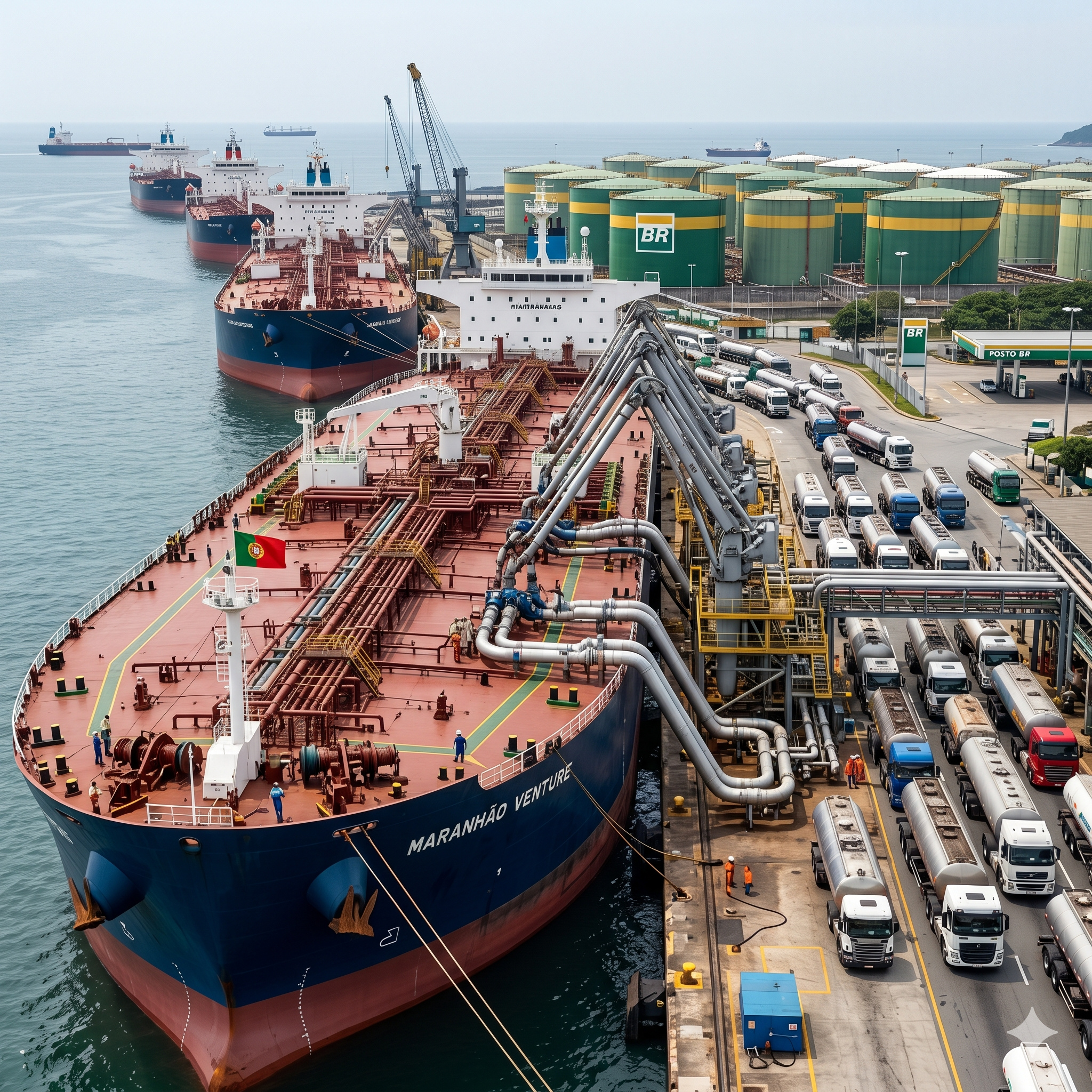
Gasoline imports in Brazil surge over 170% in April and reveal external dependence amid global fuel price hikes.
In April 2026, estimates from Datagro consultancy, released by CNN Brasil, indicated a significant change in the fuel market: Brazilian gasoline imports are expected to grow by over 170% compared to the same period in 2025, reaching approximately 309 million liters for the month. This data is noteworthy not only for its volume but also for the context in which it occurs. The increase happens at a time of greater pressure on international oil and its derivatives prices, influenced by geopolitical tensions and global supply dynamics.
This movement signals that Brazil had to resort more intensely to the external market to ensure domestic supply, something that exposes structural vulnerabilities.
Import growth is linked to high demand and price dynamics
The increase in external gasoline purchases does not occur in isolation. It reflects a combination of factors including increased domestic demand, limitations in internal supply, and economic decisions related to fuel prices.
-
The neighboring country of Brazil that reduced the working hours and increased the minimum wage by 23.7% had to hire 787,000 extra workers to cover the reduced hours, and even so, it records unemployment at a historic low.

-
A resident of Guangzhou infiltrated the village where the 500 factories that make Shein’s clothes are located, disguised, and filmed everything: shifts from 8 am to 10 pm, factories operating at night, and owners who accept any conditions to avoid losing the contract.
-
Traffic jammed between BH and Nova Lima may get significant relief with the Viaduto Ferradura, a R$ 48 million project that promises to connect MG-30 and MGC-356 without passing through the Belvedere junction.

-
After Russia turned off the tap, Europe looks to Africa as a new energy salvation: two giant pipelines of up to 7,000 km may cross the Sahara and the Atlantic, costing $25 billion and transforming Nigerian gas into a geopolitical weapon.





When national production does not keep pace with consumption, imports become the main adjustment mechanism, allowing the market to remain supplied.
Furthermore, the difference between domestic and international prices can encourage or discourage import operations.
Brazil maintains partial fuel dependence despite being an oil producer
Despite being one of the largest oil producers in the world, Brazil is not yet fully self-sufficient in derivatives such as gasoline and diesel.
This situation occurs because the country’s refining capacity does not fully cover domestic demand at all times.


This creates a structural dependence on the international market, especially during periods of higher consumption or adjustments in domestic production.
Pressured global market increases import cost and risk of consumer pass-through
The increase in imports occurs in an international scenario of high prices. Geopolitical conflicts, especially in the Middle East, have pressured the value of oil and its derivatives, including gasoline.
This means that imported fuel arrives in Brazil at a higher cost, which can generate pressure on domestic prices. The pass-through to the final consumer depends on pricing policies, competition, and market conditions.
Import logistics involve complex operation sensitive to rapid changes
Fuel imports involve a logistics chain that includes international purchase, maritime transport, storage, and distribution.
This operation is highly sensitive to changes in the global market, such as price variations and product availability. Small changes can impact costs and delivery times, affecting domestic supply.
The 170% growth in imports should not be interpreted solely as an absolute increase in consumption. It also reflects a market adjustment in the face of imbalances between supply and demand.
This type of movement is common in open markets, where imports act as a balancing valve. However, when it occurs on a large scale, it draws attention to structural issues.
Fuel sector is highly sensitive to external and internal factors
The gasoline market in Brazil is influenced by multiple factors. These include international oil prices, exchange rates, refinery pricing policies, and domestic consumption dynamics.
This combination makes the sector highly volatile, with the possibility of rapid changes in a short period.
Gasoline is an important input for transportation and various economic activities. Price changes can influence logistics costs, product prices, and inflation rates.
This expands the impact of increased imports beyond the energy sector, affecting different areas of the economy.
Refining capacity debate gains momentum amidst new data
The increase in imports reignites discussions about the need to expand refining capacity in Brazil.
Investments in this sector are frequently pointed to as a way to reduce external dependence. Domestic production of derivatives is seen as a key factor to increase energy security, especially in scenarios of global instability.
The growth of imports raises questions about the sustainability of the current model. Dependence on external markets can expose the country to price and availability shocks, especially during periods of crisis.
At the same time, imports continue to be an essential tool to ensure supply.
The increase in gasoline imports in April 2026 poses a direct question: to what extent can Brazil continue to depend on the external market to supply an essential fuel without suffering stronger impacts on prices and economic stability?









Be the first to react!