Portuguese
  Spanish


Accelerated Expansion Of Chinese Automakers In Brazil Raises Concerns In The Automotive Market And Warns US Authorities About Possible Data Collection Risks And Surveillance
An official publication from the United States Southern Command (SOUTHCOM), the magazine Diálogo Americas, which shares strategic content focused on Latin America, revealed concerns about the rapid expansion of Chinese automakers BYD and GWM in the Brazilian automotive market.
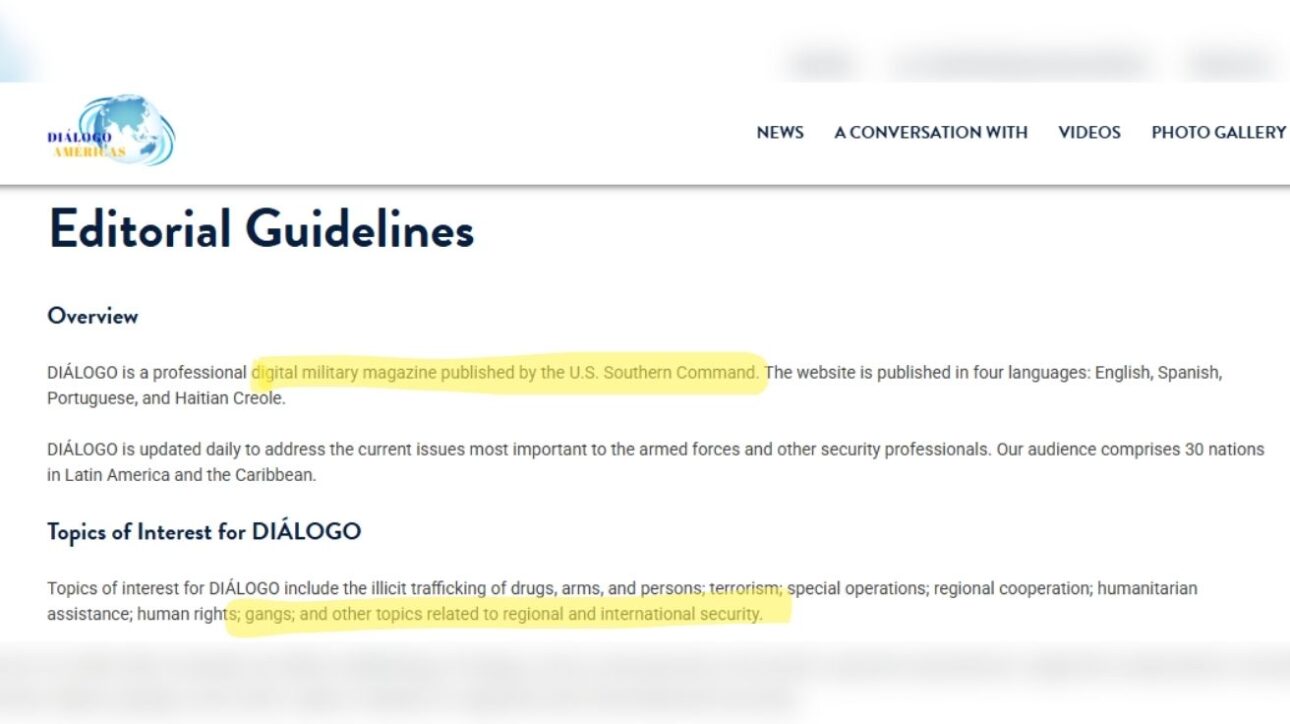
According to the article, in addition to economic impacts, there are warnings from experts about possible risks that could be characterized as “espionage” and the use of data collected by electric and connected vehicles manufactured in China.
The report details that, on July 1, 2025, BYD started production at its plant in Bahia, with a capacity for 300,000 vehicles per year. Meanwhile, GWM, which acquired the former Mercedes-Benz plant in Iracemápolis, São Paulo, plans to start operations later in 2025. In the meantime, Chinese cargo ships, such as the BYD Shenzhen, are already unloading thousands of ready units at Brazilian ports.
-
U.S. Establishes Permanent Embassy in Jerusalem, Reigniting International Debate Over Israel’s Capital

-
The world has nearly 12,000 nuclear warheads, with the majority held by the United States and Russia; see the figures for China, France, and the United Kingdom.

-
Venezuela Faces UN Alert for Hunger, Disease, and Service Collapse After Earthquakes Cause Nearly 2,000 Deaths and $6.7 Billion in Damages

-
Brazil Deploys Navy Field Hospital with ICU, Orthopedics, Pediatrics to Earthquake-Stricken Area in Venezuela, Offering 30 Beds and 150 Daily Consultations


Data released by Anfavea (National Association of Motor Vehicle Manufacturers) show that from January to May of this year, 58,118 vehicles of Chinese origin were sold in Brazil, representing an increase of 35.9% compared to 2024 and accounting for more than half of the total growth in sales.
Economic Pressure And Market Competition
The Brazilian automotive sector is denouncing tax distortions. Anfavea claims that Chinese imports, especially electric and hybrid vehicles, arrive in the country with much lower taxes than those applied to other manufacturers. This difference has created a situation of “unfair competition”, with the potential to reduce local production and cause layoffs.
The organization advocates for the early return of the 35% import tax on hybrid and electric models, which is not expected until mid-2026. Anfavea’s president, Igor Calvet, stated, “In the case of models coming from China, we have seen an atypical flow, benefiting from much lower taxes than those applied to other producing countries, which creates a dangerous distortion in our market.”
In 2024, Brazil imported 466,505 automobiles, a 33% increase compared to 2023, the majority of which consisted of imported electric vehicles. GWM, for instance, offloaded a ship in April with 900 units of the Haval H6 model, which led sales in its segment in the first quarter.
Concerns From The US Southern Command
In addition to economic concerns, the report from Diálogo Americas highlights that information security experts see additional risks in the massive influx of Chinese vehicles. These automobiles act as data collection platforms, recording real-time geolocation, traveled routes, voice, images, biometric data, and driving profiles.
“The danger increases when this data is processed by cloud systems hosted outside the country or controlled by foreign companies with low transparency about security practices,” stated Thiago Guedes, CEO of the company Deserv, who was interviewed by the publication. He emphasized that the ability to collect and transmit this information may pose a risk to privacy and even to national security.
The text also mentions that, according to Southern Command, there are precedents indicating that the Chinese Communist Party may utilize information obtained from private companies for intelligence and surveillance.
This data collection capability raises serious concerns for national security, given the known capability and willingness of the Chinese Communist Party (CCP) to leverage information from private companies for intelligence and surveillance purposes, published the magazine.
Gaps In Brazilian Legislation
Brazil has the General Data Protection Law (LGPD), which imposes strict rules for the processing and international transfer of personal data. However, experts consulted point out that the effectiveness of the law depends on active oversight and technical cooperation among regulatory agencies.
For Guedes, it would be necessary to adopt more stringent technical criteria before approving connected vehicles in the country. He advocates for mandatory cybersecurity audits, greater transparency in data flows, requirements for servers located in Brazil, and contracts with robust protection clauses.
Although the Marco Civil da Internet provides partial coverage on the issue, Diálogo Americas indicates that the country still lacks a sectoral regulatory framework for automotive cybersecurity, establishing minimum standards and mandatory international certifications.
A Dual Challenge For Brazil
The advancement of Chinese automakers in Brazil presents a dual challenge for authorities and the industry: to protect the national economy against practices deemed unfair and, at the same time, shield the country from risks of espionage and misuse of sensitive data.
For the US Southern Command, this expansion is directly related to the geopolitical context of the BRICS, a bloc comprising Brazil, Russia, India, China, and South Africa, which seeks to increase its economic and technological influence in emerging countries.
This information was disclosed by Diálogo Americas, the official media of Southern Command that closely monitors Chinese presence in Latin America and warns about potential implications for regional security and international trade relations.