






 Portuguese
  Spanish
  6 min of reading
  0 comments


Giant band of algae crossing the Atlantic already worries scientists, fishermen, and tourist destinations because the problem starts far from the sand but appears when the brown mass touches the coast
Seen by satellites, the stain looks like a brown scar crossing the blue of the Atlantic. The scientific name for the phenomenon is the Great Atlantic Sargassum Belt, a band of floating algae that can stretch for thousands of kilometers between Africa, the Caribbean, the Gulf of Mexico, and the coast of the Americas.
The issue has come back into focus because part of this material enters the route of the northern coast of Brazil, especially in the region influenced by the mouth of the Amazon and by currents that push water masses along the coast. What seems like a curious landscape seen from space can become a real problem when it reaches the beaches.
The brown band is already causing concern by reaching areas of northern Brazil. The alert gains weight because sargassum is not just dirt on the sand, but an oceanic phenomenon linked to ocean currents, nutrients, wind, temperature, and environmental changes.
-
The woman who heard a silent alert in the villages of Kenya and transformed the lack of firewood, water, and food into a movement that began with simple seedlings and grew to over 51 million trees planted.

-
Brazil launches the new national identity in Paraguay, where more than 250,000 Brazilians live, and the document eliminates the need for a passport in 8 South American countries and provides access to 5,000 digital government services.

-
17-year-old balances manual labor on the farm, up to 10 hours of study per day, and gets into Medicine at UFT through Sisu.

-
Hidden beneath icy waters between Alaska and Siberia, a 160 km underwater canyon plunges 2,600 meters and transforms the Bering Sea into a corridor of life.


The central point is that sargassum should not be treated as a villain in any situation. In the open sea, it is part of marine life. On the beach, when it arrives in excess and rots, it becomes a headache for tourism, fishing, public health, and urban cleaning.
The algae that help marine life in the open ocean change roles when stranded on the sand
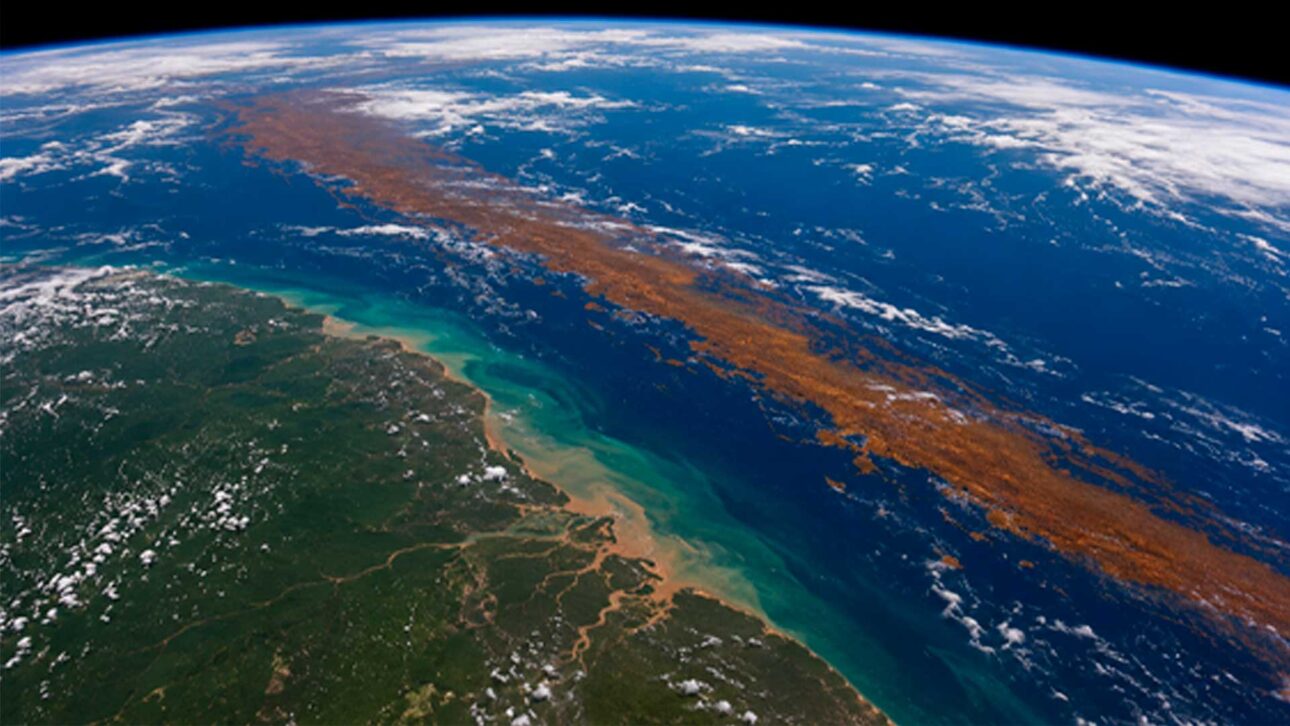
Sargassum is a brown algae that floats because it has small air-filled structures, similar to natural bubbles. The group includes species that serve as shelter, food, and breeding areas for turtles, fish, crabs, shrimp, and seabirds.
In the open sea, these floating mats function almost like biological islands. Many organisms use the mass of algae to protect themselves from predators, seek food, and cross long distances across the ocean.
The problem begins when the quantity deviates from the norm and large blocks are pushed to the shore. In this scenario, the sargassum darkens the water, occupies the sand strip, hinders sea bathing, and alters the routine of beaches that depend on tourism.
When decomposed, the algae release strong-smelling gases, especially hydrogen sulfide, known for its rotten egg-like smell, which can affect coastal ecosystems, tourism, and public health.
The brown belt has grown since 2011 and has become a visible sign of change in the Atlantic
Research published in the journal Science in 2019 helped consolidate the term Great Atlantic Sargassum Belt. Since 2011, satellite images have shown large recurring accumulations of the algae in tropical areas of the Atlantic.
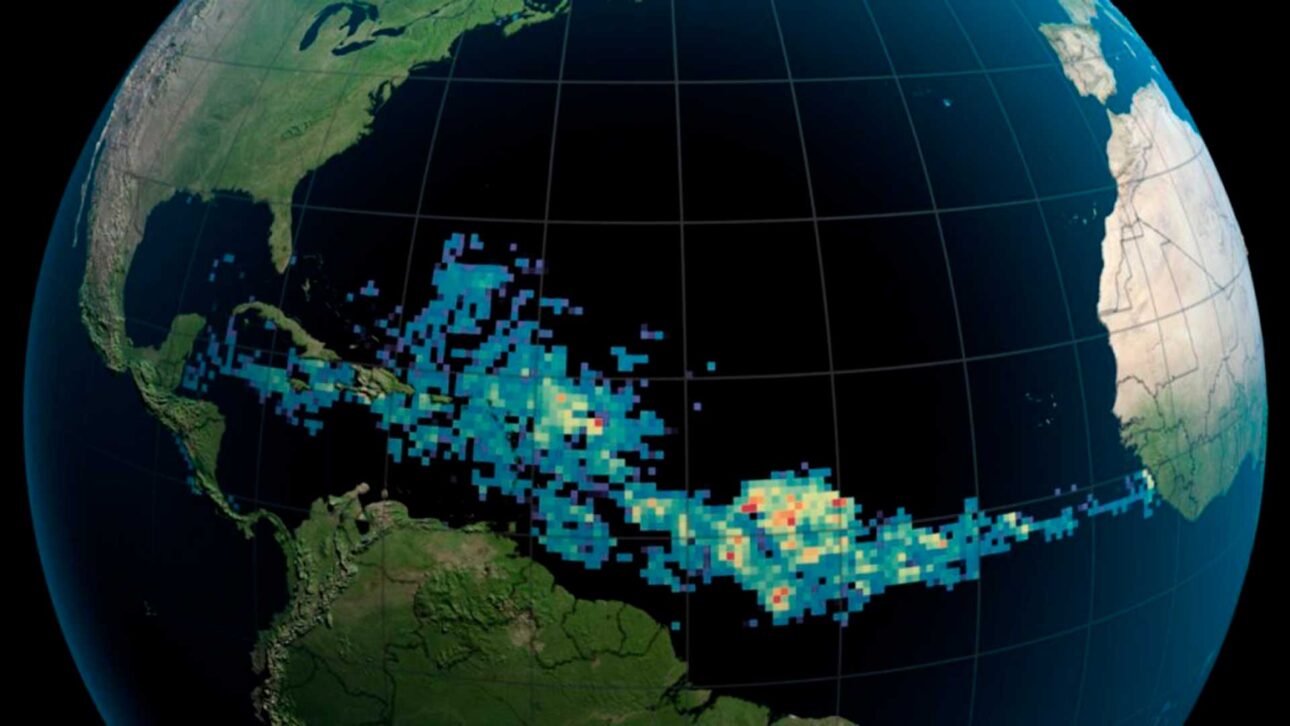
The belt has already exceeded 20 million tons in monthly peaks since 2018 and can extend for more than 8,000 kilometers in some periods. In 2025, the estimated mass surpassed 30 million tons, reinforcing the scale of the phenomenon.
This growth does not mean there is a single simple cause. The most accepted explanation involves a combination of factors, such as nutrients from rivers, deep water upwelling, salinity variations, winds, ocean currents, and biological processes within the sargassum mats themselves.
The biomass is influenced by sources of nitrogen and phosphorus, including discharges from large rivers like the Amazon, Congo, and Mississippi, as well as vertical mixing of deep waters and Saharan dust. In other words, the brown belt is an entire ocean phenomenon, not just an isolated beach.
The route to Brazil passes through the Amazon coast and currents that push the biomass
The sargassum strip forms and moves as winds and currents push the algae across the surface. Part of this mass crosses the tropical Atlantic towards the Americas and can be diverted to the Caribbean, Gulf of Mexico, and areas near the northern part of South America.
Currents and winds associated with the equatorial region help transport the sargassum across the Atlantic. The North Brazil Current and systems linked to Guyana also participate in this path, pushing floating material along the coast.
For this reason, Brazil enters the discussion even when international bulletins give more prominence to the Caribbean and Florida. The Amazon coast is near one of the circulation zones that help reorganize biomass in the western Atlantic.
The alert does not mean that all Brazilian beaches will be taken over by algae at the same time. The phenomenon depends on wind, tide, current, available sargassum volume, and the position of the masses in the ocean.
Even so, recent history shows that the risk is not theoretical. When the algae arrive in large quantities, the impact quickly appears in the landscape, smell, fishing, public cleaning, and tourists’ perception.
Salinópolis showed how the brown tide can alter the routine of a beach
A concrete example occurred at Atalaia Beach, in Salinópolis, Pará. On March 23, 2025, Agência Pará reported that the area was taken over by a large amount of sargassum, which led the state government and the city hall to start a removal action with machinery.
The scene drew attention because Atalaia is one of the most well-known beaches on the coast of Pará. When sargassum arrives in excess, the problem is no longer just environmental and also affects commerce, lodging, stalls, fishermen, and visitors.
The Bori platform, in an article signed by researchers on March 26, 2025, highlighted that the massive arrival of sargassum on the Amazon coast was repeating after about ten years and could bring losses to fishing and tourism. The text also drew attention to the lack of an efficient prediction system in Brazil.
This is a sensitive point. Caribbean countries already face seasons where governments need to remove tons of algae from beaches, install barriers, and deal with tourism cancellations. In Northern Brazil, the concern is to anticipate the problem before it becomes an expensive and difficult routine to manage.
Satellites indicate that 2026 could be another strong year for sargassum in the Atlantic
The most recent monitoring reinforces the attention. The May 31, 2026 bulletin from the Optical Oceanography Laboratory at the University of South Florida reported that the total amount of sargassum increased in May in almost all monitored regions.
The same bulletin pointed out record values for the month in several areas, except in the Western Atlantic, and stated that 2026 is shaping up to be another important year for sargassum, with the possibility of a record in the Northern Hemisphere summer. The forecast is mainly aimed at the Caribbean, Gulf of Mexico, and southeast coast of Florida, but helps to show the overall intensity of the season in the Atlantic.
This type of data is important because sargassum does not respect borders. A mass that appears far from Brazil can be reorganized by currents, fragment, move to other destinations, or feed new concentration areas.
That is why scientists advocate for more local monitoring. Without updated images, buoys, current modeling, and quick communication with coastal communities, beaches and fishermen only realize the extent of the problem when the algae is already on the sand.




Be the first to react!