Portuguese
  Spanish


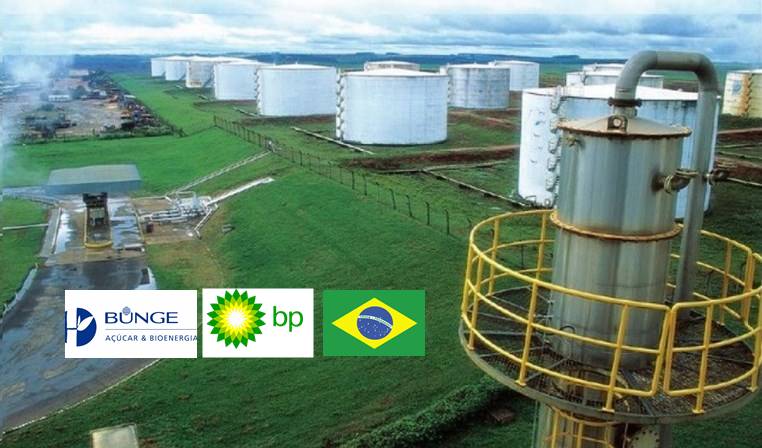

Each Will Hold 50% of the Joint Venture’s Shares and in Its Portfolio of 11 Plants to Focus on Ethanol and Sugar Production. More Than 10,000 People Are Currently Employed at BP Bunge Bioenergia
The U.S. agricultural products trading company Bunge and the British Energy BP signed an agreement to form a sugarcane ethanol joint venture in Brazil, the companies announced on Monday, coinciding with the report of record corn exports, according to the government’s report.
BP will combine its Brazilian biofuels and bioenergy ventures with Bunge’s. The autonomous entity, BP Bunge Bioenergia, will have 11 biofuel plants in Brazil, with a milling capacity of 32 million tons per year. It will produce ethanol and sugar. Bunge stated that it will receive cash resources of US $ 775 million as part of the agreement. BP will pay the trader US $ 75 million, and the joint venture will assume US $ 700 million in non-recourse debt associated with Bunge’s assets.
-
Real Estate Agent Buys Marvel Movie Subway Car for $5,000 and Converts It into Themed Airbnb
-
Real Estate Agent Buys Marvel Movie Subway Car for $5,000 and Converts It into Themed Airbnb
-
Former Roma and Fiorentina Player Filipe Gomes Returns to Brazil to Found Empório do Galeto, Aiming for $10 Million Revenue by 2026
-
Canada Builds 6.2-Hectare Containment Box to Trap 615,000 Cubic Meters of Toxic Sediment in Lake Ontario


Bunge’s new CEO, Gregory Heckman, said that the agreement “allows us to reduce our current exposure to sugar milling, strengthen our balance sheet, and focus on our core businesses.”
The company sought to focus on grains, oilseeds, and food ingredients. Bunge exited the sugar market last year but was forced to suspend an initial public offering in the Brazilian sugar sector due to lack of investor interest.
Bunge bet more than US $ 1 billion on sugar and ethanol fuel demand in 2010 when it acquired Moema, a Brazilian sugar mill operator. But the investment faced difficulties as bad weather worsened the cane crop, sugar prices fell, and Brasília pressured gasoline prices, a competing fuel for sugarcane ethanol. Bunge first announced that it was exploring a sale of the unprofitable mills four years ago.
Meanwhile, some of the world’s leading oil and gas companies are trying to expand the production of more eco-friendly liquid fuel stocks as they bet on continued demand for fuels, particularly for transport, such as heavy trucks and airplanes.
“Biofuels will be an essential part of the energy transition,” said BP CEO Bob Dudley. “Brazil is leading the way in showing how they can be used at scale, reducing transport emissions.”
The joint venture, based in São Paulo, will also generate renewable energy from biomass from sugarcane waste to power facilities with any surplus sold to the Brazilian grid.
In 2018, BP and Bunge’s businesses produced a total of about 2.2 billion liters of ethanol equivalent. Both entities employ more than 10,000 people in Brazil.
Biofuels create carbon emissions similar to fossil fuels when burned. But they are considered greener because they are produced from organic material that has absorbed carbon dioxide from the atmosphere.
Today, in the U.S. and Europe, biofuels are typically consumed by blending small amounts with traditional liquid fossil fuel stocks. But two-thirds of cars in Brazil run on ethanol.
The agreement is expected to be completed in the fourth quarter of 2019.