Portuguese
  Spanish


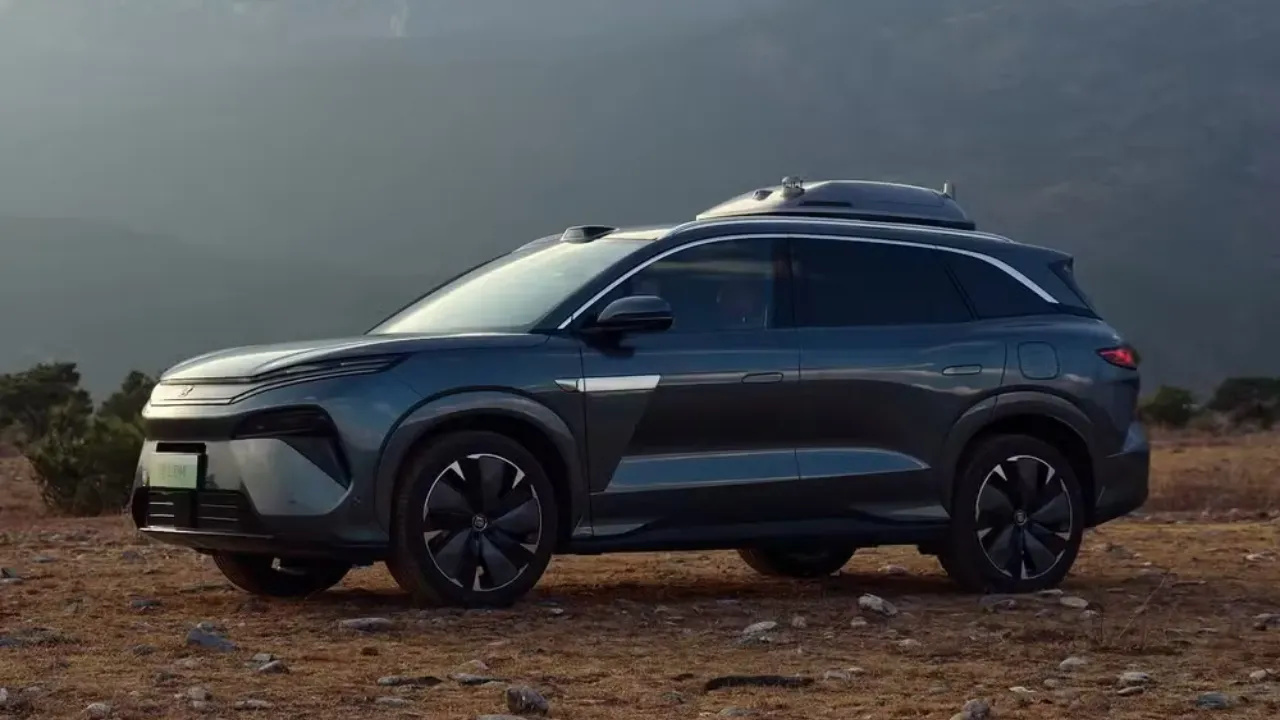

The BYD Tan L has just been registered in Brazil, reinforcing the indications that the new generation of the brand’s large SUV is close to hitting the national market. The model, recently launched in China, was included in the registry of the National Institute of Industrial Property (INPI) in October, confirming the automaker’s intention to expand its presence here. The car has already been seen testing on Brazilian streets and is expected to be one of BYD’s major bets for 2025.
In China, the Tan L is offered in fully electric (BEV) and plug-in hybrid (PHEV) versions, with the latter being the most likely for the Brazilian market. The large SUV features a robust look and cleaner lines, inaugurating the brand’s new design language. It measures 5.04 meters in length, 1.99 in width, and 1.76 in height, with a wheelbase of 2.95 meters. The model can have six or seven seats, depending on the configuration, and is positioned above the Tan EV, currently sold in Brazil.
Inside, the BYD Tan L bets on a luxurious environment with two-tone finishes, a complete digital dashboard, and a central 15.6-inch screen. The SUV also features the DiLink 150 multimedia system, a head-up display with augmented reality (AR-HUD), and the advanced DiPilot 300 driver assistance package, which can include LiDAR sensors mounted on the roof. This technology is part of the semi-autonomous system called “God’s Eyes,” capable of detecting obstacles, braking automatically, keeping the car in its lane, and even parking by itself. There are 12 cameras and 18 radars working together to provide more safety and comfort.
-
Sales of Brazil’s Cheapest Electric Car Halted Before First Deliveries: E-Motors Suspends Emova Easy Due to Import Tax Increase and Rising Freight Costs

-
Nissan Discontinues Qashqai SUV Amid Cost-Cutting, Chinese Competition, and Product Line Review

-
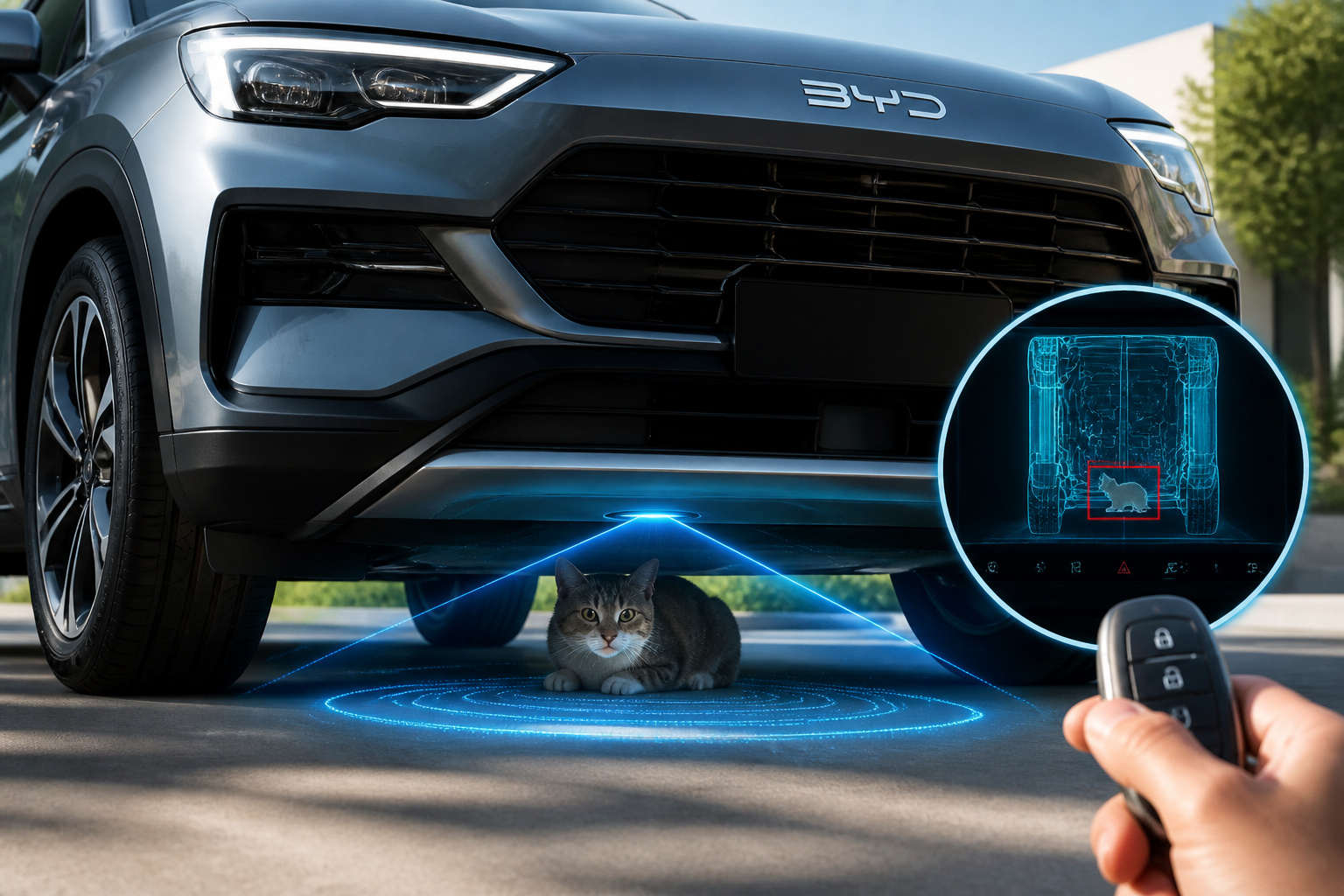
BYD Patents Revolutionary System Using Computer Vision to Detect Animals Under Cars Before Starting, Preventing Tragedies

-
Study Reveals Why Cars Are More Expensive to Produce and Buy in Brazil Compared to Mexico, Highlighting Taxes, Logistics, and Industrial Costs as Key Factors.



The plug-in hybrid (PHEV) version is the most interesting for the Brazilian audience, combining a 1.5 turbo gasoline engine with 156 horsepower with two electric motors. This configuration promises acceleration from 0 to 100 km/h in just 4.3 seconds, performance worthy of sports cars. The average consumption is 5.6 liters per 100 kilometers, and the 35.6 kWh battery allows for a range of up to 215 kilometers on electric power alone.
The 100% electric (BEV) version uses BYD’s famous Blade battery, with a capacity of 100.5 kWh and a range between 560 and 670 kilometers, depending on the version. The electric system of 1,000 volts enables ultra-fast charging, recovering up to 400 kilometers of range in just five minutes.
But what really stands out on the BYD Tan L is its most unusual feature: the drone installed on the roof. Developed in partnership with DJI, the equipment is stored in an aerodynamic compartment and can be launched with the car stationary or in motion. It follows the vehicle, capturing aerial images in high resolution and automatically returning to its compartment when the battery is low. The range reaches 2 kilometers, and the charging is done directly via the car’s system. This function is primarily aimed at recordings, travel vlogs, and even monitoring off-road routes, depending on the version.
Prices in China range from 229,800 to 289,800 yuan, which is equivalent to about R$ 174,000 to R$ 220,000 in direct conversion, although prices in Brazil are expected to be much higher. The current model, the Tan EV, starts at R$ 539,800. The new Tan L is expected to occupy the upper range, reinforcing BYD’s strategy to compete with electrified luxury SUVs. There is still no official date for the launch, but the registry at the INPI and local testing indicate that the debut is near.