Portuguese
  Spanish


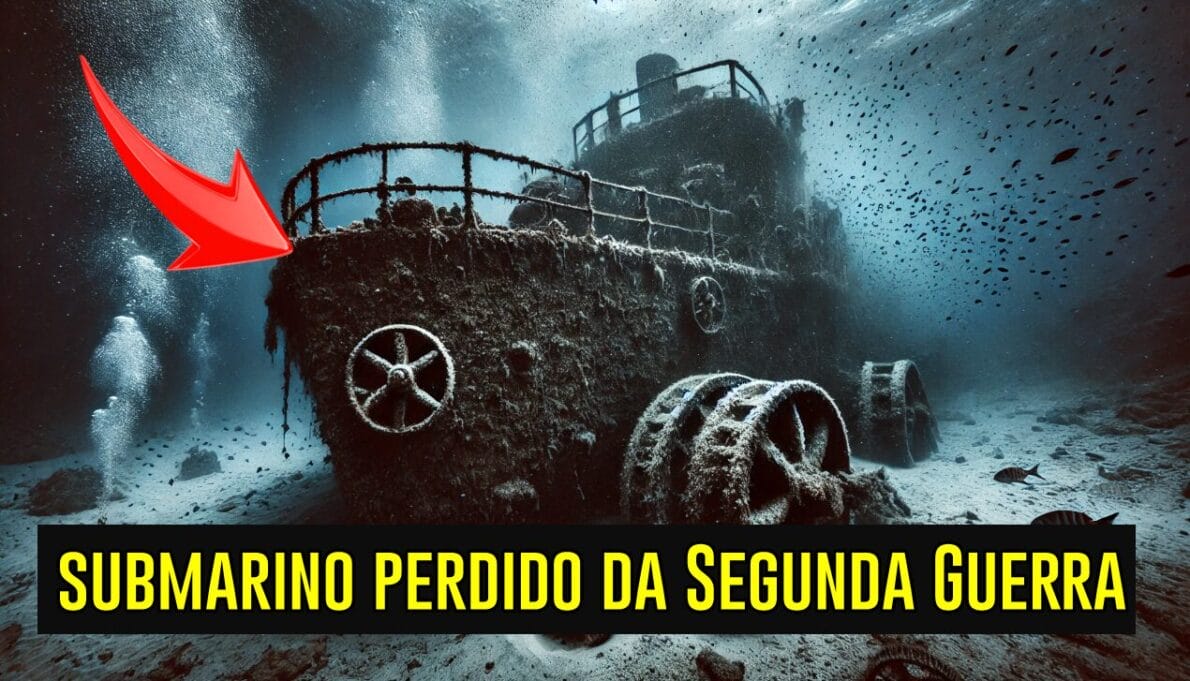

A World War II Submarine, Lost for Decades with 64 Crew Members, Has Been Found by Shipwreck Hunters. Understand the Importance of This Discovery for History and the Mystery It Carries!
In 1943, at the height of World War II, the British submarine HMS Trooper mysteriously disappeared while patrolling the Aegean Sea. With 64 men on board, the ship set out on a mission that would never be completed. A group of shipwreck hunters made a significant discovery.
Now, after eight decades of uncertainty, a team of hunters believes they have discovered the wreckage of the vessel, bringing to light one of the greatest naval mysteries of the time.
The submarine was scheduled to arrive at the port of Beirut on October 17, 1943, but was never seen again. Its crew, led by Lieutenant John S. Wraith, did not make contact with the Royal Navy after departing Beirut the previous month. For decades, many expeditions attempted to locate the Trooper, but all failed.
-
Thailand Converts 8 Tons of PET Bottles into 3,500 School Backpacks, Showcasing Circular Economy with Over 40 Factories Involved

-
Mysterious Bats Spotted in Paris’s Père Lachaise Cemetery, Drawing Tourists to the “Vampire Cemetery”

-
From Selling Street Food to Leading a $300 Million Construction Firm: The Journey of a Brazilian Entrepreneur

-
Abandoned Penthouse in Houston Reveals Million-Dollar Suite with 24-Karat Gold, Tiffany Crystals, and Opulence Even Elvis Might Have Snubbed



Now, a team of divers, led by the experienced Κostas Thoctarides, used advanced sonars and remotely operated underwater vehicles to locate the wreckage.
The discovery occurred at a depth of 830 feet (approximately 250 meters), near the Greek island of Donoussa, in the Icarian Sea, an area known for its rough waters and strong currents.
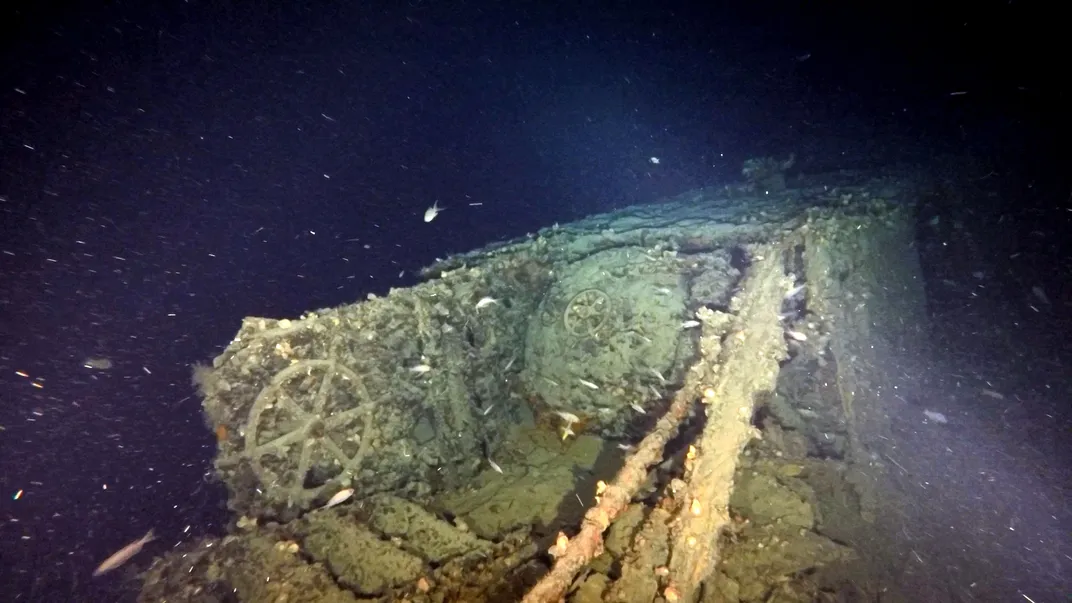
Photo – Kostas Thoctarides
The Discovery and Condition of the Wreckage
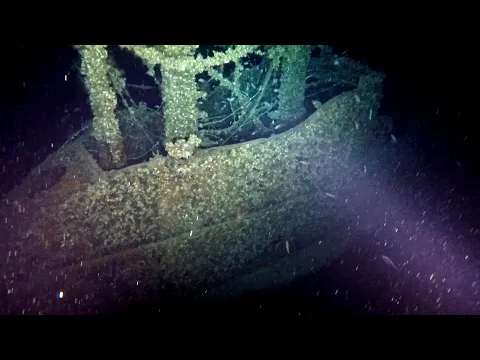
The wreckage of the HMS Trooper is divided into three large pieces: the bow, the middle of the ship, and the stern. According to Thoctarides, the submarine suffered a “very violent sinking“, suggesting that a German submarine mine was responsible for the sinking.
Historical records confirm that a German mine-layer positioned 287 mines in the area just days before the Trooper began its patrol mission.
The location of the submarine was a significant breakthrough for researchers, who spent years searching in the wrong areas. Previous expeditions focused on regions around the islands of Leros, Kalymnos, and Kos, locations mentioned in witness accounts that believed to have sighted the Trooper at the time.
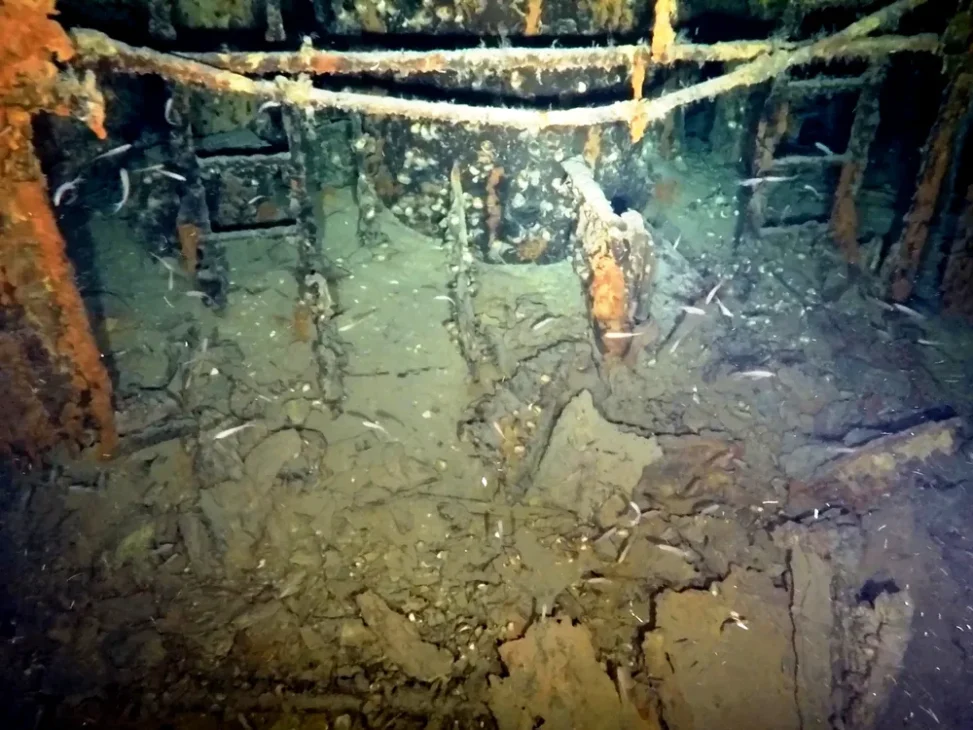
Photo – Kostas Thoctarides
However, Thoctarides’ team took a more meticulous approach, focusing their searches on German maps that showed the exact position of the mined areas at the time. This new strategy led to the discovery of the Trooper north of the island of Donoussa.
The Submarine and Its Last Mission
The Trooper was under orders to patrol the Dodecanese islands, a region occupied by Italy during World War II. In addition to patrolling the area, the submarine was also responsible for an important mission: to drop off three secret agents and supplies on the island of Evia. After completing this task, the submarine returned to the Aegean Sea to continue its patrol.
However, on October 5, 1943, the Trooper was dispatched to an area between the islands of Naxos and Ikaria, where it was to continue its surveillance. The expected date for its return to Beirut was October 17, but after October 5, the submarine disappeared without a trace, leading the Royal Navy to declare it lost.

Impact on Descendants and Respect for the Wreck Site
The discovery of the wreckage of the HMS Trooper offers not only a historical closure but also emotional for the descendants of the 64 crew members who lost their lives.
Thoctarides and his team emphasized that they will not disturb the site, considering the submarine a war grave. They hope that the location will bring comfort to the victims’ families, who have long sought answers.
One of the descendants is Richard Wraith, son of Commander John S. Wraith. In a statement, he expressed his feelings about the discovery: “I hope that the families of those who were on board can finally have a place to pay their respects and remember their loved ones.”
Recovering this story, both for historians and families, offers an opportunity to reflect on the sacrifices made during the war and to honor the memory of those who were tragically lost at sea.
The case of the HMS Trooper is no longer a mystery. It is a reminder of the cost of war and the strength of the human spirit in seeking the truth, even decades after the events.