






 Portuguese
  Spanish
  7 min of reading
  1 comment


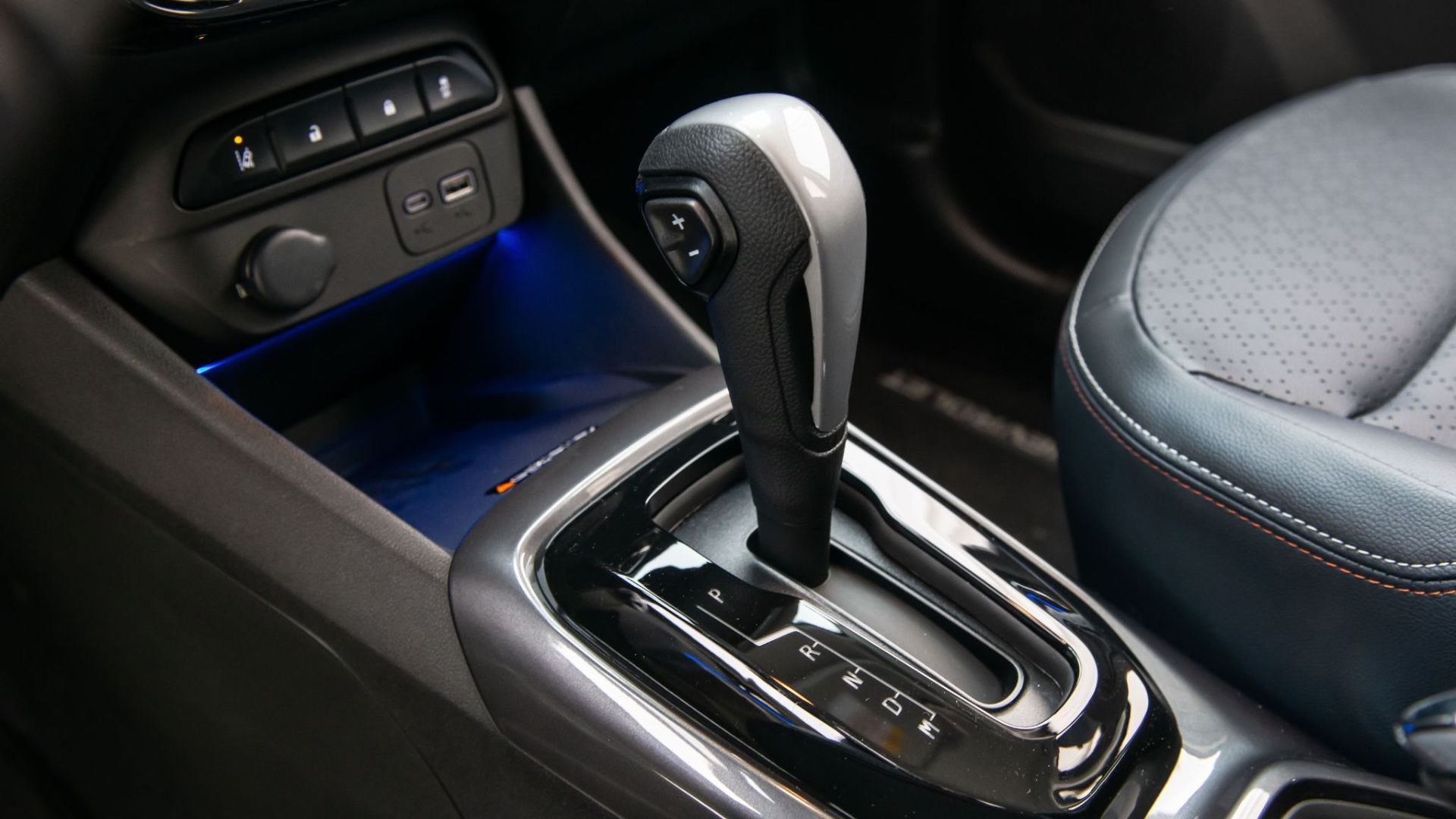


Common Mistakes When Driving with Automatic Transmission Can Shorten the Life of the Transmission and Create Expensive Repairs, Even in Modern Vehicles with Electronic Protection Systems.
The automatic transmission, which already equips a significant portion of new cars sold in Brazil, has brought more comfort and practicality to driving, but it has also opened up space for bad habits that can be costly.
Using the positions “P” (park) and “N” (neutral) incorrectly, ignoring basic guidelines, and neglecting maintenance are actions that, over time, can seriously damage the transmission and result in high-cost repairs.
Although the system is designed to make the driver’s life easier, it has peculiarities that do not exist in manual transmissions.
-
Uber Faces Shareholder Scrutiny as Board Accused of Ignoring Safety, Compliance, and Harassment Warnings Amid Over 3,500 U.S. Lawsuits

-
Ferrari’s First Electric Car Divides Fans, Priced at $630,000, Amid Concerns Over Limited Editions; Brand Clarifies It’s Not Just for Future Perks
-
BYD Dolphin Mini: The Electric Car That Defies Depreciation, Losing Only 3.58% in a Year and Becoming the Best-Selling Retail Model Under $22,000

-
Electric Car JAC E-JS4 Loses $19,000 in Value in One Year, Leading Record Depreciation of Used Cars in Brazil Due to Expensive Battery and New Models


Experts consulted by UOL Cars explain that seemingly harmless mistakes, when repeated frequently, overload gears, excessively heat the fluid, and accelerate internal wear, compromising the durability of the system.
Next, see how each habit influences the automatic transmission and why it is important to adjust your driving style to avoid unnecessary losses.
Incorrect Use of “P” and “R” in Automatic Transmission
In a rush to maneuver, many drivers shift the lever to “R” (reverse) while the car is still moving forward or engage “P” before the vehicle has come to a complete stop.
Even at low speeds, this behavior causes internal impacts that were not anticipated in the transmission design.
Engineer Cláudio Castro from SAE Brazil explains that this practice, repeated over time, tends to compromise sensitive components: according to him, even at low speed, selecting “P” or “R” with the car in motion can damage parts of the transmission, such as gears and locking mechanisms.

In older transmissions, where gear selection is purely mechanical, the risk is even greater because there is no “filter” between the driver’s command and the internal engagement.
More modern models, on the other hand, usually have electronic protection systems.
In many current cars, when attempting to engage “P” or “R” while the vehicle is moving, the electronic control simply blocks the command until the speed drops to a safe level.
Even so, the recommendation is clear: only shift to “P” or “R” after the car is completely stopped, even during quick maneuvers in tight parking spaces.
Neutral at the Traffic Light: A Manual Habit That Harms the Automatic
Drivers who have spent years driving manual cars often reflexively put the transmission in neutral when stopping at traffic lights or in traffic jams, a correct practice in such vehicles to avoid keeping the clutch pressed all the time.
In automatic transmissions, however, the logic is different.
According to Cláudio Castro, in automatic transmissions the guideline is to keep the lever in “D” and the foot on the brake during short stops.
He explains that this keeps the hydraulic system pressurized and ensures lubrication of the internal parts of the transmission, which is essential for proper operation.
In many automatic transmissions, fluid circulation depends precisely on this continuous connection with the drive unit.
Engineer Camilo Adas, also from SAE Brazil, emphasizes that the position “N” was mainly designed for specific situations, such as workshop maneuvers, low-speed towing, or moving the vehicle with the engine off.
By putting the transmission in neutral at every stop in traffic, the driver deviates from the manufacturer’s intended use without gaining real benefits in terms of economy or system preservation.
Furthermore, some newer cars feature technologies that automatically disengage the transmission under certain conditions, including while in motion, precisely to reduce consumption.
In this case, the vehicle itself manages this effort “relief” without requiring any additional intervention from the driver.
Climbs and Automatic Transmission: Why Not “Hold” the Car Only on the Accelerator
In manual vehicles, it’s relatively common to find someone who keeps the car stationary on inclines by balancing the accelerator and clutch instead of using the brake appropriately.
This behavior is known to drastically reduce the lifespan of the clutch.
In automatics, there is a sense that the car can “hold itself” on slight inclines thanks to idle and the torque converter.

In some situations, simply keeping the accelerator slightly pressed is enough to prevent rollback without stepping on the brake.
At first glance, this seems like an advantage of the automatic system, but the downside appears in the heat generated inside the transmission.
Even using the torque converter, a part that does not suffer the same friction wear as a conventional clutch, the practice of keeping the car parked on a slope only with the accelerator is not recommended.
As Castro warns, using idle or the accelerator to “hold” the vehicle on an incline heats the transmission fluid more than necessary and increases fuel consumption without any gain in safety.
The specialists’ guidance is straightforward: at any stop, whether on flat or inclined terrain, the driver should keep their foot on the brake.
In models that come with auxiliary systems, such as hill start assist or automatic electronic parking brake, it’s worth taking advantage of these resources to reduce effort on the transmission and make vehicle control more stable on inclines.
“Push Start” and Automatic Transmission
When the battery dies in a manual car, many resort to the old tactic of “push starting”.
The vehicle is pushed or rolled down a slope, the gear is engaged, and the engine ends up spinning enough to start.
Even in this type of transmission, the practice is not without risk, especially in engines with timing belts.
In automatic vehicles, the situation becomes even more delicate.
There are transmission designs that, in theory, would allow some type of start with the vehicle in motion, shifting the lever to “N” and then to “D” or “2” at a certain speed.
Even so, this is not a recommended use for everyday situations.
The “push” transmits abrupt forces to the system, stressing gears, shafts, and even supports of the drivetrain.
Repeating this procedure significantly increases the likelihood of failures and may bring about expensive repairs sooner.
For engineer Edson Orikassa, the correct behavior is different: if the battery dies, the ideal is to resort to recharging with appropriate equipment or the well-known “jump start”, following the procedures indicated by the manufacturer.

When the battery can no longer hold a charge, the solution is to replace it with a new one, sized according to the car’s specifications.
Fluid Maintenance and Essential Care for Automatic Transmission
Another common mistake is treating the automatic transmission as a “maintenance-free” system.
The idea that the fluid lasts forever still circulates among drivers, and this belief can lead to significant expenses in the future.
Automatic transmissions, just like manual ones, depend on lubricant fluid in good condition to protect gears, valves, internal clutches, and other components.
The vehicle manual usually indicates the approved type of fluid and, in many cases, the suggested interval for inspection or change.
In severe usage conditions, it may be advisable to move this service forward.
There are models where the manufacturer does not mention a fixed replacement interval, referring to fluid as “lifetime fluid.”
Even in these cases, experts remind us that the system is subject to unforeseen events.
A small leak can reduce the lubricant level and increase internal friction, raising the operating temperature of the transmission, which is one of the main enemies of automatic transmission.
Edson Orikassa also points out that the fluid can become contaminated by external agents or particles generated by the normal wear of the system.
When this happens, the fluid loses efficiency and no longer protects the parts as it should.
During inspections, it’s worth observing the appearance of the oil: very dark colors or a burnt smell may indicate that the fluid no longer has the adequate characteristics to continue in use.
Fluid-related problems often manifest through symptoms perceptible while driving.
Among them are jerks during gear shifts, delays in the car moving when accelerating, and the sensation that the engine “revvs up” without the speed increasing correspondingly, a phenomenon known as transmission “slippage.”
In light of these signs, the guidance is to seek a trusted workshop and follow the specific technical recommendations for the vehicle model, avoiding makeshift solutions.
Considering all of this, adjusting some simple habits when driving and respecting the manufacturer’s usage and maintenance guidelines is not only a way to preserve the comfort of the automatic transmission, but also to avoid expenses that can impact the budget; have you identified any of these mistakes in your driving routine?





Muito boa as orientações. Parabéns.