






 Portuguese
  Spanish


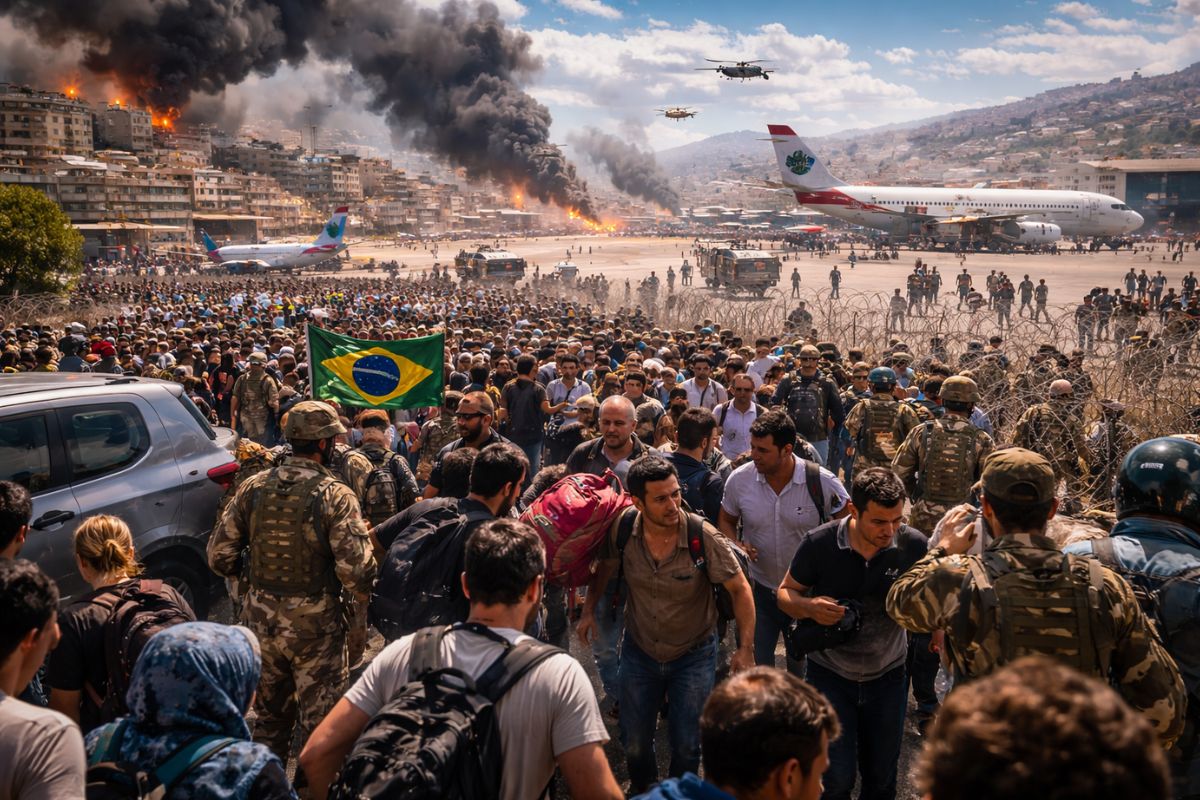


The Escalation of the Crisis in the Middle East Triggers Displacements in Lebanon, Mobilizes Withdrawal Actions for U.S. Citizens, and Increases Concern for the Thousands of Brazilians Living in Countries Affected by the Conflict.
The worsening of the crisis in the Middle East is already causing scenes of flight, tension, and uncertainty among residents of Lebanon and also raises alarms for Brazilians living in the region. According to the information presented, more than 52,000 Brazilians live in countries involved in the conflict, while authorities monitor the developments of the military escalation.
In Lebanon, images show thousands of civilians leaving the south of the country towards Beirut, after alerts to abandon their homes. What would normally be a 1 hour and 30 minute journey took 24 hours, reflecting the chaos experienced by families leaving not knowing if they would be able to return.
Mass Flight Exposes the Drama of Those Who Leave Everything Behind
The rise of tension in Lebanon has turned roads into escape routes. Residents reported the fear of leaving home without any certainty about the future, amid traffic jams and forced displacements towards the capital.
-
Chinese Nuclear Submarine Launches Simulated Warhead Missile in Pacific, Heightening Regional Tensions Amid Naval Drills with Russia Near Qingdao; New Zealand and Papua New Guinea Warn of Persistent Chinese Military Presence

-
Ayatollah Ali Khamenei’s Funeral Draws 15 to 20 Million in Tehran, Calls for Revenge Against Trump After Joint Israel-U.S. Attack

-
U.S. Establishes Permanent Embassy in Jerusalem, Reigniting International Debate Over Israel’s Capital
-
The world has nearly 12,000 nuclear warheads, with the majority held by the United States and Russia; see the figures for China, France, and the United Kingdom.


The testimonies of people living this reality reveal the depth of the anguish. The uncertainty is not just at the moment of departure, but also in the fear of not knowing whether the house will still be standing, if family members will remain safe, and how long this situation may last. For many, the memory of a recent war makes the scenario even more painful.
Brazilians in the Middle East Become the Center of Concern


The impact of the crisis also reaches Brazil due to the number of Brazilian citizens living in the affected countries. According to the provided data, Lebanon has the largest Brazilian community among the affected countries so far, with 22,000 residents.
Next are Israel, the United Arab Emirates, Jordan, Qatar, Bahrain, Kuwait, and Iraq. In Iran, the estimated number is 85 Brazilians, based on 2023 data from the Ministry of Foreign Affairs.
This situation increases the anxiety of families and amplifies the demand for clear guidance in light of the worsening in the Middle East.
United States Organizing Flights and Brazil Has Not Yet Announced a Similar Operation
As the situation deteriorates, the U.S. Department of State has reported that it is organizing charter flights to help U.S. citizens leave the Middle East. About 1,500 people have already requested assistance to return to the country.
In the case of Brazil, the Ministry of Foreign Affairs has not yet disclosed similar actions, according to the presented material.
The lack of announcement of a similar operation increases the sense of insecurity, especially considering the significant number of Brazilians spread across countries directly affected by the crisis.
Itamaraty Reinforces Alerts and Recommends Heightened Attention
Since the beginning of the military escalation, the Itamaraty has advised against traveling to Iran, Israel, Qatar, Kuwait, the United Arab Emirates, Bahrain, Jordan, Iraq, Lebanon, Palestine, and Syria. For those already in these locations, the recommendation is clear: heighten attention and strictly follow local authorities’ guidelines.
Additionally, the Brazilian embassy in Qatar stated that leaving by land through Saudi Arabia has been one of the alternatives to exit the region.
The statement also indicates that the Saudi government has signaled the possibility of issuing transit visas through a simplified process, while Brazilian and Saudi authorities evaluate how to operationalize this measure.
Personal Accounts Show That Fear Goes Beyond War
Among the gathered accounts, the dominant feeling is one of anguish. Young people and families speak of the weight of abandoning their routines abruptly, not knowing when it will be possible to return or if there will be anything intact to find again.
Another testimony, from an Iranian who has lived in Brazil for nine years, shows a view deeply marked by pain and a lack of hope for simple solutions.
The words express a rejection of violence and disbelief that a war of such magnitude could easily rebuild a country. More than numbers and diplomatic strategies, the crisis in the Middle East exposes lives suspended by uncertainty.
In light of this scenario, do you believe that Brazil should announce more concrete measures to assist Brazilians living in the region?







