






 Portuguese
  Spanish
  4 min of reading
  0 comments


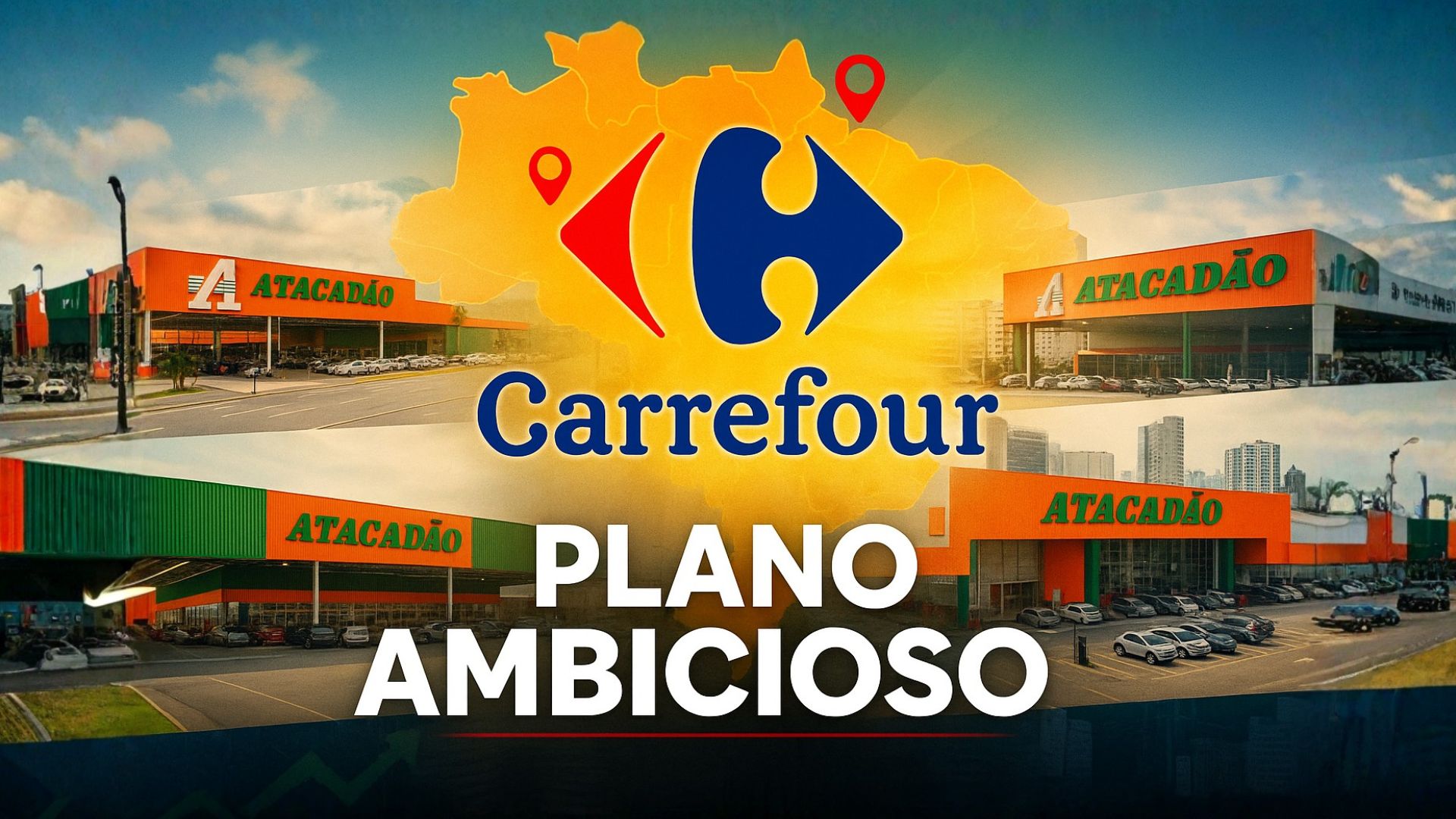
With Investment Exceeding R$ 8 Billion, Carrefour Plans to Open 120 New Atacadão Stores in the Next Five Years. However, the Pace of Expansion Will Depend on the Economic Scenario, Especially the Interest Rate and the Level of Consumption.
The Carrefour Group Brazil has set a goal to open 120 new Atacadão units within five years, with an investment expected to exceed R$ 8 billion, according to a report published by Revista Veja.
However, the expansion is contingent upon the country’s macroeconomic scenario. As stated by the company’s president, Pablo Lorenzo, “it will depend on the interest rate and the level of consumption.”
Atacadão Expansion Conditional on Economic Scenario
This goal is part of an investment plan focused on the cash-and-carry format, which currently accounts for the majority of the group’s revenues in Brazil.
-
Anvisa reveals flaws in supplements from IDNLABS and suspends 11 batches that include creatine, BCAA, beta-alanine, and multivitamins; the measure affects products with quality, composition, and labeling issues, while consumers are advised to check the printed codes on the packaging.

-
Ypê expands exchange and refund of products suspended by Anvisa, but consumers still need to check final batch 1, manufacturing date, and category before using laundry detergents, dishwashers, and disinfectants.
-
Son of a Chinese immigrant who sold tea in the countryside of São Paulo, Zhang Ye almost went bankrupt in 2021 and today, at 28 years old, claims to earn 1 million reais per day and has become the number 1 on TikTok Shop in Latin America.

-
Hidden in Shenzhen, a Chinese company claims to ship over 20,000 orders a day and promises to turn any dropshipping beginner into a respected brand for just 20 dollars.




According to a report published by Exame magazine, the project aims to increase the presence of the brand in different regions of the country, prioritizing areas with identified demand and availability of suitable land.
There is still no detailed timeline by state.
When commenting on the pace of openings, Lorenzo linked the schedule to economic performance.
According to him, opening decisions will depend on capital costs, determined by the base interest rate, and consumption trends.
“It will depend on the interest rate and the level of consumption,” the executive emphasized.
Capital Closure and New Management Phase
The group completed its capital closure at B3 in May, ending the trading of its shares in the Brazilian market.
According to reports from Exame magazine, the operation brought administrative simplification to the group’s structure.
Pablo Lorenzo stated that the market environment imposed a routine of excessive explanations about topics considered to have little operational relevance.
With the exit from the Stock Exchange, financial planning and project execution gained greater autonomy, according to industry analysts.
Retail specialists consulted by Exame pointed out that the change allows for quicker decision-making, as the group is no longer subject to short-term fluctuations in the stock market.
However, Atacadão’s expansion must follow criteria for financial return and alignment with local demand.
Investment and Expected Return
The planned investment of more than R$ 8 billion covers land acquisition, store construction, equipment purchases, and initial stock formation.
Industry sources interviewed by Exame magazine highlight that the company maintains as a reference a return consistent with cash-and-carry standards, evaluating indicators such as productivity per square meter and sales maturation time.
The geographical distribution of the investment has not yet been disclosed.
According to retail specialists, criteria such as road access, population density, presence of small retailers, and competitiveness in the supply chain usually guide the choice of locations.
Factors such as urban licensing and land costs also influence the speed of expansion.
Interest Rates, Consumption, and Retail Sensitivity
Economists consulted by industry outlets explain that the interest rate has a direct impact on retail investments, as it affects financing costs and credit availability for suppliers and consumers.
The level of consumption, in turn, indicates the speed of return from new units.
In periods of stable income and controlled inflation, the maturation of stores tends to occur more quickly.
During periods of economic downturn, companies usually adopt a more cautious approach, opening stores only in regions with stronger consumption indicators.
In an interview granted to Exame magazine, Pablo Lorenzo reaffirmed that the pace of expansion will depend on the combination of these variables.
The company intends to adjust the store opening schedule according to the evolution of economic fundamentals over the next few years.
Streamlined Governance and Operational Focus
The exit from the Stock Exchange also changed the group’s governance dynamics.
Without the need to disclose quarterly results to the market and to cater to a large number of minority shareholders, management points to gains in internal efficiency and agility.
“We needed to provide excessive explanations about issues that were, in practice, irrelevant,” Lorenzo stated when describing the previous period.
Exame also highlighted that the group has begun to focus efforts on internal productivity and margin metrics, aiming to optimize operational costs and strengthen the logistics structure.
Corporate governance specialists believe that capital closure may facilitate the execution of long-term projects, as long as the company maintains transparency and control standards.
Effects on the Market and the Consumer
Industry analysts believe that Atacadão’s expansion is likely to increase competition in the grocery retail sector and broaden the supply of products at more competitive prices.
The cash-and-carry format, based on essential assortments and economical packaging, continues to attract both end consumers and small-scale retailers, which explains the interest of large networks in reinforcing their presence in this segment.
The expansion will also require complementary investments in distribution centers, fleet, and supply systems, points considered crucial by logistics specialists to maintain efficiency and continuity in supply.
According to industry data, Atacadão accounts for a significant portion of Carrefour Brazil’s revenue and is considered the group’s main growth driver in the country.


-

1 person reacted to this.